A lit antebellum-style two-story house with white columns and a wraparound porch at night, framed by live oak trees draped in Spanish moss.

Furnace Repair in Crossett, AR

Tell us about the job

Takes about a minute. No obligation.

RepairFurnace or heatingAshley County, AR
Step 1 of 2

What ZIP code is the job in?

Five months of real work

Furnaces in Crossett run from November through March, with overnight lows averaging 36°F through December, January and February. That's a mild load compared to a lot of the country, and it doesn't run your furnace into the ground.

So age and neglect are the usual suspects

A furnace that hasn't been pushed hard for years is less likely to be failing from wear. When one acts up here, it's more often a part that needs attention than a system worn out from the job it's been asked to do.

5 months
November through March, your furnace is on duty
36°F
the average winter night it heats against
6 winter storms
in ten years, the nights a failure hurts most
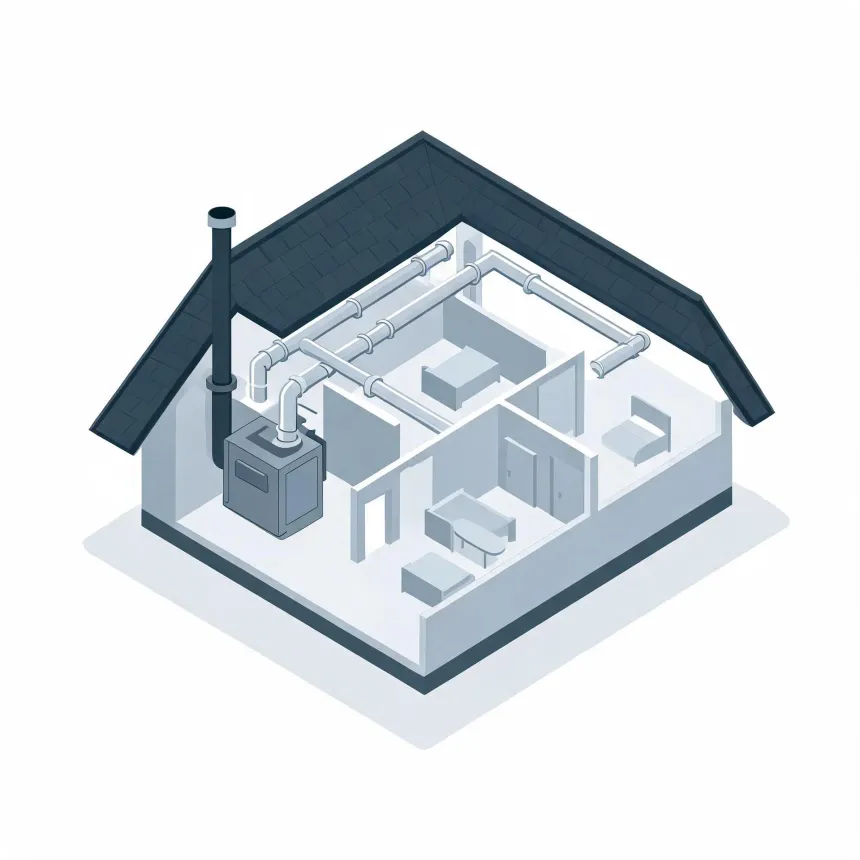
Isometric illustration of a cutaway house showing a dark furnace unit with a flue pipe and branching ductwork running through rooms with simple furniture under a dark gabled roof.
Your furnace works hardest from November through February.

NOAA nClimDiv, 1991–2020 normals

An old furnace can run fine for years if the burners light clean and the heat exchanger is sound.

Once the heat exchanger cracks or the control board starts failing, you're replacing it, not patching it.

Nothing about Crossett weather wears out a furnace. Ninety-four events in ten years, and none of them are what's in your ductwork.

94 severe weather events from 2015 to 2024
24% of homes statewide lost power a day or more in 2024
65 damaging wind events from 2015 to 2024
October is your windowFurnaces in Ashley County start up in November. Weak parts tend to show themselves in that first cold week.

That mild workload is a reason to get a repair looked at instead of writing the furnace off. If it's heated this house for years without being pushed hard, a cracked heat exchanger or a failing control board is the exception, not the likely verdict. Most calls turn out to be an igniter, a flame sensor, or a blower motor worn out on its own schedule, not from the job it's been asked to do. Winter storms have hit Ashley County six times between 2015 and 2024, and a furnace that quits during one of them is not a problem that waits well. Get the part replaced and the furnace should see you through the rest of its years without much trouble.

Worth knowing what you're repairing before you pay for it

If this furnace came with the house, find out before you pay for the repair what kind of shape the rest of it is in. A contractor can check the heat exchanger and the control board while they're already in there for the part that's acting up. That tells you whether this is a repair you make once, or one you're about to make again.

Find a contractor
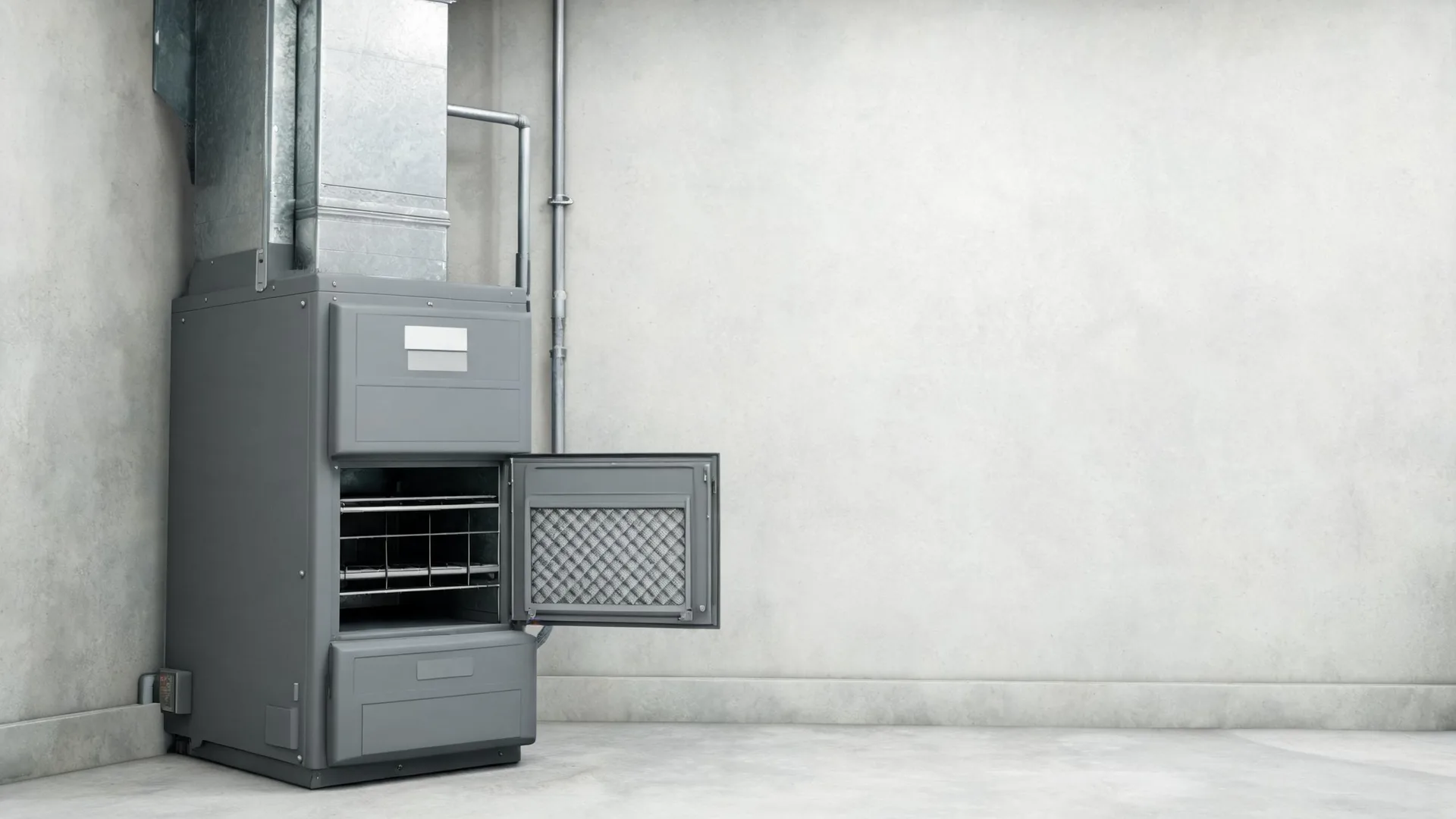
A gas furnace with attached ductwork, gas piping, and condensate lines installed in a concrete-block basement.

What a failing furnace sounds and feels like before it quits

A furnace usually tells you something before it quits outright. Short cycling is one of the first signs, where it fires up, runs for a short while, and shuts off before the house warms. That can mean a dirty flame sensor that isn't proving the flame is lit, or a clogged filter choking airflow until the furnace overheats and trips a safety switch. A burner that's yellow instead of blue is worth a call on its own. So is a furnace that needs several tries to light, or one where the igniter glows but nothing catches. Banging or popping from the ductwork as it starts usually means the burners are dirty and lighting unevenly. If the blower runs but no heat comes out, or it runs constantly and never seems to satisfy the thermostat, that's a different problem than a furnace that won't start at all, and worth describing accurately when you call for help.

A small problem feeds on itself

A flame sensor coated with a little soot still proves a flame most of the time. Let the furnace keep short cycling on it and the carbon builds with every failed attempt, until a quick cleaning turns into a sensor that won't read a flame at all. Airflow problems work the same way. A dirty filter makes the blower work harder, and a blower working harder against restricted air runs hotter than it should.

The limit switch can only do its job for so long

When a furnace overheats, the limit switch shuts off the burners to keep the heat exchanger from taking the damage. That's the switch doing its job. But a furnace that keeps tripping that switch and firing back up is cycling heat into a part that's already stressed, instead of getting looked at once. The exchanger that cracks under that kind of repeated stress was often fine before the airflow problem started.

Before you call anyone, there are a few things worth checking yourself. Start with the thermostat. Make sure it's set to heat, not just fan, and that the temperature is actually set above the room temperature. Check the filter next. Hold it up to a light. If you can't see through it, air isn't getting through it either, and that alone can cause short cycling or a furnace that blows cold. Look at the furnace switch, the one that looks like a light switch near the unit itself, and make sure it hasn't been bumped off. Check the breaker it's on too. A tripped breaker or a blown fuse will shut the whole thing down with no warning at all. If the furnace has a standing pilot, see whether the pilot light is actually lit. None of this fixes a cracked heat exchanger or a failing control board, but it rules out the simple stuff before you pay someone to find it.

A diagnostic visit starts before any panel comes off. A tech asks what the furnace was doing. Short cycling, no heat, won't light, and when it started matter more than they sound like they would. Then the cover comes off and they watch it try to run, because a furnace often does the thing wrong right in front of you if you let it attempt a normal cycle. They'll check for a flame and what color it's burning. They'll test the flame sensor and igniter with a meter rather than guess from how they look. The limit switch and pressure switch get checked too, since either one can shut a furnace down for a reason that has nothing wrong with them. Airflow gets checked the same way, since restricted air causes problems that look like something else entirely. Only after all that does anyone say which part is actually failing.