A nighttime street scene featuring a row of lit white colonial-style houses with wrap-around porches, flanked by oak trees draped in Spanish moss.

Heat Pump Installation in Jonesboro, AR

Tell us about the job

Takes about a minute. No obligation.

New system or replacementHeat PumpCraighead County, AR
Step 1 of 2

What ZIP code is the job in?

Electricity here runs cheap

Arkansas households paid 12.32 cents per kilowatt-hour in 2024, well under what a lot of the country pays. A heat pump still costs less to run than straight electric resistance heat, but the gap in your power bill between one model and a more efficient one will be smaller here than it would be somewhere with pricier power.


Pick for the outage, not the rating

When the payback on a top-tier efficiency model stretches out, what you're buying it for shifts. A unit that holds up when the power's been out for hours and the grid is just coming back, and that a local contractor can get parts for fast, matters more in Jonesboro than a fraction of a point on the efficiency rating.

7 months
October through April, your system heats
5 months
May through September, it cools
32°F
the average winter night it heats against
89°F
the average summer afternoon it cools against
Isometric line illustration of a cutaway house showing interior rooms with furniture, ceiling ductwork under a dark shingled roof, and an outdoor condenser unit connected by lines on the right.
Your system heats October through April and cools May through September.

NOAA nClimDiv, 1991–2020 normals

Heat here runs October through April.

Install before September and the system is broken in, not breaking in, when the cold hits.

Jonesboro weather is hard on outdoor equipment

91 damaging wind events from 2015 to 2024
60 hail events from 2015 to 2024
Power costs 12.32 cents a kWh statewide

Jonesboro sits in climate zone 3A, warm with a long stretch of hot weather and a winter that stays mild. A heat pump installed here has to clear the federal minimum for that zone, 14.3 SEER2 for cooling. That floor is higher than what manufacturers have to meet nationally, so a unit built to the national minimum won't necessarily meet what's required here. A contractor quoting a system in Jonesboro should be working from the regional number, not the national one. There's also a federal tax credit available on qualifying heat pumps, worth asking about when you're comparing models.

Most of Jonesboro already heats with electricity

Most homes in Craighead County heat with electricity already, so a heat pump replaces like for like rather than asking for new gas lines or a new electrical setup. That makes it the simpler path when the old system goes out and the next one needs to be ready for whatever the grid does this winter.

Find a contractor
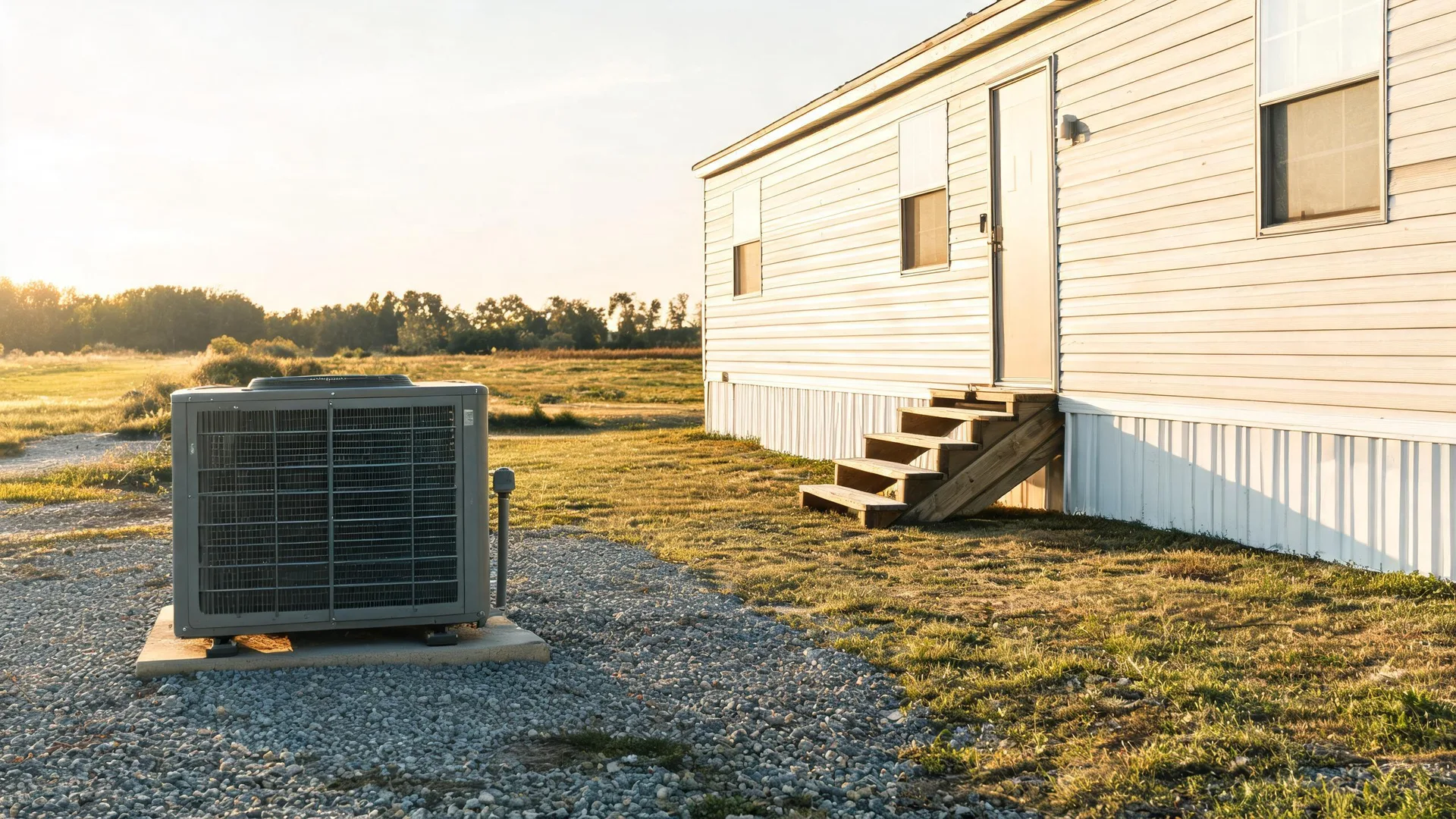
A gray heat pump outdoor unit mounted on a concrete pad next to a residential house with lap siding and stone accents.

The right size comes from a load calculation, not the old unit's number

Sizing a heat pump starts with a load calculation, not the old unit's number. A contractor works out how much heat this house loses on the coldest day and how much it gains on the hottest one, room by room. Square footage alone won't tell you that. Get the size wrong in either direction and the strain lands on the same part, the compressor. Too big and it short cycles, running in bursts that cool the air but never run long enough to pull the moisture out or settle into a steady temperature. Too small and it runs flat out on the worst days and still falls behind, grinding away for hours with no rest. A unit sized right runs long, steady cycles most of the year and still has enough reserve for the days that push it hardest.

Ask for the heating rating, not just the cooling one

A heat pump has a separate rating for how it performs putting out heat in cold weather, apart from its cooling rating. A contractor who only quotes the cooling side is leaving out the number that tells you how the unit will actually do on the coldest days.

Ask what happens when the outdoor air gets too cold to draw from

Every heat pump reaches an outdoor temperature where it can no longer pull enough heat from the air to keep the house warm on its own. Below that point, a backup heat source takes over, usually electric resistance coils. Ask what temperature that switchover happens at, because running on backup heat costs more than the heat pump does.

The efficiency rating on a heat pump's label tells you how much heat it moves for the electricity it uses. It is not a promise about how your house will feel or what your bill will look like. A higher rating means the compressor is doing more work for the same amount of power, and that shows up over time as lower electricity use. It does not mean the house heats up faster or the air feels any different coming out of the vents. That rating also assumes the unit is sized right and installed right. A high-efficiency model crammed into a house too big for it, or too small, will not perform anywhere near its label, because a compressor that short cycles or runs flat out wastes the efficiency it was built for. The number on the label is a fair way to compare models. What you actually get depends on the sizing and the install as much as the rating itself.

Installation cost comes down mostly to how much has to change beyond swapping the outdoor unit. If the ductwork already fits the airflow a heat pump needs, the job is straightforward. If the ducts are undersized or leaky, they have to be addressed first or the new system will never hit its numbers. The electrical panel matters too. A heat pump pulls differently than a gas furnace did, and an older panel may need work before it can take the new circuit. Where the lines run, how far the indoor and outdoor units sit from each other, and whether the old equipment comes out clean or fights you on the way out all add labor. None of that shows up on the unit's price tag, but it shows up in the bid.