Heat pump vs furnace in Craighead County, Arkansas

A person's hand in a dark blue sleeve adjusts a round wall-mounted thermostat with a black screen, with a living room containing a gray sofa, potted plant and open tool bag in the background.

Tell us about the job

Takes about a minute. No obligation.

New system or replacementCraighead County, AR
Step 1 of 3

What kind of equipment?

Which costs less to run in Craighead County?

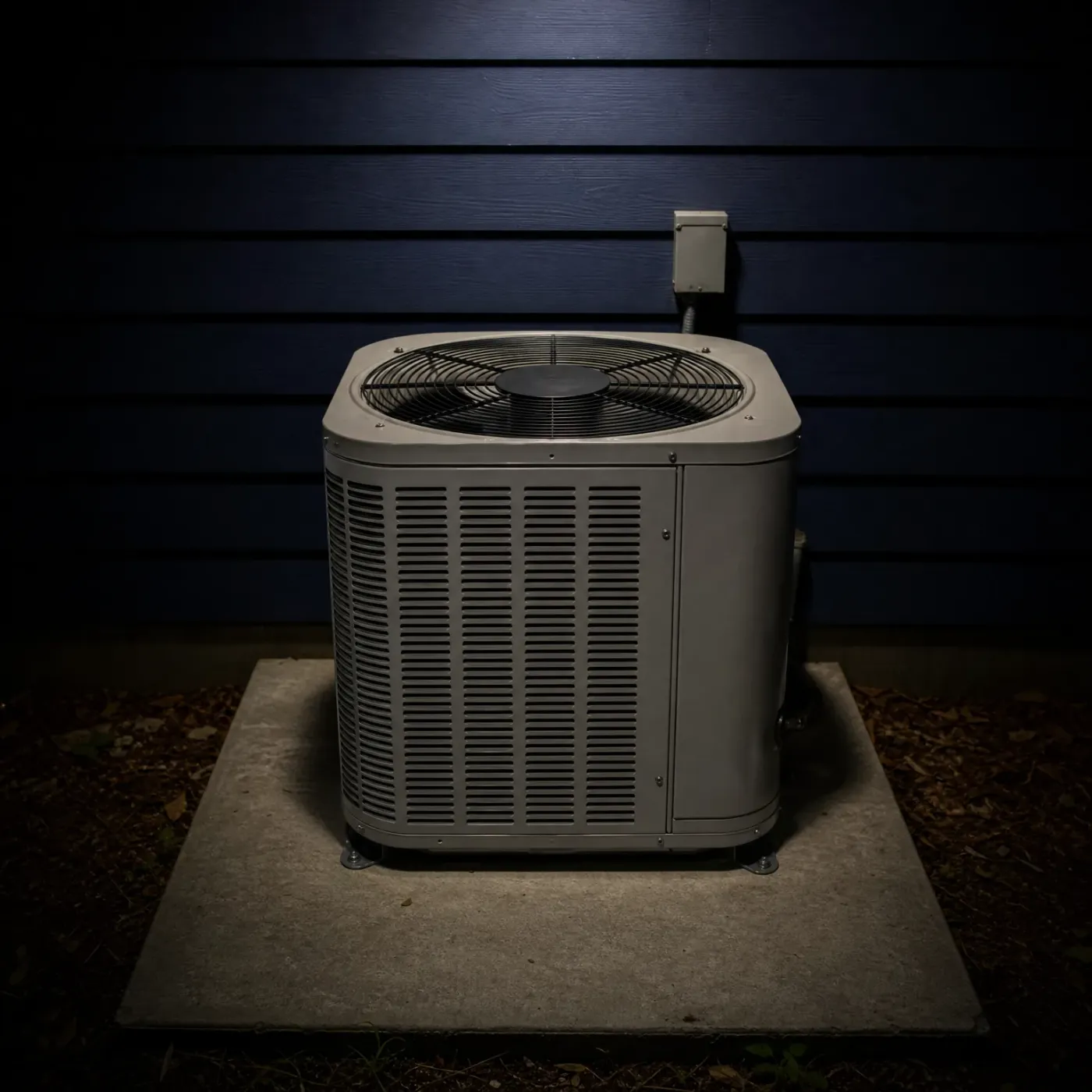
An outdoor air conditioning condenser unit on a concrete pad beside a dark horizontal-lap sided wall at night, with an electrical disconnect box mounted on the wall above.

Heat pump

To heat your home here$1.64per 100,000 Btu

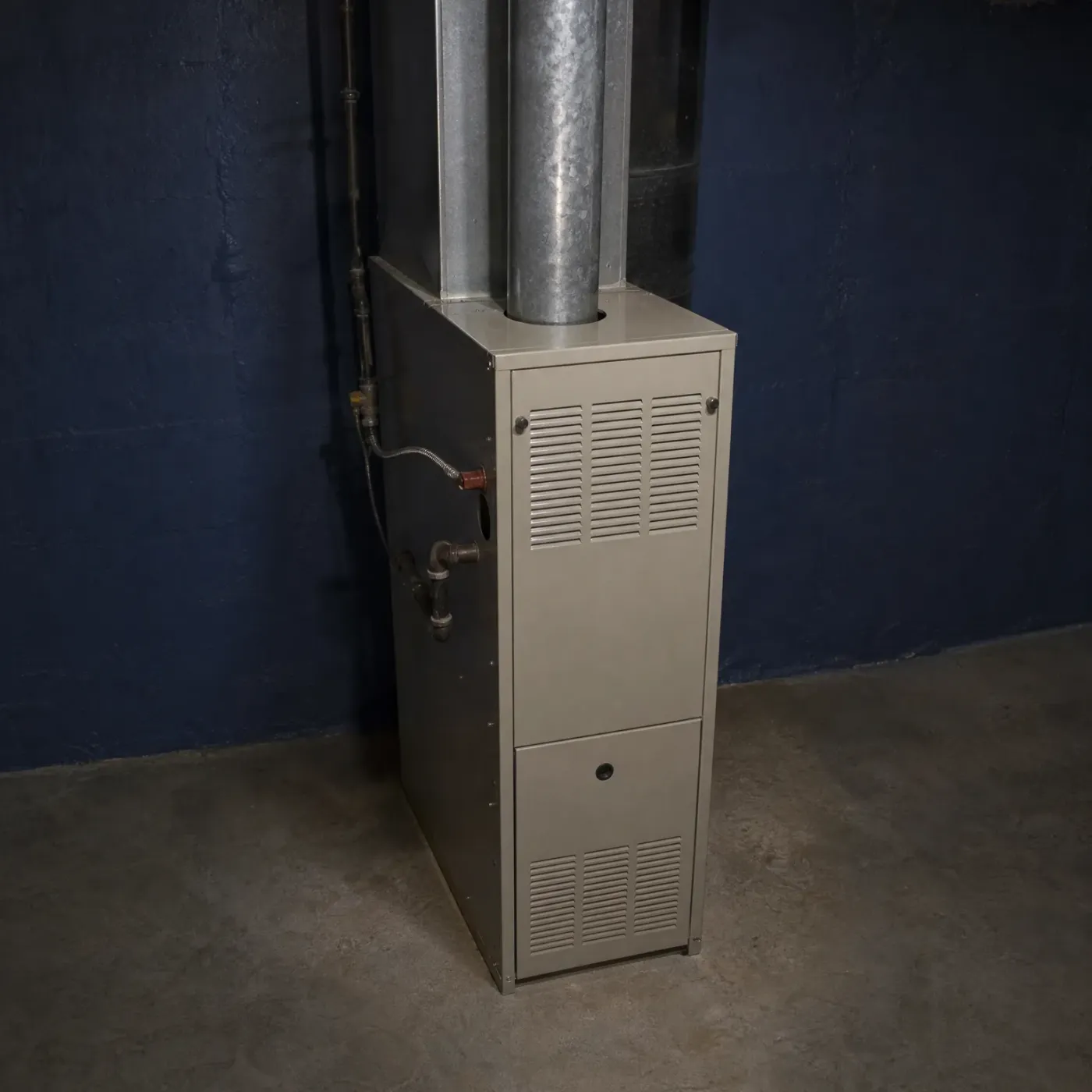
A beige sheet-metal furnace with louvered access panels stands against a dark blue painted basement wall on a concrete floor, with metal flue ducts rising from its top and gas piping along the wall.

Furnace

To heat your home here$1.97per 100,000 Btu

At Arkansas's gas and electricity prices, a heat pump makes the same heat as a gas furnace for about 17% less.

Btu stands for British thermal unit, the standard measure of heat energy.

Where does a heat pump shine?

  • Covers a long cooling season

    Cooling runs May through September here, close to five months of the year. A heat pump handles that same stretch for cooling and switches over to keep the house warm once fall comes, all from one system.

    A glass of iced tea on a round wooden table on a covered porch with wicker seating, blue and white cushions, potted plants, a ceiling fan, and green trees beyond the railing.
  • Steady, even comfort

    A heat pump runs long and low instead of blasting on and off. Rooms hold an even temperature all day.

    A dimly lit living room at night with a navy armchair holding an open book and a knitted throw, a lit table lamp, a stone fireplace with a fire, built-in blue shelving, and a golden retriever sleeping on a light rug.
  • No gas line, nothing burning in the house

    It moves heat instead of making it from fire. That means no combustion, no flue and no gas bill for heat.

    Kitchen with light wood cabinets, white marble-look countertops and backsplash, a navy blue island with wooden stools, an induction cooktop with a steel kettle, two blue pendant lights, stainless refrigerator and black wall oven.

Where does a furnace shine?

  • Pairs with any central AC

    Most central air systems are built around a furnace. The two share the blower, the ducts and the thermostat.

    A rectangular metal floor vent set into a hardwood floor near a white baseboard and dark cabinet, with a sheer curtain hanging above and a blue patterned rug at the lower right.
  • Fast, strong heat on demand

    Turn the heat up and the furnace answers right away. There's no long wait for the house to catch up.

    A mudroom entry with a dark navy glass-paned door showing snowy trees outside, fur-trimmed boots on a jute mat, a wooden bench with a blue blanket and mug, hanging coats, pale blue cabinets, a sheer curtain, and a floor vent.
  • Proven, simple, easy to get serviced

    The design is simple and well understood. That keeps service calls short.

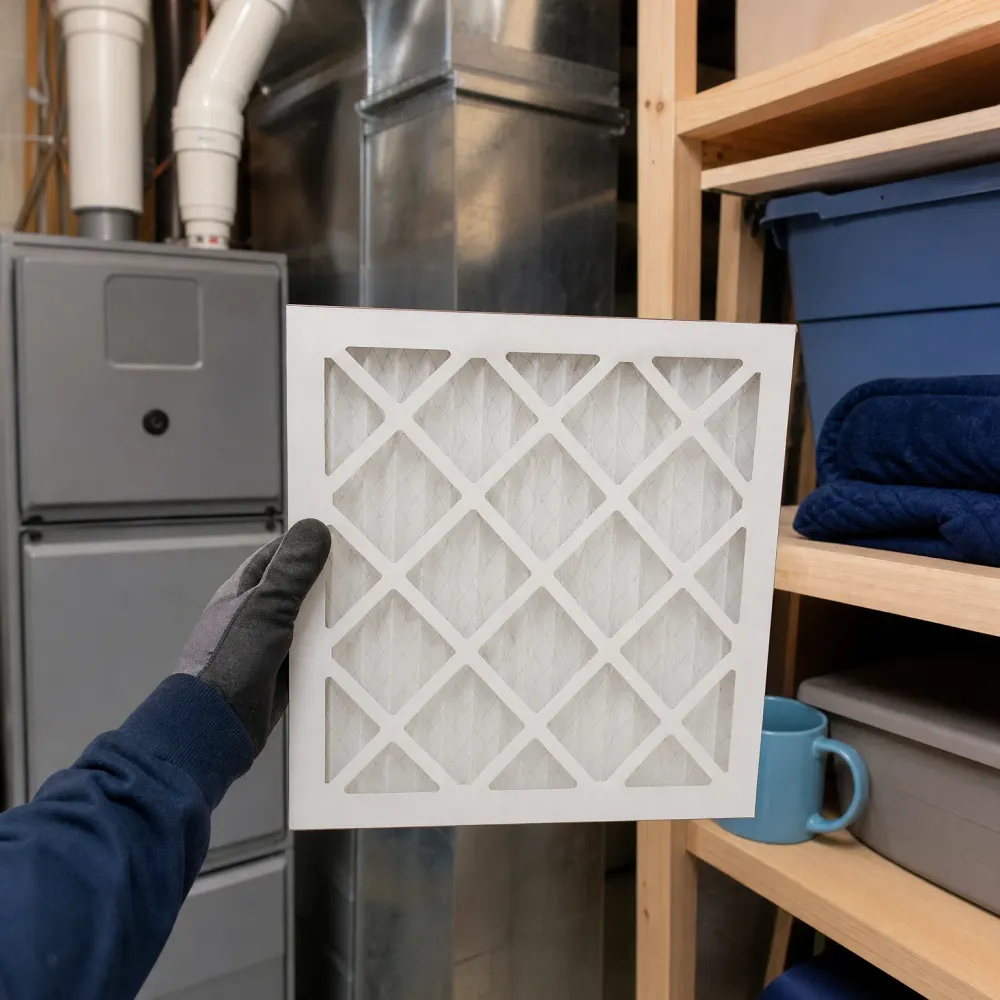
    A gloved hand holds a white pleated air filter in front of a furnace and ductwork, next to wooden shelves holding bins, folded blankets, and a blue mug.

Can a heat pump keep up with winter here

Your furnace question is really a question about 32 degrees, because that is the average overnight low here from December through February, and it falls at or below freezing about 70 nights a year. A standard heat pump has two marks against it in that range. Below 40°F it puts out less heat than its rating says. Below about 35°F it often needs backup heat to make up the difference. Every one of those 70 cold nights falls past both marks.

That does not rule out a heat pump. It rules out a standard one. The ENERGY STAR Cold Climate certification exists for this exact range: to earn it, a heat pump has to make at least 1.75 units of heat for every unit of electricity at 5°F, and hold onto at least 70 percent of its 47°F capacity at that same temperature, checked by outside testing. In a two winter field test of these units in real homes, backup heat covered only a small share of the heat needed between 0°F and 35°F, and the units ran on backup heat alone only rarely, even below zero. Craighead County barely sees zero at all, fewer than one night a year. A cold climate heat pump is built for colder nights than this county gets.
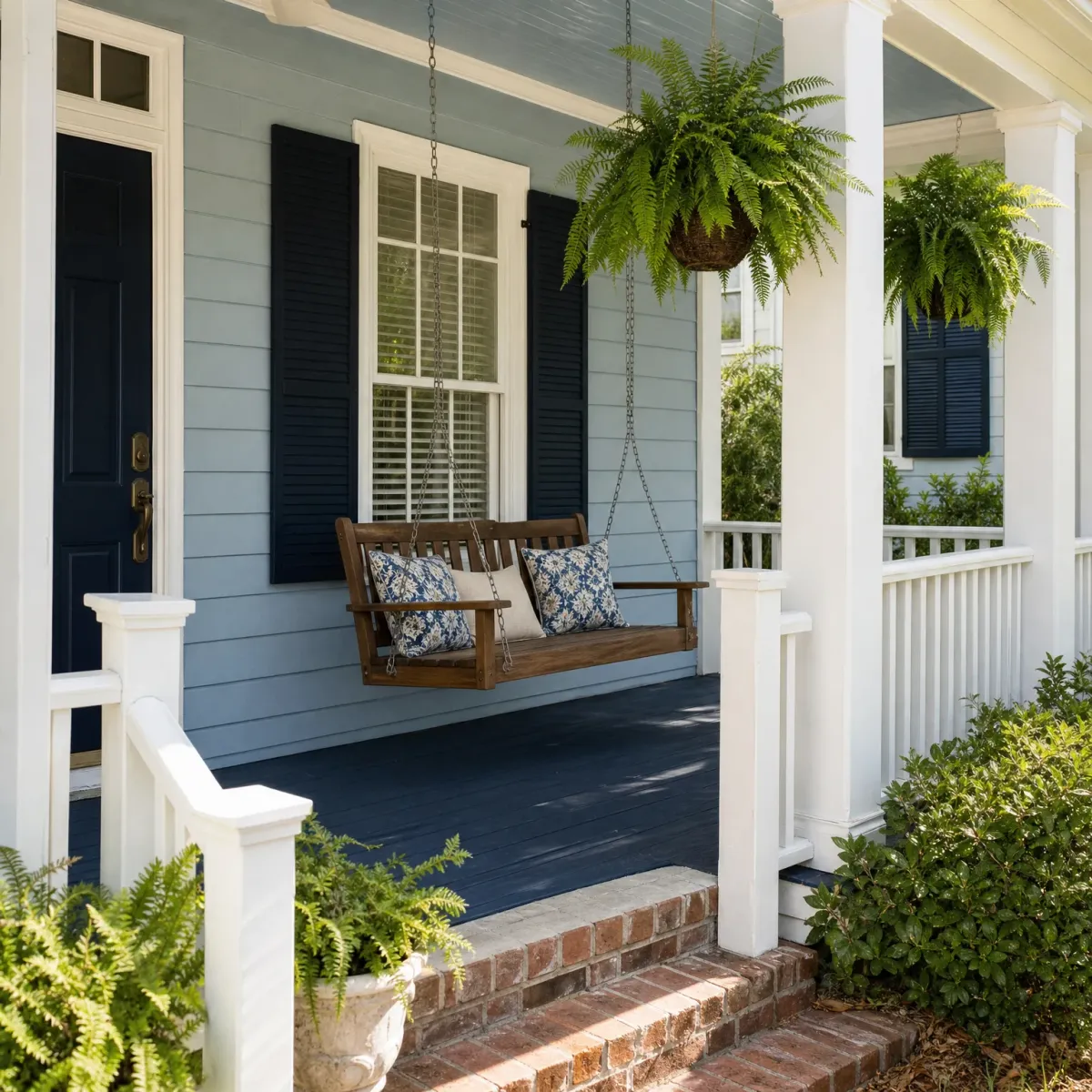
A covered porch with light blue lap siding, dark navy shutters and door, white columns and railings, a wooden swing hung by chains with blue floral pillows, hanging ferns, a dark blue painted floor, and brick steps flanked by shrubs.

What it costs to run, and what it means for summer

Run the two side by side at Arkansas's fuel prices and the heat pump wins. It makes the same heat for $1.64 per 100,000 Btu against $1.97 for a gas furnace, about 17% less, and that number already assumes no help from backup heat. A cold climate model, needing less backup heat on the nights this county actually gets, would not cost more than that figure. Gas still heats more homes in this county today, 36.3% against electricity's 57.9%, but that is about what each house already has hooked up, not about which machine is cheaper to run.

There is also the other five months. Cooling runs May through September here, with about 60 days a year reaching 90°F or above, and heating runs the longer stretch, seven months to five. A furnace has no part in cooling. It sits idle those five months while a separate air conditioner carries the load. A heat pump is that air conditioner. Buy one and you are not adding a second machine next to the furnace, you already own your summer cooling.

Sources: NOAA nClimDiv · NOAA 1991–2020 seasonal normals · PNNL Building America guide · PNNL-37127 field study · ENERGY STAR product criteria · EIA SEDS 2024 · 10 CFR 430.32 · Census ACS 2020–2024

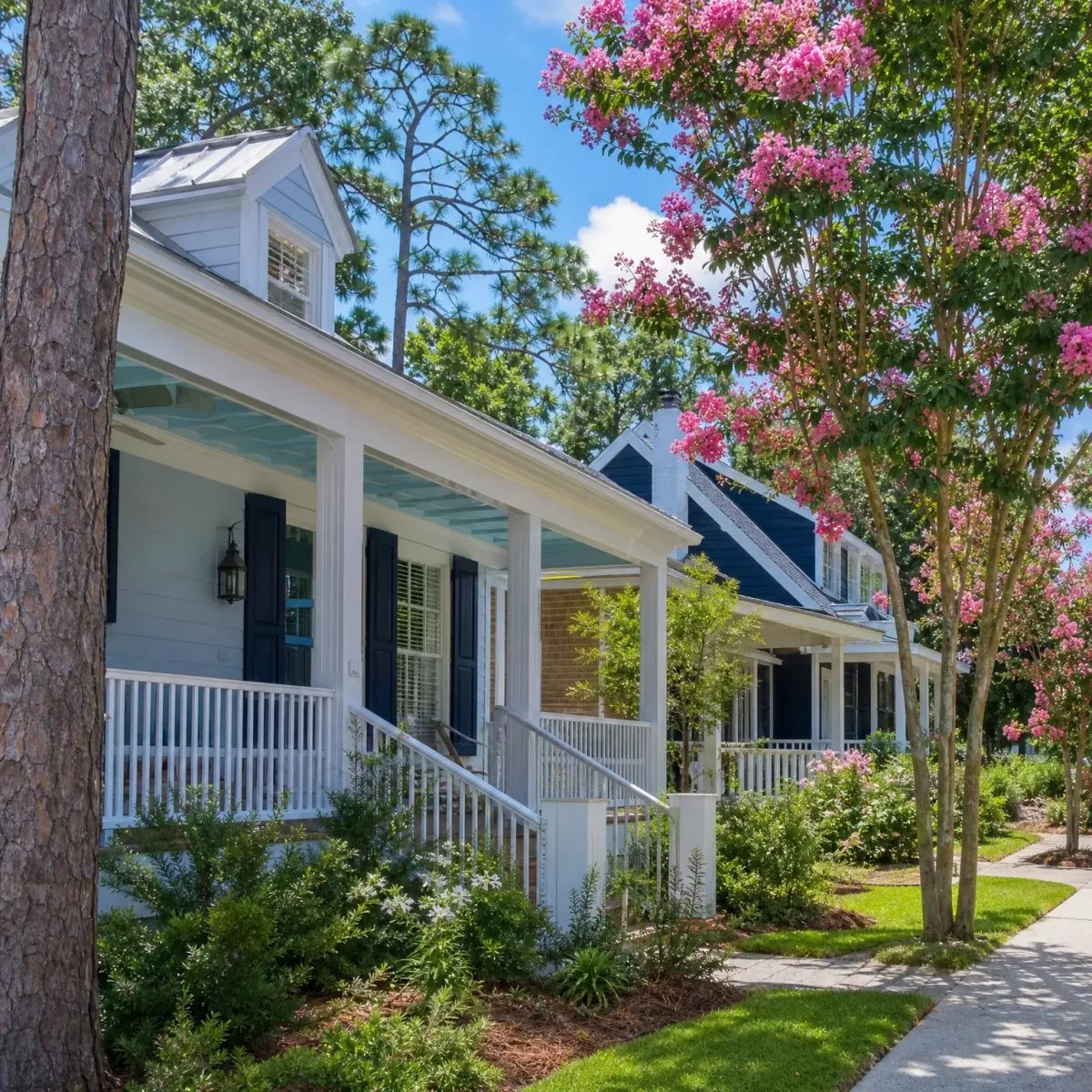
A row of light-colored houses with covered front porches, white railings and dark shutters, fronted by shrubs, lawn and a concrete sidewalk, with pink-flowering crape myrtle trees and tall pines under a blue sky.

Common questions about heat pumps and furnaces

  • Will a heat pump keep my house cool enough here?

    Yes. A heat pump is a central air conditioner in the summer months, built to handle the same afternoons near or above 90°F, which happen here about 60 days a year, as any central AC paired with a furnace.

  • Can I keep my furnace and add a heat pump?

    Yes, and here that often makes sense. A heat pump handles the cooling season and most of the heating season on its own, then the furnace takes over on the roughly 70 nights a year here that drop to freezing or below, right where a standard heat pump's output starts to fall short of its rating.

  • What if my house doesn't have a gas line?

    Without a gas line your choices are a heat pump, electric resistance heat, or a furnace burning propane or oil instead of gas. A heat pump is worth comparing against those directly, since it moves heat rather than burning fuel to make it, and at Arkansas's electricity prices it costs less to run than the propane or oil a furnace would need instead.

  • Is a heat pump cheaper to run than a furnace in Craighead County?

    Yes, a heat pump costs less to run here. At Arkansas's average fuel prices it works out to $1.64 per 100,000 Btu of heat against $1.97 for a gas furnace, about 17% less, and that heat pump figure already assumes only the federal minimum efficiency.