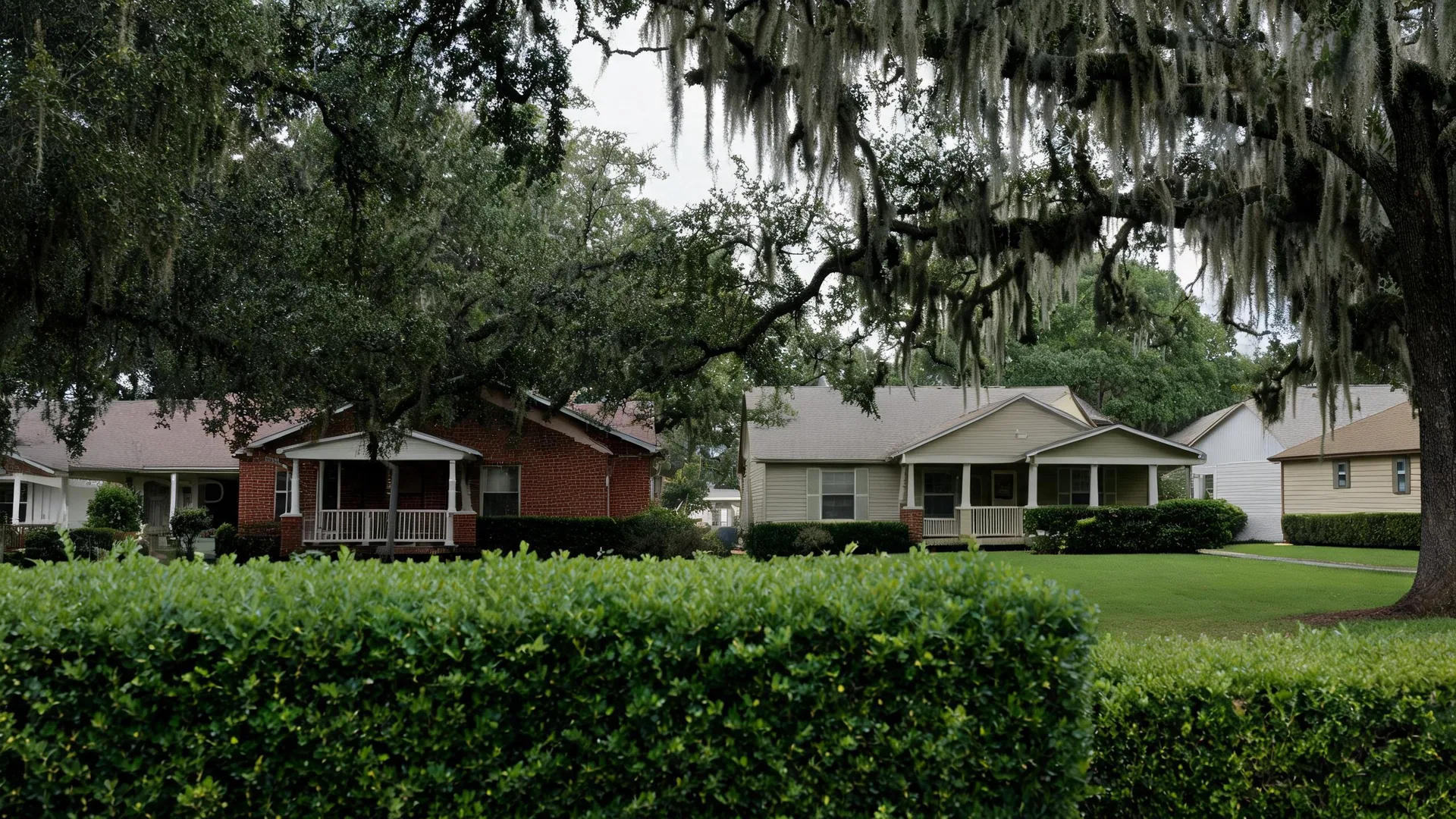
Single-story houses with covered porches, one brick and one light-colored siding, behind a trimmed hedge and lawn, beneath large oak trees draped with Spanish moss.

Heat Pump Repair in Jonesboro, AR

Tell us about the job

Takes about a minute. No obligation.

RepairHeat PumpCraighead County, AR
Step 1 of 2

What ZIP code is the job in?

Warm air in winter means something's wrong

A heat pump in heating mode should never blow cold air at the vents. If the air feels room temperature or cooler, the reversing valve may be stuck or the refrigerant charge may be low. Either way the unit is working against itself, running longer and still not warming the house.


A unit that won't stop frosting over needs a look

Heat pumps frost up in cold weather and defrost themselves on a cycle, that's normal. What's not normal is ice that builds back fast or never fully melts off the coil. That points to a failing defrost control or a fan that isn't moving air the way it should, and it won't clear on its own.

7 months
October through April, your system heats
5 months
May through September, it cools
32°F
the average winter night it heats against
89°F
the average summer afternoon it cools against
Isometric grayscale illustration of a cutaway house showing interior rooms, ceiling ductwork connected to an indoor air handler, and an outdoor condenser unit beside the exterior wall.
Your system heats October through April and cools May through September.

NOAA nClimDiv, 1991–2020 normals

Check that the thermostat is set to heat, not fan only, before anything else.

A wrong setting looks exactly like a broken unit, and it takes a minute to rule out.

Most calls come in the first cold snap or the first hot week, when the system meets a job it couldn't handle

Cooling runs May through September
Heat runs October through April
91 damaging wind events from 2015 to 2024
A county built since 1992Half the homes in Craighead County went up in 1992 or later.

Craighead County logged 177 severe weather events between 2015 and 2024, and hail and damaging wind made up most of them. A heat pump's outdoor unit sits right in the path of both. The coil and fan blades take the hit when hail comes through or wind throws debris around. A unit can still run after that and still be worse off. A bent fin or a dinged blade changes how it moves air even if the compressor never skips a beat. If a storm has come through recently and the heat pump is running longer than it used to, or the air feels weaker at the vents, have the outdoor unit looked at even though it still turns on. Close to a quarter of Arkansas households lost power for a day or more last year, and a heat pump that was already struggling before the outage is the one that won't keep up once it's back on.

A newer system is usually worth repairing

A heat pump that came with a newer house still has working life left in it. That makes repair the first thing worth ruling out, not replacement. Have the unit looked at and go from there.

Find a contractor
A man seen from behind in a dark shirt and tan pants climbs concrete steps toward a navy blue front door, carrying a canvas tool tote in his right hand, with a large blue planter and shrub to the left.
A white mini-split heat pump outdoor unit mounted on a concrete pad beside a gray-sided house, surrounded by gravel and green shrubs.

The compressor carries the load, and it shows wear first

A diagnostic starts outside, not at the thermostat. The tech checks refrigerant pressure, looks at the reversing valve, and watches how the outdoor fan and compressor behave when the system calls for heat. Inside, they'll check airflow at the vents and pull the panel to look at the defrost board and sensors. A heat pump that's been running on a strained component for a while usually shows it there before it shows it anywhere else. The compressor is the part that wears hardest, since it runs almost continuously in both heating and cooling. If a visit turns up a compressor on its way out, that changes the conversation from repair to replacement fast.

A stuck reversing valve picks one season and stays there

The reversing valve is what lets a heat pump switch between heating and cooling by redirecting refrigerant flow. When it sticks, the system gets locked on one side, and that's why a heat pump can blow cold air no matter how high the thermostat is set. It doesn't loosen up or correct itself with time.

A weak capacitor can look like a dead compressor

The capacitor delivers the jolt that starts the compressor and the outdoor fan motor. When it starts to fail, the outdoor unit may hum without starting, or kick on and shut back off on its own. That behavior gets blamed on the compressor often enough that it's worth checking the capacitor first.

A heat pump that's struggling still tries to meet every call for heat or cool, and that's what causes the damage. A weak capacitor forces the compressor to draw harder on every start, and each hard start wears it down a little more. A low refrigerant charge makes the compressor work to move heat it doesn't have enough refrigerant to carry, so it runs hotter than it should. Ice left on the coil blocks airflow, so the system runs longer to make up for it, and that longer run feeds more frost back onto the coil. None of that corrects itself by running more. It just shifts the wear from a part that's simple to replace onto the compressor, which is the one part nobody wants to be replacing.

Hail is the thing to ask about specifically. Craighead County had 60 hail events between 2015 and 2024, enough that it's worth a direct question to whoever looks at the outdoor unit. Ask them to check for dents in the coil fins and marks on the fan blades. Wind throws branches and debris into the cabinet too, and that kind of hit can happen without the unit ever shutting off. A quiet compressor doesn't rule out either one. If there's been a storm recently and nobody has opened up the outdoor unit since, ask for the coil and the blades by name, not just a general check.