





A row of single-story houses with covered porches, the nearest clad in red brick, seen behind a trimmed hedge and lawn beneath large moss-draped oak branches.

Heat Pump Maintenance in Jonesboro, AR

Tell us about the job

Takes about a minute. No obligation.

Tune-up, service, or cleaningHeat PumpCraighead County, AR
Step 1 of 2

What ZIP code is the job in?

Craighead County logged 177 severe weather events between 2015 and 2024, most of it wind and hail. A heat pump's outdoor unit sits right outside, in the path of all of it. Hail dents the cabinet and bends the fins around the coil. Wind throws branches and debris into the fan. None of that announces itself right away, it just makes the unit work harder until the day it doesn't. Worth having someone look it over before the next round of storms comes through.

A clogged outdoor coil makes the system run longer to do the same job.

Homeowners can rinse the outdoor unit with a garden hose and keep leaves and grass clippings away from it between visits.

May is the first hot month here. Get the heat pump looked at in April.

Cooling runs May through September
Heat runs October through April
91 damaging wind events from 2015 to 2024

Half the homes in Craighead County were built in 1992 or later, so a lot of the heat pumps out there are younger than the neighborhood looks. A newer unit still wears, just slower, and a yearly check is what keeps it on that slower track. The tech can catch a weak capacitor or a refrigerant level drifting low before either one turns into a breakdown. Skip enough checks and even a newer system starts acting older than it is. If your heat pump came with the house, it's worth finding out just how new it really is.

Check the outdoor unit after every storm that comes through

After a storm, have the outdoor unit checked before you run it again. A quick look can catch a dented cabinet or bent fins while it's still a simple fix.

Find a contractor
A man in a dark long-sleeve shirt and tan work pants carries a canvas tool bag up porch steps toward a navy blue front door, with a potted shrub beside the entry.
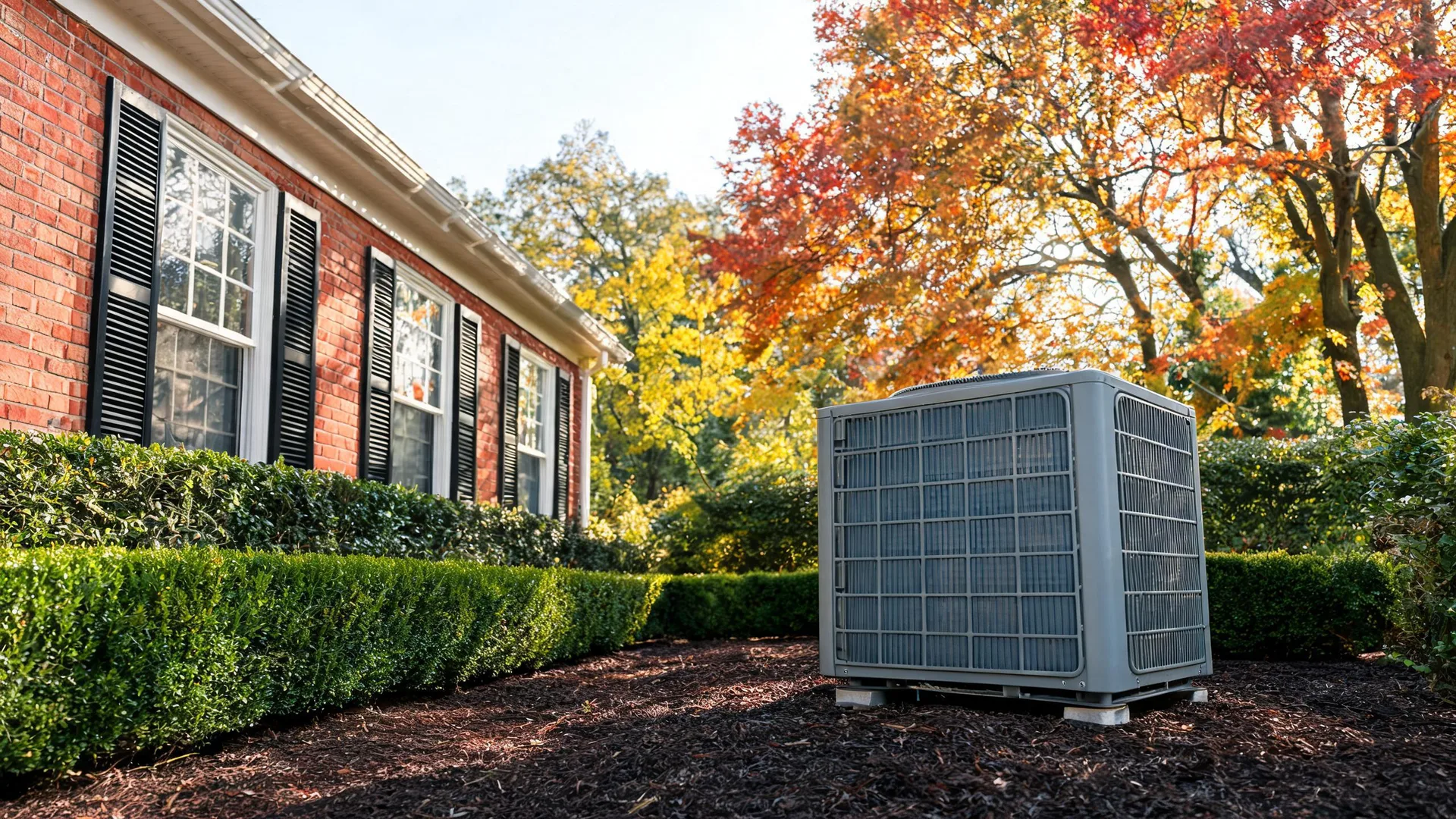
A gray heat pump outdoor unit mounted on a concrete pad next to the stone-accented exterior wall of a house.

It runs year round, so it wears year round

A heat pump doesn't get an off season. It runs the compressor to cool the house for months, then reverses and runs it again to heat, so the moving parts inside rarely get a long rest the way a furnace does. That steady use is normal and the system is built for it, but it means wear doesn't wait for one busy season to show up. A contactor pits a little every time it closes. Refrigerant drops slowly, and nothing points at it until the system is running on less than it needs. Maintenance is what catches that drift while it's still small, because left alone the compressor ends up doing more work to make up for it, and that's the part nobody wants to replace.

A quick visit checks that it runs

A fast tune-up gets the system blowing cold or warm, glances at the readout, and calls it done. That tells you the heat pump turned on. It doesn't tell you the refrigerant charge is right, or whether the contacts inside the contactor are starting to pit, or what the amp draw on the compressor looks like compared to last year.
A thorough one checks why it runs well

A real tune-up pulls the panel, checks refrigerant pressures against what the system is supposed to carry, tightens electrical connections, and measures temperature rise across the coil. It catches the capacitor that's weak but not dead yet, the coil that needs a real cleaning and not just a rinse. That's the visit that keeps a small problem from becoming a service call.

A heat pump that needs a look doesn't always stop working, it just stops working the way it should. The system short cycles, shutting off a few minutes after it starts instead of running a full cycle. Or it runs and runs without the house ever feeling right, blowing air that's warm when it should be cold or barely warm at all in the dead of winter. Ice builds up on the outdoor coil and stays there instead of clearing in the defrost cycle. The outdoor unit gets loud in a way it wasn't before, a rattle or a hum that wasn't part of the sound last year. Any one of those is the system asking for a check before it asks for a repair.

A real tune-up starts outside, with the fins and the coil, but most of what matters happens where you can't see it. The tech checks refrigerant pressure on both the high and low side, because a heat pump that's low on charge still blows air, just not enough to keep up. They check the reversing valve, the part that switches the system between heating and cooling, since a valve that sticks can leave you heating when you meant to cool. Electrical connections get tightened, because a loose one generates heat on its own and that heat degrades the connection further. The condensate drain gets checked too, so water has somewhere to go instead of backing up into the unit. None of it is dramatic work. It's the kind of thing that's easy to skip and hard to notice missing, until the day it isn't.