





A illuminated white antebellum-style house with a wraparound porch, white columns, and Spanish-moss-draped oak trees, photographed at dusk.

Heat Pump Installation in Mountain Home, AR

Tell us about the job

Takes about a minute. No obligation.

New system or replacementHeat PumpBaxter County, AR
Step 1 of 2

What ZIP code is the job in?

Mountain Home sits in climate zone 4A, which asks real work of both sides of a heat pump, heating and cooling. Any split-system heat pump installed here, if manufactured from 2023 on, has to hit at least 14.3 SEER2 for cooling and 7.5 HSPF2 for heating. Those are federal floors, not local extras, so they narrow down which models a contractor can even offer you. A federal tax credit is available on qualifying installations, worth asking about when you're comparing systems and prices.

7 months
October through April, your system heats
5 months
May through September, it cools
28°F
the average winter night it heats against
88°F
the average summer afternoon it cools against
Isometric line illustration of a cutaway house showing interior rooms with furniture, ceiling ductwork connected to an indoor air handler, and refrigerant lines running to an outdoor condenser unit on a pad.
Your system heats October through April and cools May through September.

NOAA nClimDiv, 1991–2020 normals

More than half the homes in Baxter County already heat with electricity.

A heat pump fits a home already wired for electric heat without reworking how the house gets its power.

September is the month to get a heat pump in, before it has to carry the heat alone

Cooling runs May through September
Heat runs October through April
Climate zone 4A

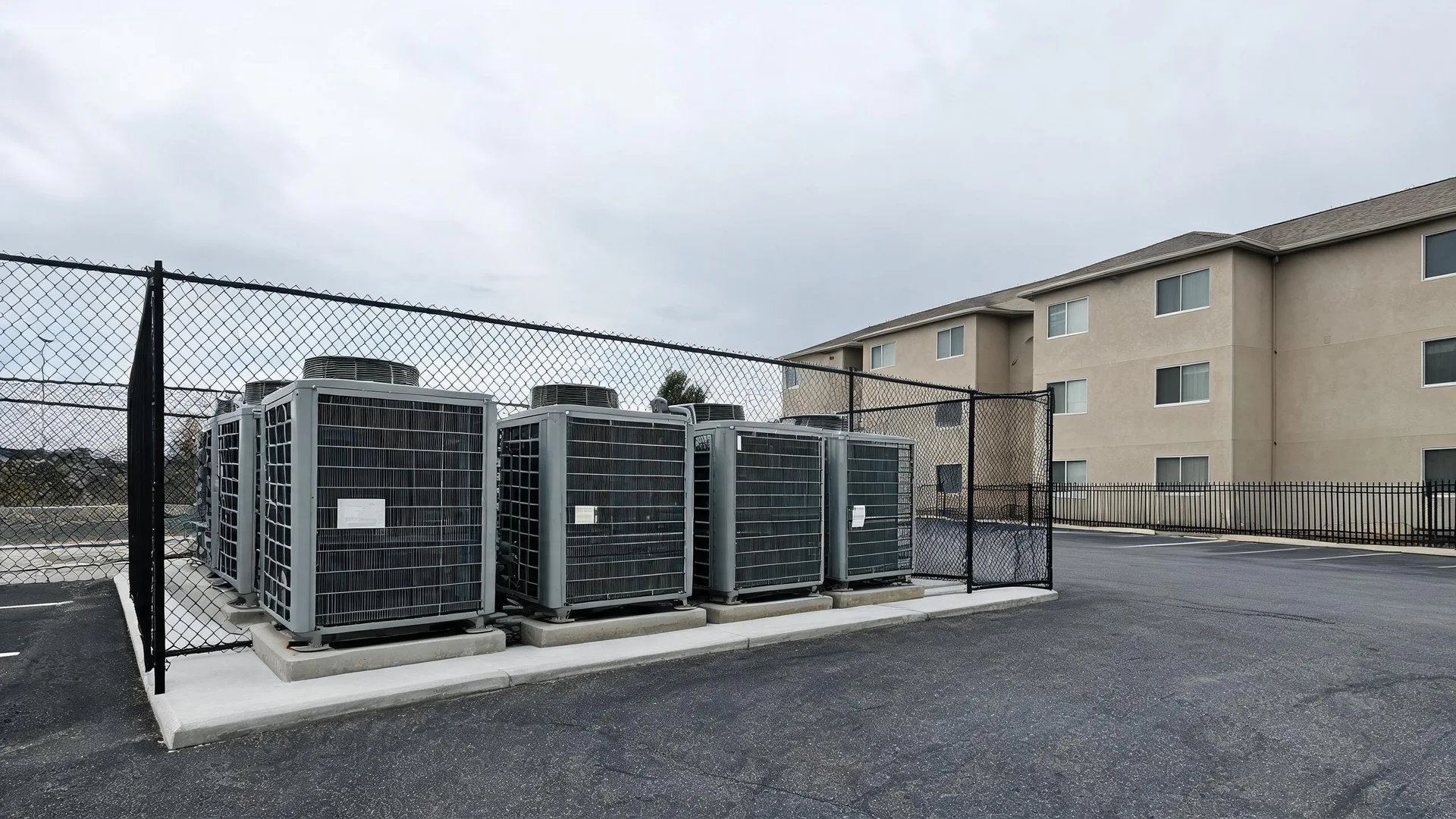
Baxter County saw 114 severe weather events between 2015 and 2024, and damaging wind and hail accounted for most of them. Any outdoor unit sitting in a yard here takes that weather directly, so where a contractor sets the pad and what they put around it matters as much as the unit itself. The bigger issue is power. Nearly a quarter of Arkansas households went at least a full day without electricity in 2024, and a heat pump needs power to run, winter or summer. Worth asking a contractor how the system handles an outage, and whether a backup heat source makes sense alongside it.

Here, fit and reliability matter more than squeezing out the last point of efficiency

Electricity here runs 12.32 cents a kilowatt-hour, cheaper than most of the country, so the highest-efficiency model on the lot will take longer to earn back its extra cost. What matters more in Mountain Home is whether the unit and the install can take the wind and hail this county sees, and what happens to your heat when the power drops. Get those answers before you decide which system to buy.

Find a contractor
A residential heat pump outdoor unit mounted on a concrete pad next to a house with gray vinyl siding.

The rating on the sticker is only part of the story

SEER2 and HSPF2 are both ratios, cooling or heating output divided against the power it takes to produce it. A higher number means the compressor and coil get more comfort out of the same electricity, not that the unit is bigger or stronger. The number on the label comes from lab testing under set conditions, so it tells you how that equipment performs on paper. How it performs in a house depends on duct condition, whether the system was sized to the house, and whether the installation was done right. A high-efficiency unit installed poorly can run worse than a modest one installed well.

Bigger isn't better

A heat pump sized too large for the house turns on, satisfies the thermostat fast, and shuts off again. Those short cycles mean the system never runs long enough to pull moisture out of the air in summer. In winter it never settles into a steady run either. The compressor also takes more wear from starting and stopping that often than it would running longer at a steady pace.
The sizing comes from a load calculation

A contractor works out the right size by measuring the house itself. Square footage matters, but so does window area, insulation, ceiling height, and which way the house faces the sun. That calculation is what tells them the heating and cooling load. The old system's size or a flat rule of thumb per square foot does not. Ask to see the numbers behind the unit they're proposing before you agree to it.

The old outdoor unit and indoor coil don't just get unplugged and left. A contractor recovers the refrigerant from the lines before anything comes apart, since it can't be vented into the air legally or safely. The old unit gets disconnected from the electrical whip and the refrigerant lines, then hauled off, along with the indoor coil and any line set that isn't being reused. If the new heat pump ties into existing ductwork, that stays, though a contractor should check it for leaks and proper sizing before connecting a new system to old ducts. The pad underneath usually gets reused or replaced, and the area gets cleared so the new unit sits level and clear of the old mounting holes or anchors.

Installation day starts with the inside work. The indoor coil goes in first if it's being swapped, set into the ductwork or air handler and sealed so no air leaks around it. Line sets get run between the indoor coil and the outdoor unit, then the whole system gets evacuated with a vacuum pump before any refrigerant goes in. That step pulls out moisture and air, because either one left in the lines causes problems later. Once the new outdoor unit is set on its pad and leveled, the contractor charges the system to the right refrigerant level, not just by filling it, but by checking pressures and temperatures against what the unit calls for. Last comes the electrical hookup and a full run-through, checking that the thermostat talks to the system, that it switches between heating and cooling the way it should, and that airflow at the vents matches what the house needs.