

Can a heat pump actually keep up here
Winter here is long but not brutal. Heat runs seven months, October through April, and the overnight low averages 28°F across December, January and February. Freezing nights happen about 85 times a year, under half the nights of the heating season. Nights at 0°F or below are rare, fewer than one a year.
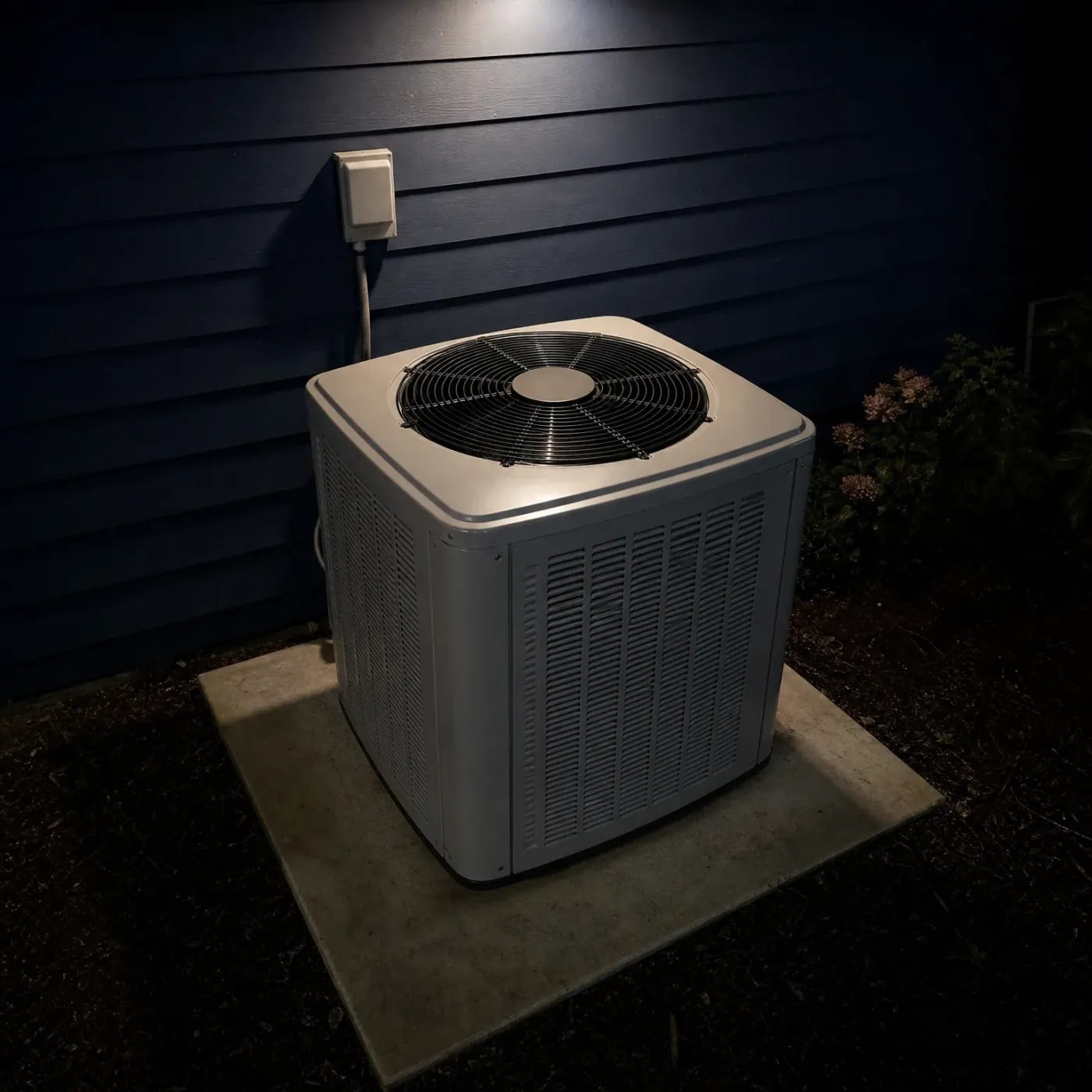
That matters because a standard heat pump has two separate limits. Below 40°F it starts putting out less heat than its rating says. Below about 35°F it often needs backup heat to make up the difference. Here, the average winter low of 28°F sits below both marks, and every one of those 85 freezing nights does too. So a standard heat pump in Baxter County is working below its rating for most of the winter, not just on the coldest nights.
That doesn't mean it can't heat the house. It means it leans on backup heat, usually electric resistance, more often than it would somewhere milder. If you want a heat pump that holds its output in cold weather, look for the ENERGY STAR Cold Climate label. To earn it, a heat pump has to keep at least 70 percent of its 47°F heating capacity once it drops to 5°F, verified by outside testing. That is well past anything Baxter County sees most winters. Field testing on cold-climate models backs this up: across two winters, backup heat covered only a small share of the heat needed between 0°F and 35°F, and running on backup alone was rare even above 0°F. A cold-climate heat pump is built for colder than what this county gets.