Storms are routine here
Baxter County logged 114 severe weather events between 2015 and 2024, with damaging wind and hail the most common. Where the outdoor unit goes, and what shields it from flying debris, is worth deciding before the install.
Takes about a minute. No obligation.
Baxter County logged 114 severe weather events between 2015 and 2024, with damaging wind and hail the most common. Where the outdoor unit goes, and what shields it from flying debris, is worth deciding before the install.
Nearly a quarter of Arkansas households lost power for 24 hours or more in 2024. A gas furnace still needs electricity to run its blower and controls, so a long outage means no heat unless there's a backup plan for it.
NOAA nClimDiv, 1991–2020 normals
Furnaces in Mountain Home start running in October.
Get it installed in September and it's working before you need it, not after the first cold night.



Mountain Home sits in climate zone 4A, a mixed zone that works a furnace hard in winter and an AC hard in summer. Any gas furnace installed here now has to hit at least 80.0 percent AFUE, the current minimum. That floor jumps to 95.0 percent for furnaces built from December 2028 on. A furnace installed before then still only has to meet the rule in force when it was built. Worth asking your contractor which side of that line the unit you're looking at falls on.
Replace it before the season starts, so it happens on your schedule, not in a hurry.
Find a contractorThe AFUE number on the label tells you how much of the gas burned actually turns into heat in the house, and how much goes out the flue. A higher number means less waste, same as it did the day it was installed. That rating does not drift downward with use the way a car's mileage might. What changes its real-world efficiency is upkeep. A dirty burner, a clogged filter, a blower working harder than it should, all of that makes the furnace burn more gas to hit the same temperature, no matter what the label says. The rating is the ceiling. Keeping the furnace serviced is what keeps it running closer to that ceiling instead of well below it.
A furnace is priced by the size of the unit, measured in BTU output, and the size has to match the house. A contractor works that out with a load calculation, not a guess based on the old unit's size. Too big and it short cycles, too small and it runs constantly. Either way you're paying for a mismatch long after the install is done.
If the existing ducts are the right size and in good shape, the new furnace connects to them and that's most of the job. If they're undersized, leaky, or built for a different kind of system, bringing them up to par is its own project on top of the furnace itself. That's usually the biggest swing between one quote and another.
The old furnace does not get left in place. Disconnecting it means capping the gas line, pulling the flue connection, and cutting it free from the ducts and the wiring that ran the blower and controls. It gets hauled out, usually in pieces if it has to come through a tight space to get out of the house. A gas furnace also holds a heat exchanger that's been cracked open to air over years of heating cycles, and a contractor will check it before assuming it's safe to leave sitting around, let alone reuse. None of that old equipment goes back in. Once it's out, what's left is scrap metal, and a decent contractor hauls it off as part of the job instead of leaving it for you to deal with.
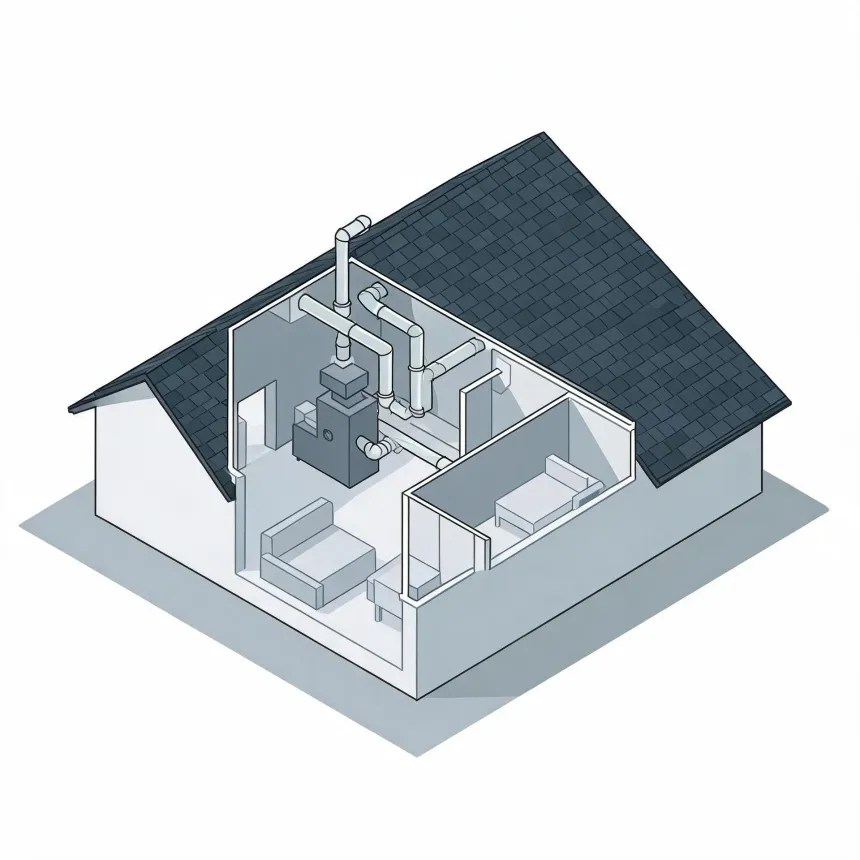
The new furnace goes in roughly where the old one sat, so the gas line, the flue, and the duct connections line up without rerouting everything. A contractor dry fits it first, checking that the flue pitch is right and the gas line reaches without a makeshift joint. Once it's set, the flue gets connected and sealed, the gas line gets hooked up and checked for leaks, and the ducts get sealed to the cabinet so air isn't leaking out at the connection before it ever reaches a vent. Then it's wired to the thermostat and the power runs through startup. A combustion analyzer gets used to check the burn, because a furnace can look like it's running fine and still be burning the gas wrong. Before anyone leaves, it runs through a full heating cycle while someone watches for the blower to kick on at the right point and the flame to look even across the burner.