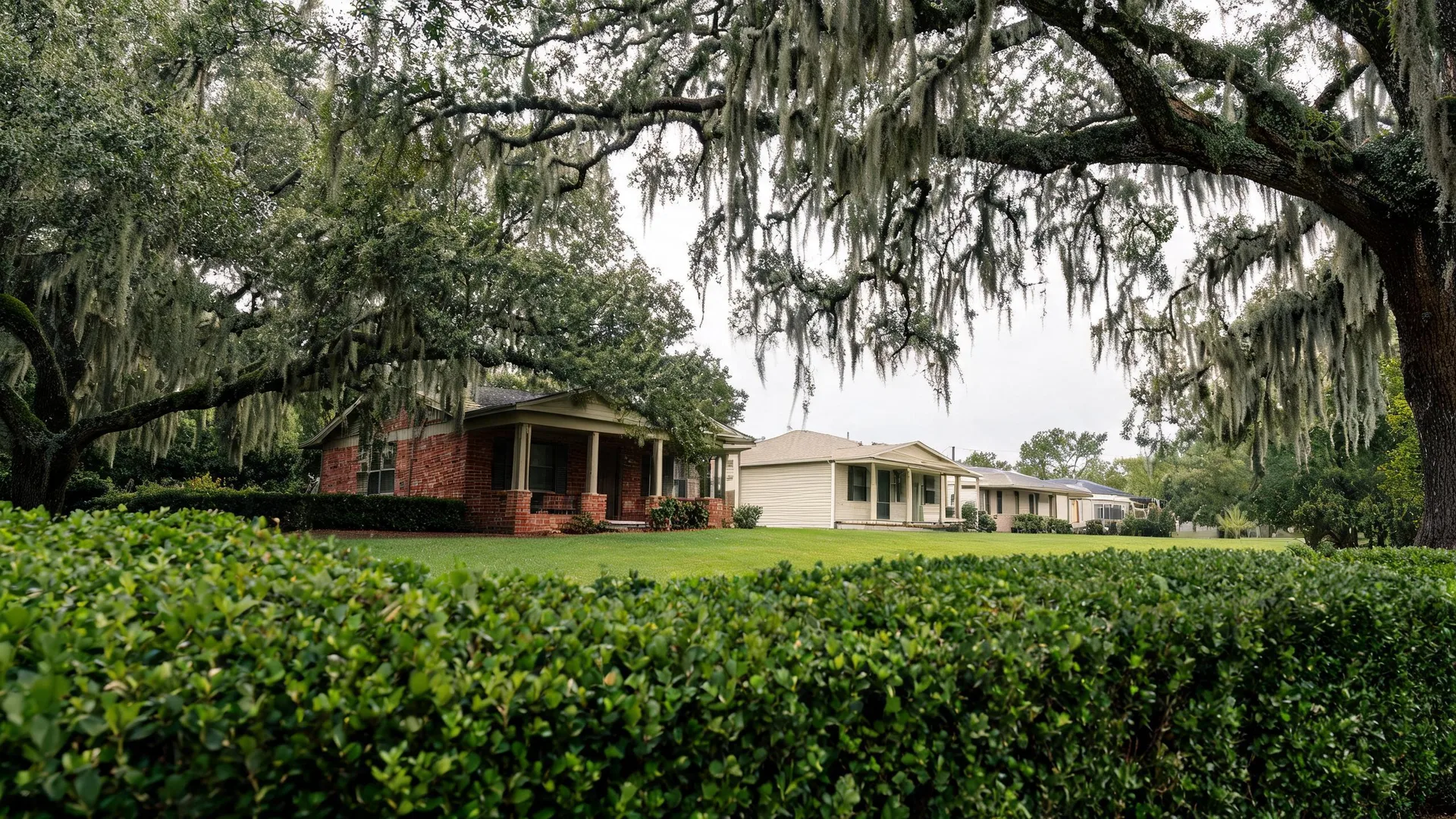





A single-story brick house with a covered porch sits on a mown lawn behind a long trimmed hedge, framed by large oak branches draped with hanging moss, with additional light-colored houses in the background under an overcast sky.

Heat Pump Repair in Mountain Home, AR

Tell us about the job

Takes about a minute. No obligation.

RepairHeat PumpBaxter County, AR
Step 1 of 2

What ZIP code is the job in?

A heat pump that needs a part here and there is still worth fixing, especially if the compressor and the coils are sound. What changes the math is the compressor itself. That's the heart of the system, and if it's failing, you're often better off putting money into a new unit than into a compressor swap. Age matters too, not because a number says so, but because a system near the end of its life tends to need the next part, and then the next one after that. If a contractor tells you the refrigerant it uses is being phased out, ask about that directly, since it affects what repairs will cost down the line. A heat pump that's short cycling, running constantly, or blowing air that isn't warm enough in winter or cool enough in summer is telling you something specific, and a tech can usually trace it to one cause rather than guess.

7 months
October through April, your system heats
5 months
May through September, it cools
28°F
the average winter night it heats against
88°F
the average summer afternoon it cools against
Isometric cutaway illustration of a small house showing interior ductwork and an air handler connected by lines to an outdoor condenser unit on a pad beside the building.
Your system heats October through April and cools May through September.

NOAA nClimDiv, 1991–2020 normals

A heat pump running with a refrigerant leak keeps pulling oil out with the charge.

Low oil wears the compressor faster, so the longer it runs low on charge, the more likely the compressor is what fails.

October and May are when a weak heat pump quits

Cooling runs May through September
Heat runs October through April
51 damaging wind events from 2015 to 2024

Half the homes in Baxter County were built in 1985 or later. If your house falls on that side, the heat pump likely hasn't been running long enough to wear a compressor out on its own. A system still within its working life is usually worth repairing when something goes wrong, a sensor here, a part there. Mobile homes make up a real share of the housing here too, and those often run smaller packaged units, which is worth knowing if that's your situation.

Get it looked at early

Problems tend to show up in the first weeks of the season, when the load hits a part that was already weak.

Find a contractor
A gray air-source heat pump mounted on a concrete pad next to a house with gray vinyl siding, surrounded by gravel and flanked by green shrubs and white hydrangea flowers.

The hours still add up, just not toward the end yet

A heat pump in a newer house hasn't had years to rack up wear, but it still runs through every season here, not just the hardest weeks of summer and winter. That adds hours fast, so the clock is ticking even on a younger system. If a part fails now, that's usually just a part failing, not the system telling you it's done. Worth checking the data plate or the paperwork from when the house was built or sold, so you and the contractor are working from the actual age rather than a guess.

Check the thermostat first

Make sure it is set to heat or cool as needed and the temperature is actually set past room temperature. If the display looks dim or blank, check the batteries. A heat pump that seems dead sometimes just has a thermostat that lost its setting or its power.
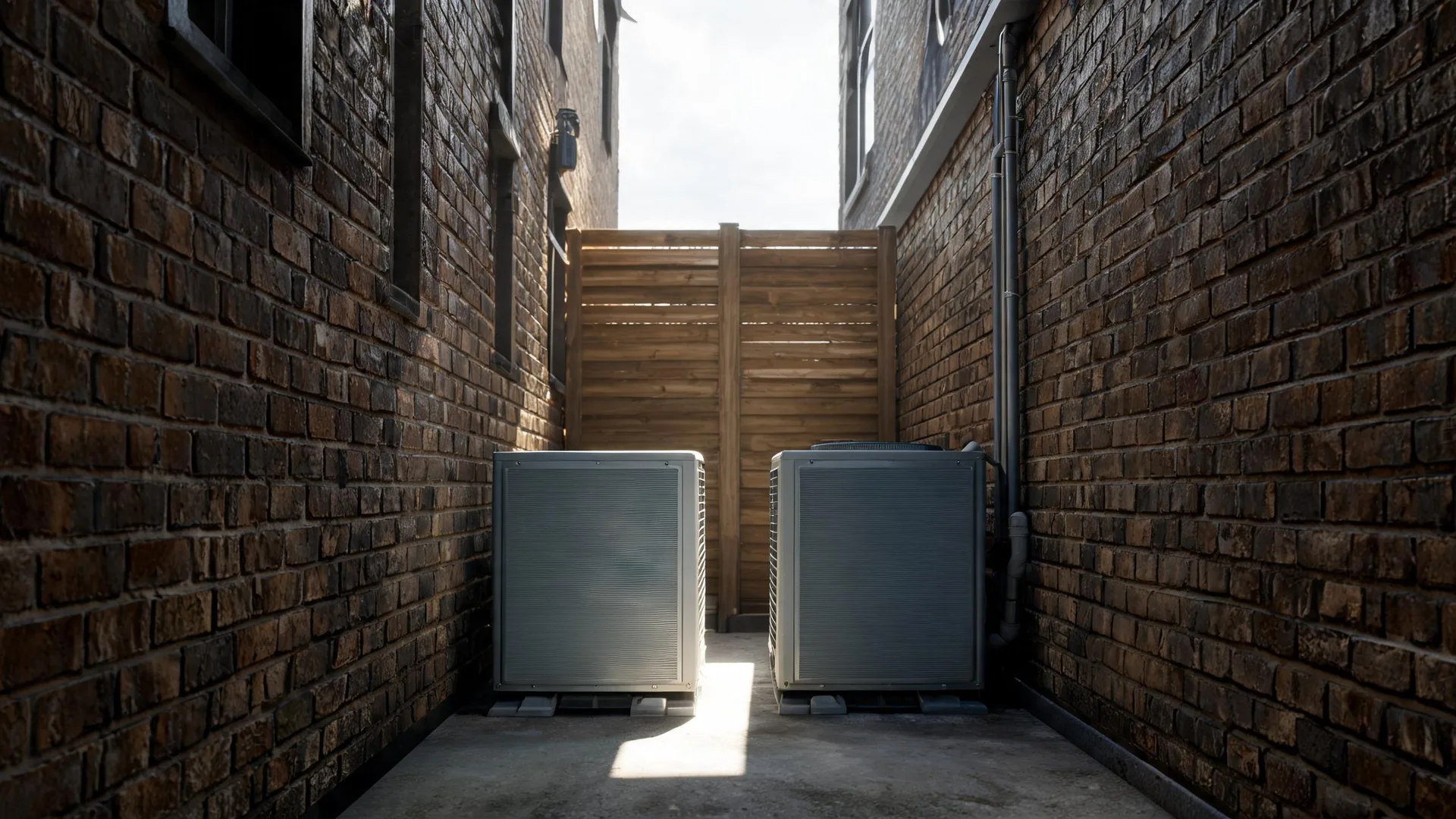
Look at the outdoor unit and the filter

Walk outside and see if the outdoor unit is iced over, covered in debris, or has anything blocking airflow around it. Then check the air filter inside. A clogged filter starves the system of airflow and can make it struggle or ice up. Anything beyond that, refrigerant or electrical parts, is a job for a licensed tech.

Most heat pump failures trace back to a handful of things. The reversing valve sticks, and the system gets stuck in one mode, blowing cold air when you need heat. The defrost sensor or board fails, so frost builds up on the outdoor coil and never clears, and airflow drops until the unit can't keep up. A run capacitor weakens, and the compressor or fan motor struggles to start or draws harder than it should. Low refrigerant, usually from a slow leak at a fitting or coil, makes the compressor work against a charge it doesn't have, and that wears it out faster than almost anything else. Contactors pit and stick from normal arcing over time, and the outdoor unit just stops answering the thermostat's call. None of these mean the system is done. Most are a single part, found and replaced.

A diagnostic visit starts outside, at the unit itself. The tech checks the pressures on both sides of the refrigerant circuit, since that alone rules a lot in or out. Electrical testing comes next. The capacitor, the contactor, the windings on the compressor and fan motor get checked against what they should read, not just whether they run. Inside, the tech looks at airflow across the coil and checks the defrost board and sensor, since a defrost cycle that isn't firing right will mimic other problems. A reversing valve gets tested by watching whether the system actually switches modes when asked, not just by looking at it. Most of this takes less time than people expect, because the readings point somewhere specific rather than leaving the tech guessing.