A single-story brick house with a covered porch sits on a mown lawn behind a long trimmed hedge, framed by large oak branches draped with hanging moss, with additional light-colored houses in the background under an overcast sky.

Heat Pump Maintenance in Mountain Home, AR

Tell us about the job

Takes about a minute. No obligation.

Tune-up, service, or cleaningHeat PumpBaxter County, AR
Step 1 of 2

What ZIP code is the job in?

Wind and hail find the outdoor unit

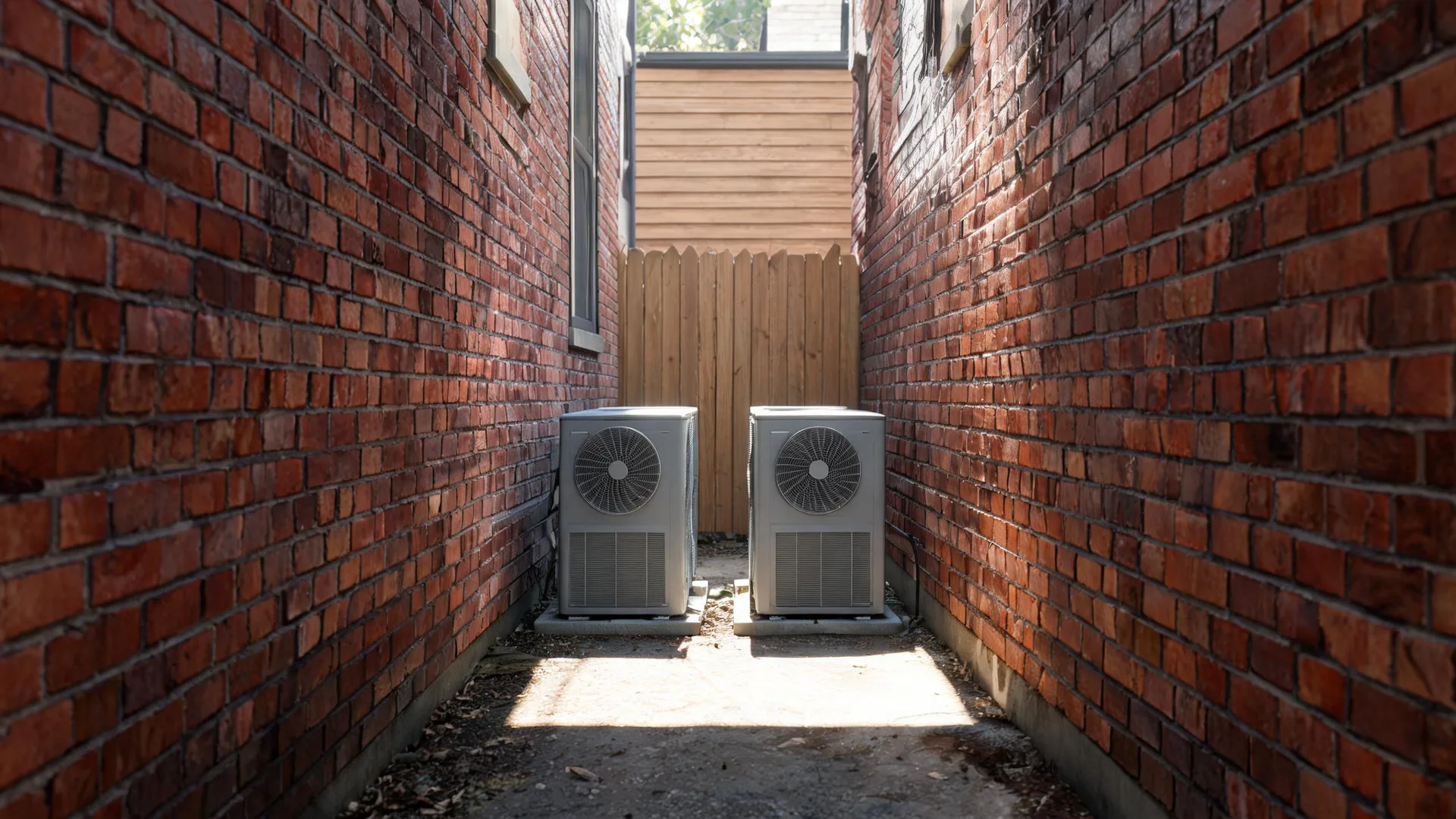
Baxter County saw 114 severe weather events between 2015 and 2024, including damaging wind and hail. That outdoor unit sits outside year round, and both wind and hail reach the coil and the fan. Tornadoes touched down in the same stretch, so the range of what comes through is wide.


A heat pump has no backup to switch to

Your heat pump is how you get both heat and cooling. Nearly a quarter of Arkansas households went without power for a day or more in 2024. A furnace shares the house with a water heater that might run on gas. A heat pump has nothing else to fall back on, so what shape it's in before a storm matters more.

Heat pumps here start working hardest in October, when heat season starts.

Have it checked in September, before that first cold month asks everything of it.

Half the homes here were built by 1985, and a lot of those heat pumps are younger than the house

Half the homes here were built by 1985
Climate zone 4A
Power costs 12.32 cents a kWh statewide

Once a year is enough for this. Baxter County asks a lot of a heat pump, heating through the winter and cooling through the summer with no season off, and on top of that it sits outside through wind, hail and the occasional ice storm. A yearly check doesn't need to be more than that. One visit catches a coil that's taken a beating, a refrigerant charge that's drifted low, or a part that's wearing out before it fails on the coldest night of the year. Skip it and the system still runs, until the day it has to work hardest and doesn't.

Get the outdoor unit looked at before the next storm finds it

Have the outdoor unit checked for hail dents, bent fins or debris before the next storm comes through. A tech can clear what's built up and catch damage early, while the system still has a chance to get through winter without failing on you.

Find a contractor
A man in a dark jacket, cap and tan work pants carries a canvas tool bag up stone steps toward a navy front door, with a potted shrub beside the entry.
A dark gray heat pump unit mounted on a concrete pad next to a house with gray siding and a stone veneer wall.

A newer system is still worth the yearly check

A heat pump installed with a newer home still has a working life to protect. The yearly check is how you get the full stretch out of it, catching a problem while it's still small enough to fix on a schedule instead of in an emergency call during the first cold snap.

Keep the area around the outdoor unit clear

Leaves, grass clippings and anything stacked against the cabinet block airflow across the coil. Keep a couple feet of open space on every side and pull out anything growing up against it. If a storm drops branches or debris on top of it, clear that off too.

Change or clean the air filter

A dirty filter chokes airflow on both the heating and cooling side, since a heat pump pushes air through the same ductwork either way. Check it monthly and swap or wash it once it looks gray or clogged. This is the one thing between visits that actually changes how hard the system has to work.

Skip the yearly check and the first thing to go is usually efficiency, quietly, before anything actually breaks. A coil caked with dirt can't give up heat the way it should, so the system runs longer to do the same job. Refrigerant that's drifted low makes the compressor work harder than it was built to run. None of this announces itself. The system keeps heating, keeps cooling, right up until the strain catches up with something that stops working at all. What maintenance catches is the small stuff while it's still small. A weak capacitor. A contactor with pitted points. A coil that needs a real cleaning instead of a rinse. Left alone, those are exactly the things that pick the worst possible day to fail.

A real tune-up means the panels come off, not just a glance at the thermostat. Outside, the tech cleans the coil, checks the fan motor, and makes sure refrigerant pressure matches what the system calls for, since a charge that's even a little off makes the compressor work harder than it should. Inside, that means checking the reversing valve, the part that lets a heat pump switch between heating and cooling, along with the electrical connections and the condensate drain. They'll test the capacitor and contactor too, since those are small parts that wear out quietly and take the system down when they finally go. None of this is guesswork. Each reading gets compared against what the manufacturer specifies for that unit, so a tech knows whether something is drifting out of range before it fails outright.