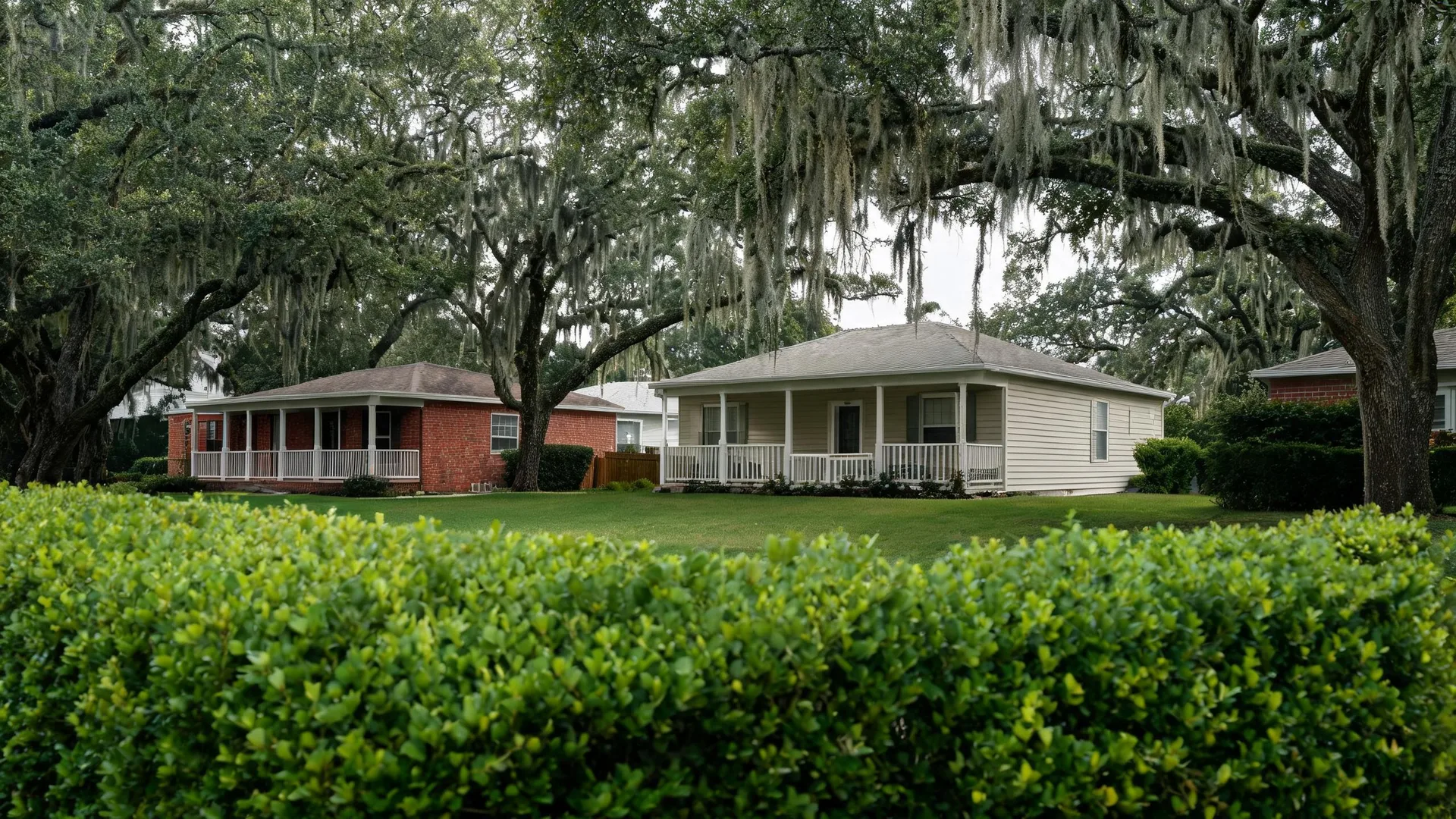





Two single-story houses, one brick and one with light siding, both with covered front porches, set behind a mowed lawn and a tall green hedge under large moss-draped oak trees.

Furnace Repair in Mountain Home, AR

Tell us about the job

Takes about a minute. No obligation.

RepairFurnace or heatingBaxter County, AR
Step 1 of 2

What ZIP code is the job in?

Before you call anyone, check the thermostat is set to heat and the temperature is set above room temperature. Sounds obvious, but a thermostat bumped to the wrong setting is an easy fix nobody wants to admit to. Next, go look at the filter. A filter packed with dust chokes airflow, and some furnaces will shut themselves down rather than run with it blocked. Check the breaker panel too. A tripped breaker or a switch knocked off near the furnace itself will stop it cold, and both are safe to check and reset yourself. If you smell gas, skip all of this and get out of the house, then call your gas utility. If none of that gets it running, the problem is inside the unit, and that's a job for someone with tools and training.

7 months
October through April, your furnace is on duty
28°F
the average winter night it heats against
13 winter storms
in ten years, the nights a failure hurts most
Isometric line illustration of a cutaway single-story house with a shingled roof, showing an interior furnace connected to ductwork and a tall vertical flue pipe, plus simple furniture in the adjacent room.
Your furnace works hardest from November through March.

NOAA nClimDiv, 1991–2020 normals

Furnaces in Baxter County sit idle from April to October.

A furnace that hasn't run in seven months often shows its weak spot in October's first cold snap.

Half the homes here were built in 1985 or later, so a lot of furnaces are still within their years

Half the homes here were built by 1985
Heat runs October through April
Winter nights average 28°F

A furnace that's running costs something to run. The igniter, the blower motor and the control board all draw electricity, and Arkansas households paid $36.10 per million Btu for it in 2024. That number doesn't tell you what's wrong with your furnace. It just matters once you're deciding whether a repair makes sense or a new unit would cost less to run over time. Most furnace problems here are ordinary ones. A failed igniter, a dirty flame sensor, a blower motor on its way out. None of that is specific to Mountain Home. It's the same list a tech checks in any cold climate.

A furnace problem now, not a furnace replacement

Winter here brings overnight lows around 28°F, and the furnace either handles that or it doesn't. Most repairs come down to the same few parts failing, and those get fixed in an afternoon.

Find a contractor
A man in a cap, dark shirt and tan pants carries a worn canvas tool bag up concrete steps toward a dark blue front door with a sidelight window and a large planter beside it.
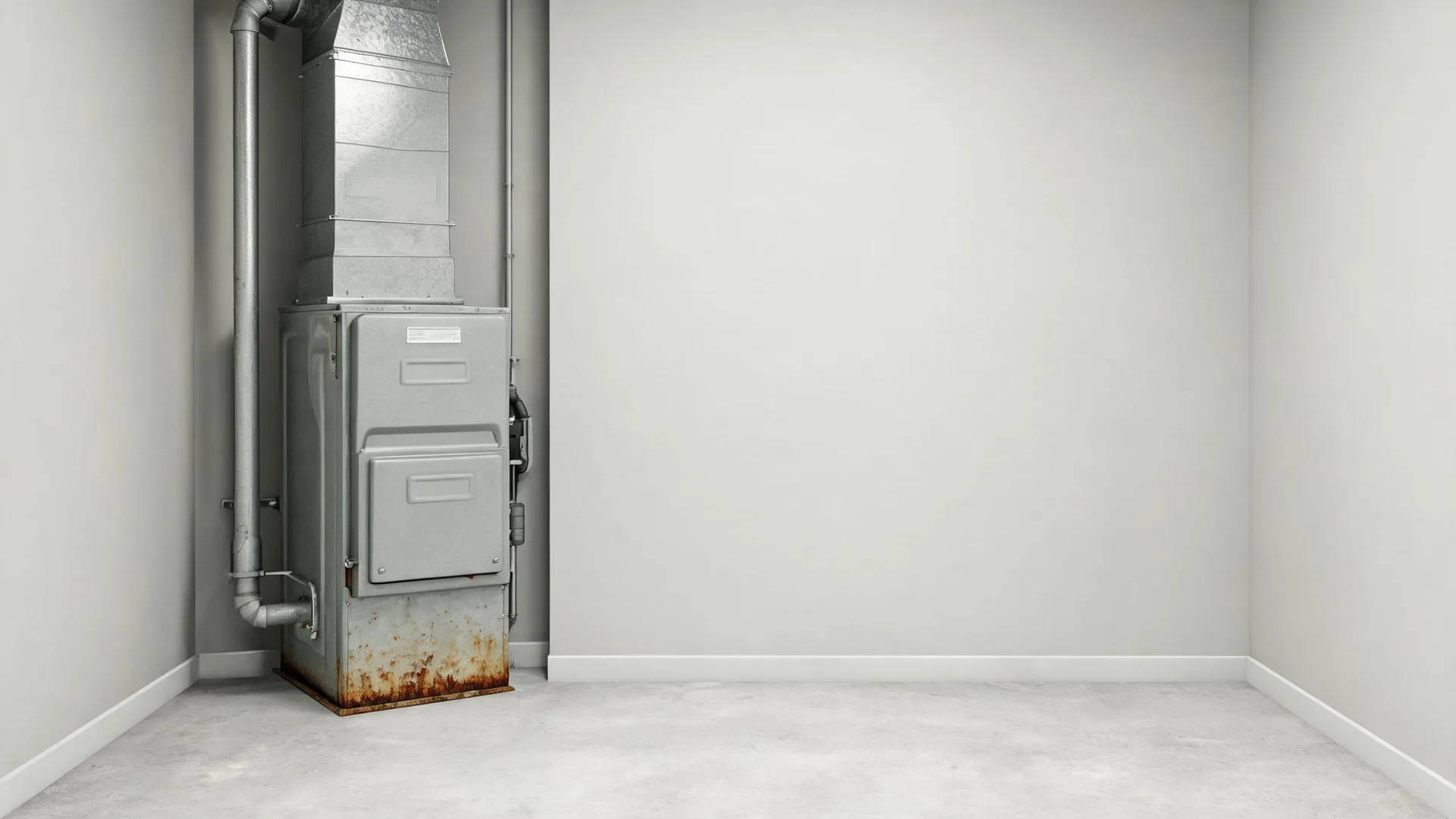
A gray residential gas furnace installed in an unfinished basement, connected to sheet-metal ductwork and PVC pipes.

Know roughly how old the house is before you call

If your furnace came with the house, when the house was built tells you something about the furnace. A lot of houses here went up in 1985 or later, so a lot of furnaces haven't logged the years that wear parts out. Before you decide anything, think about roughly when your house was built, and mention it when you call someone out. That's worth more to a tech than a guess at the furnace's age.

A cracked heat exchanger gets worse, not better

Metal that's already split keeps flexing every time the burners fire and shut off. Running it longer doesn't let it heal. It widens the crack and raises the chance of flue gas getting into the air the blower pushes through the house.
A limping blower motor can burn out for good

A motor straining on a worn bearing or weak capacitor still moves air, just not enough of it. Keep calling on it and the motor overheats and seizes. At that point a repair that could have been one part becomes a motor replacement.

Short cycling is one of the most noticeable signs. The furnace fires up, runs for a couple minutes, then shuts off before the house warms up. That usually points to a flame sensor that's lost its ability to prove the flame, or a furnace overheating because airflow is restricted somewhere. A burner flame that's burning yellow instead of blue is worth paying attention to too. It can mean a dirty burner or a venting problem, and it's not something to wait out since it ties back to how cleanly the gas is burning. A new noise matters as much as a new smell. A bang on startup, a screech from the blower, a rattle that wasn't there last winter, that's the machine telling you a part is wearing out before it fails outright. Warm air that's weaker than it should be, or rooms that used to heat evenly and now don't, often comes down to the blower motor losing strength. Catching the failing part early is almost always the easier repair.

A diagnostic starts before any panel comes off. A tech will ask what the furnace was doing right before it quit, since a bang on startup and a steady loss of heat point to different parts. Then they run it themselves and watch the sequence. Does it ignite. Does the flame stay lit. Does the blower kick in when it should. A multimeter checks what you can't see by eye, like whether the flame sensor is actually reading a flame or the igniter is pulling the current it needs. A static pressure reading shows whether air is moving through the ducts the way it should, which either rules out airflow as the cause or points straight at it. None of this takes guesswork once the furnace is open. It takes knowing which reading matters for what the furnace is doing.