White County sees a lot of severe weather
White County recorded 107 severe weather events between 2015 and 2024, from damaging wind to hail to tornadoes. A heat pump's outdoor unit sits outside year round, exposed to all of it.

Takes about a minute. No obligation.
White County recorded 107 severe weather events between 2015 and 2024, from damaging wind to hail to tornadoes. A heat pump's outdoor unit sits outside year round, exposed to all of it.
Nearly a quarter of Arkansas households were without power for 24 hours or more in 2024. A heat pump needs electricity to run, so it's worth talking through backup options for heat and hot water before the installation is finished, not after the power goes out.

NOAA nClimDiv, 1991–2020 normals
Electricity already heats 63.8% of homes in White County.
A heat pump runs on that same electric service most homes here already have.



At 12.32 cents a kilowatt-hour, Arkansas power costs less than most of the country pays. That changes what's worth asking the installer about. Don't lead with SEER2 numbers or lifetime savings projections. Ask how the unit holds up through a hard freeze, what happens to heat and hot water when the grid goes down, and what the warranty covers on the outdoor unit. A system that runs a little less efficiently but keeps working through a bad storm is worth more here than one that shaves a few dollars off a bill every month.
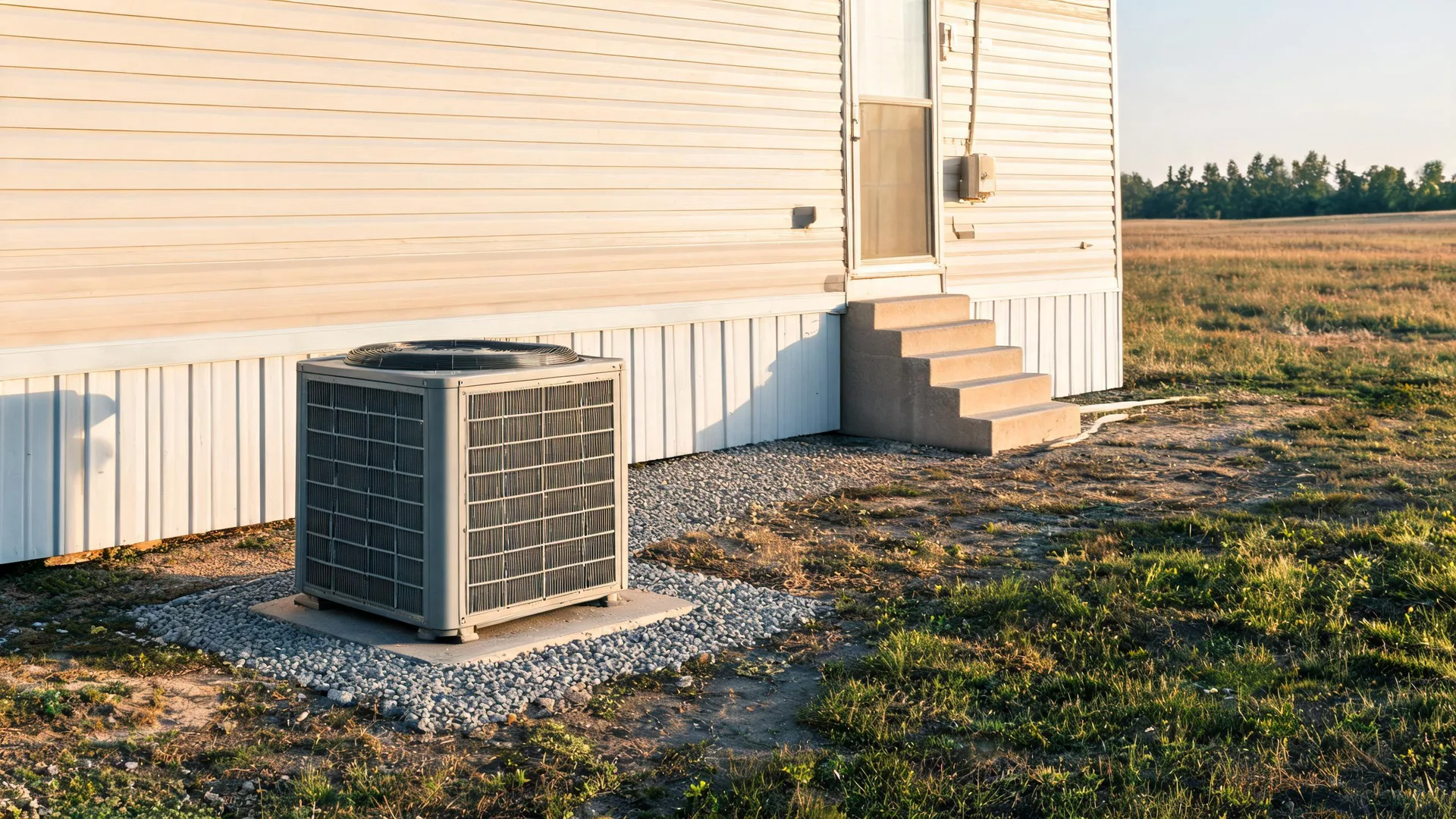
White County has logged 39 hail events between 2015 and 2024. That's worth knowing when you're sizing a unit, but it doesn't call for anything special in the unit itself. A standard size and efficiency fit the job here. Where the money should go is the installation. A solid pad, a cabinet that can take a hit, and a warranty that covers the outdoor unit if the weather does.
Find a contractor
Cooling runs here from May through September, heating from November through April. That leaves April and October open. Get the new heat pump in during one of those months and the installer can take the time a good install needs, pad level, refrigerant charge checked, pad or cabinet set the way it should be. Wait until the first hot week or the first hard freeze and you're asking for next-day work on a unit that has to run for the next five or six months straight.
The installer disconnects the refrigerant lines, the electrical whip and, if there's a furnace paired with the old AC, the gas or ductwork connections. The outdoor unit, the indoor coil and the old air handler or furnace all come out. Most installers include haul away as part of the job, but it's worth confirming before the work starts.
The refrigerant in the old system can't just be released into the air. A licensed installer uses a recovery machine to pull it out and store it properly before the lines get disconnected. This is standard practice and part of why the swap takes a trained tech rather than a quick swap job.
A couple of quotes for the same heat pump can land far apart once you know where to look. Ask each installer how they arrived at the size, not just the number itself. A unit sized off a rule of thumb runs different than one sized off a room-by-room load calculation, and that difference shows up on the first hard freeze. Ask what refrigerant line set they're reusing versus replacing, and whether the indoor coil matches the outdoor unit the way the manufacturer specifies. A mismatched coil will run, but it won't run the way the warranty assumes. Ask what the warranty actually requires to stay valid, since most call for registration and proof of annual service, not just the purchase. And ask who answers the phone if the unit won't start on the coldest night of the year, because that answer matters more than anything on the spec sheet.
Installation day starts with the old equipment coming apart and ends with a startup check on the new one. Once the outdoor unit and coil are set, the installer runs the line set, pulls a vacuum on it, and checks for leaks before any refrigerant moves. Skip that step and moisture left in the lines can damage the compressor down the road. After charging, they check refrigerant levels against the manufacturer's specs for the outdoor temperature that day, not just a gauge reading. They also check static pressure and look at whether the existing ductwork can move the air this unit is rated for. Last comes the startup cycle, run in both heating and cooling, so any wiring or control issue shows up with the installer still on site instead of on the first cold morning.