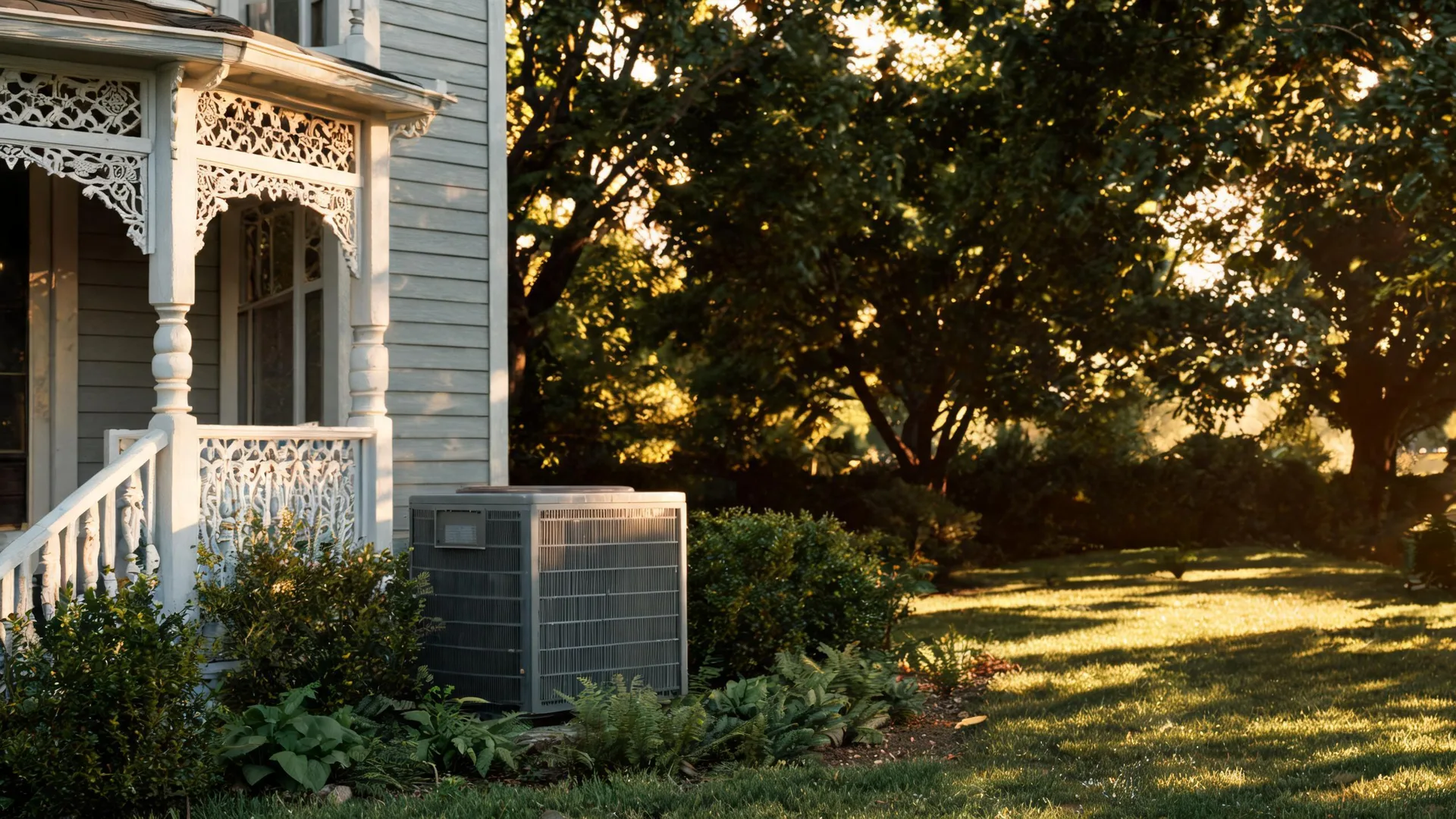
Two seasons, no break
A heat pump in Batesville runs heat from October through April, then switches over and runs cooling from May through September. That's almost the whole year with barely a rest between.
Takes about a minute. No obligation.
A heat pump in Batesville runs heat from October through April, then switches over and runs cooling from May through September. That's almost the whole year with barely a rest between.
September is the last calm month before heat starts in October. April is the last calm month before cooling starts in May. Book the check then, not after the system is already working hard.
A heat pump that never gets checked keeps running on a dirty coil and a weak refrigerant charge.
The compressor has to work harder to make up for both, and that's what wears it out early.



It starts running hard in the first month of the season here. Book the check the month before.
Find a contractorA tune-up starts with a look inside the cabinet, not just a glance at the thermostat. A tech pulls the panel and checks the contactor points, because a pitted contactor runs the compressor hot without ever tripping anything. The refrigerant charge gets checked against what the system is supposed to carry, since a charge even a little low makes the compressor work to move heat it can't fully move. The coil gets inspected on both sides, because a coil caked with dust or lint loses its ability to transfer heat and nothing on the thermostat tells you that's happening. Belts aren't part of the story on this kind of equipment, but bearings and the run capacitor are, and a weak capacitor will let a motor start hard for months before it finally fails to start at all. None of this shows up as a symptom you'd notice from the couch. The system still turns on, still blows air, still seems fine, right up until the part that was quietly struggling gives out.
A quick visit checks the filter and glances at the thermostat readout. A thorough one pulls the panel, puts gauges on the lines, and checks the contactor and capacitor by hand instead of guessing from how the system sounds.
Skip the gauges and a low charge goes unnoticed. Skip the contactor check and a pitted one keeps running the compressor hot until it fails outright. The system still looks serviced. It just hasn't been.
The filter is the cheapest insurance this system has. Once it loads up with dust, airflow across the indoor coil drops, and a heat pump moving too little air starts losing capacity in both directions, heat and cooling alike. The outdoor coil has its own version of the same problem. It sits outside collecting leaves, grass clippings and plain dirt, and once that builds up the coil can't reject or pull heat the way it's supposed to, so the compressor runs longer to do the same job. The drain matters for a different reason. Indoors, the coil pulls moisture out of the air, and that water has to leave through the drain line. Let it clog and the pan backs up, sometimes slow enough that nobody notices until there's water where it shouldn't be. None of this announces itself. The system just quietly asks the compressor to work harder until something gives.
A tune-up also covers the reversing valve, since that's the part that lets a heat pump switch between heat and cooling, and a valve that sticks will leave the system blowing the wrong temperature air or stuck in one mode until someone notices. The tech checks refrigerant line insulation too, because bare or crushed insulation on the suction line makes the compressor work to maintain the charge temperature it needs. Defrost control gets checked as well. A heat pump is supposed to sense frost on the outdoor coil and briefly reverse to melt it off, and a defrost board or sensor that's failing will either skip defrost entirely, icing the coil solid, or run it too often, wasting the cycle it just finished. Electrical connections at the outdoor unit get tightened, since a loose connection heats up under load and that heat damages the wire insulation around it over time. None of these are things a homeowner can check by looking at the outdoor unit from across the yard.