





White plantation-style houses with wraparound porches lit at night, surrounded by Spanish moss-draped live oak trees.

Heat Pump Maintenance in Cabot, AR

Tell us about the job

Takes about a minute. No obligation.

Tune-up, service, or cleaningHeat PumpLonoke County, AR
Step 1 of 2

What ZIP code is the job in?

Between visits, check the air filter and change it when it looks gray or clogged. A dirty filter is the biggest thing an owner can control, since it starves airflow across the indoor coil and makes the whole system work harder. Walk outside and look at the outdoor unit too. Keep leaves, grass clippings and mulch away from the sides, and make sure nothing is stacked against it or growing into the fan on top. After a freeze, glance at the outdoor coil for a heavy, solid coating of ice, since a thin frost is normal but thick ice means something is wrong. Inside, keep supply vents and return grilles open and clear of furniture or rugs. None of this replaces a real inspection of the refrigerant charge or the electrical components, but it keeps the system breathing freely until a tech gets eyes on it.

A clogged filter chokes the indoor coil until it can't pull heat out of the air at all.

Clean the coils and clear the drain and the heat pump moves heat instead of fighting to.

Half the heat pumps in Cabot are still young enough for a checkup to matter

Half the homes here were built by 1997
54 hail events from 2015 to 2024
Power costs 12.32 cents a kWh statewide

A heat pump works year round here, so there's no slow season to catch problems before they matter. October is the month to get it looked at before heat starts in November, and April before cooling starts in May. Book it in October and the same visit can catch what the system needs before the cold hits and before it has to reverse and start pulling heat from outside air near freezing. Wait until the first cold snap and you're calling after it's already struggled through a night it wasn't ready for.

Storms hit Lonoke County often. Make sure your heat pump can take it

Lonoke County saw 159 severe weather events in the last ten years, between wind, hail and tornadoes. The outdoor unit sits outside through all of it, exposed to hail and flying debris. Statewide, close to a quarter of households lost power for a day or more in 2024, and a heat pump needs to come back on and run right once power returns. A maintenance visit now catches bent fins, a cracked fan blade or loose wiring before the next storm finds them first.

Find a contractor
A man in a dark cap, navy T-shirt and tan work pants, seen from behind, carries a canvas tool bag up porch steps toward a dark blue front door, with a potted shrub in a blue planter to the right.
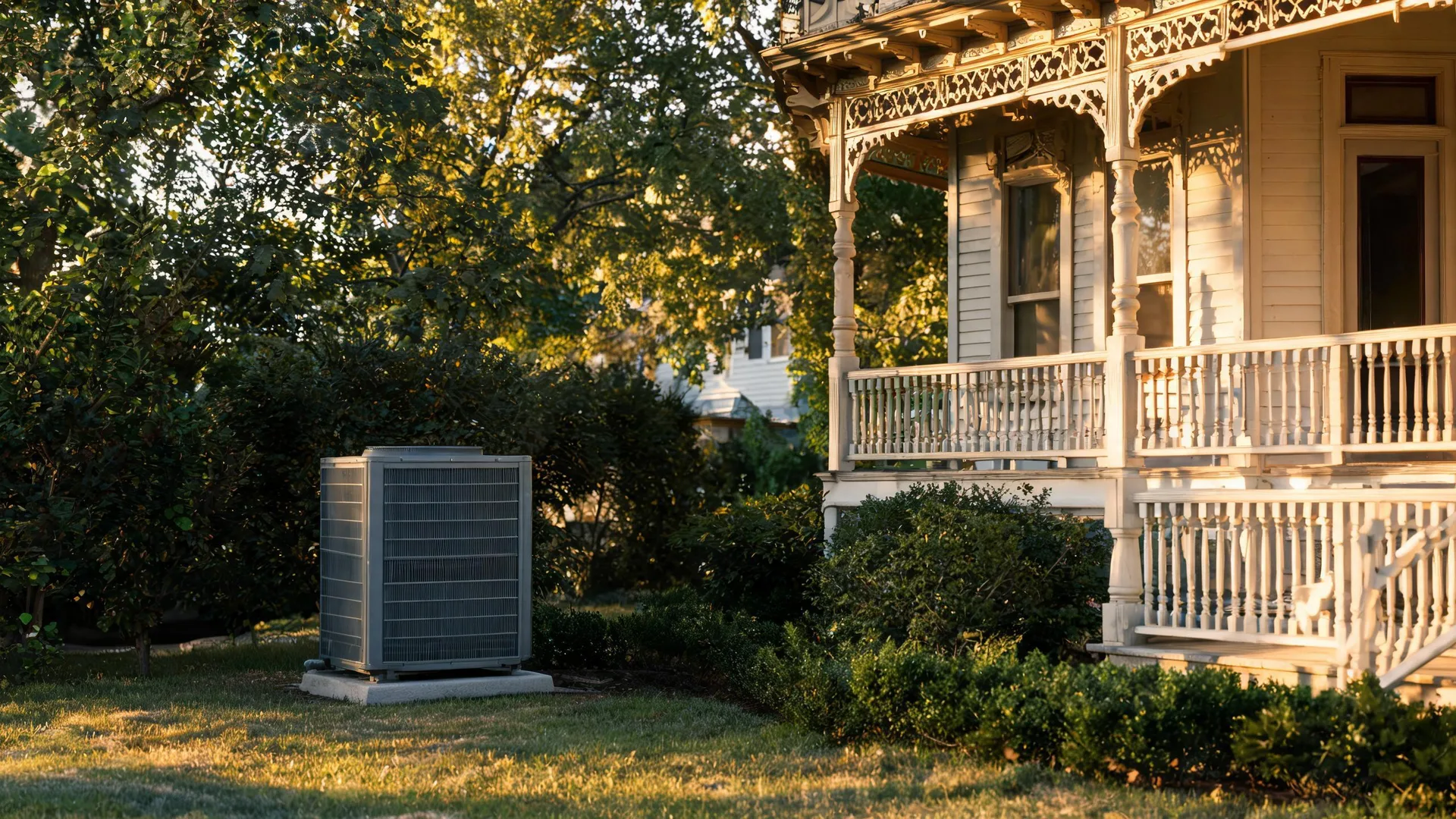
A gray heat pump outdoor unit mounted on a concrete pad next to the stone-accented exterior wall of a house.

A real tune-up runs the system both ways, not just one

A quick visit and a thorough one can look the same from the kitchen window. The difference is whether the tech actually runs the system through both modes or just glances at it idling in one. Checking refrigerant pressure with gauges takes real time, and so does washing the outdoor coil instead of rinsing the dust off the top. A tune-up that skips switching the heat pump into both heat and cool, start to finish, hasn't tested the one part most likely to fail without warning. Ask what was checked and what the readings were. If the answer is vague, the visit probably was too.

A sticking reversing valve hides until it has to move

The valve that switches a heat pump between heat and cool sits idle most of the time. If it's gummed up or starting to stick, nothing shows it on the days it isn't asked to change direction. The day the system needs to switch over, it either doesn't, or it switches and won't switch back.
Low refrigerant never corrects on its own

A heat pump low on charge keeps running low. It moves less heat than it should and leans harder on the compressor to make up the difference. Left alone long enough, that's what turns a simple top off into a compressor replacement.

A heat pump that needs a look doesn't always announce it. Run times stretch out, and the system cycles on for longer or more often than it used to just to hold the same temperature. Air coming out of the vents feels cooler than it should on heat, or warmer than it should on cool, even though the system is running. Ice builds up on the outdoor unit and doesn't clear on its own during the defrost cycle. The outdoor fan or compressor gets loud, or starts making a sound it didn't make before. Any of these is worth a service call on its own. Together, they mean the system is already working harder than it needs to.

A real tune-up starts with the electrical side. A tech checks the capacitor's strength, tightens connections in the disconnect box and at the contactor, and looks for wiring that's chafed or scorched from heat. Refrigerant charge gets checked against what the system calls for, not just topped off by feel. The outdoor coil gets washed clean, since dirt on those fins acts like insulation and keeps the system from giving up or pulling in heat the way it should. Indoors, the tech checks the blower wheel for dust buildup and confirms the condensate drain is clear, because a clogged drain backs up into the pan and sometimes into the house. On a heat pump specifically, the reversing valve gets tested in both directions, not just looked at, since that's the part most likely to fail quietly.