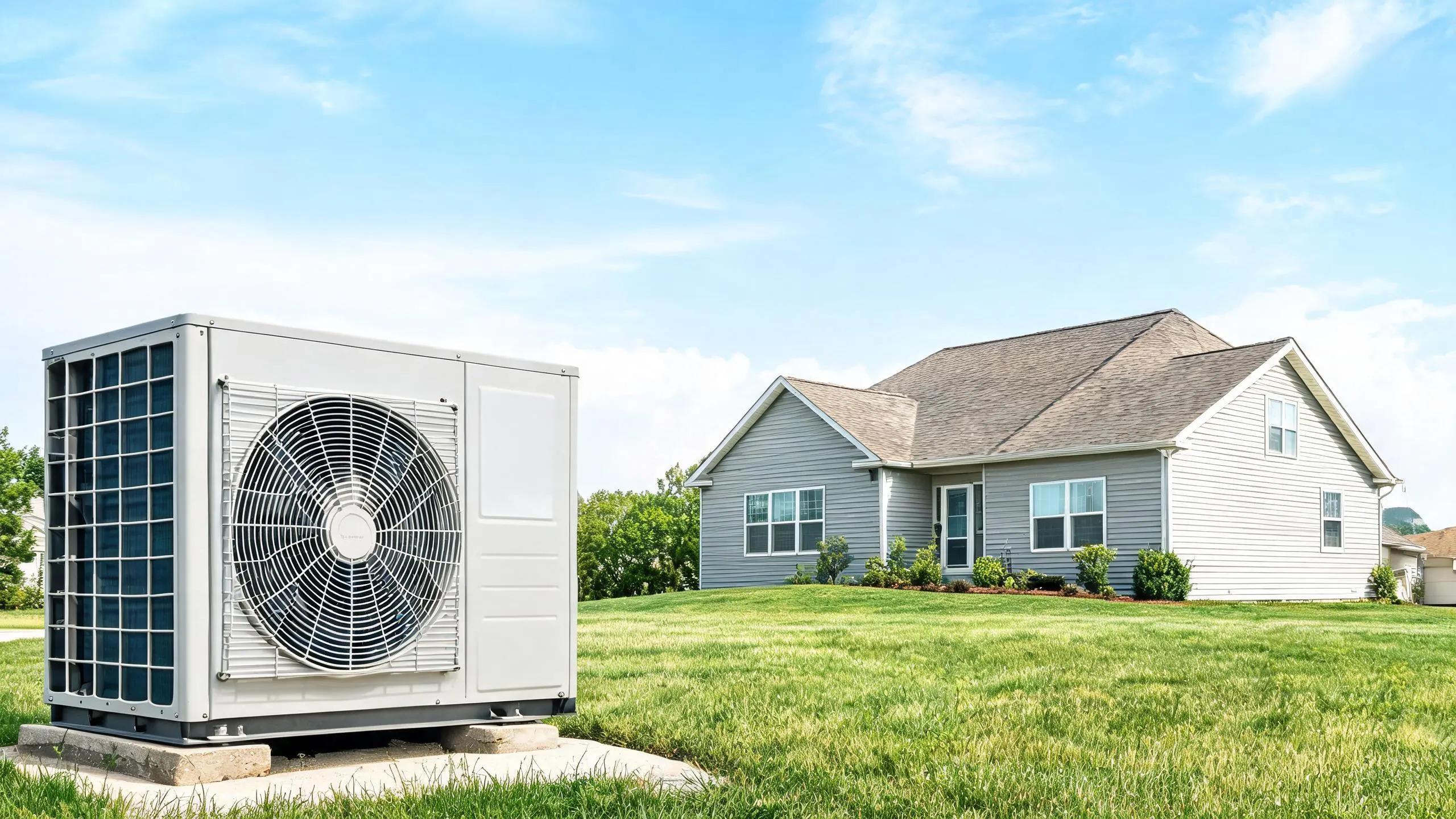
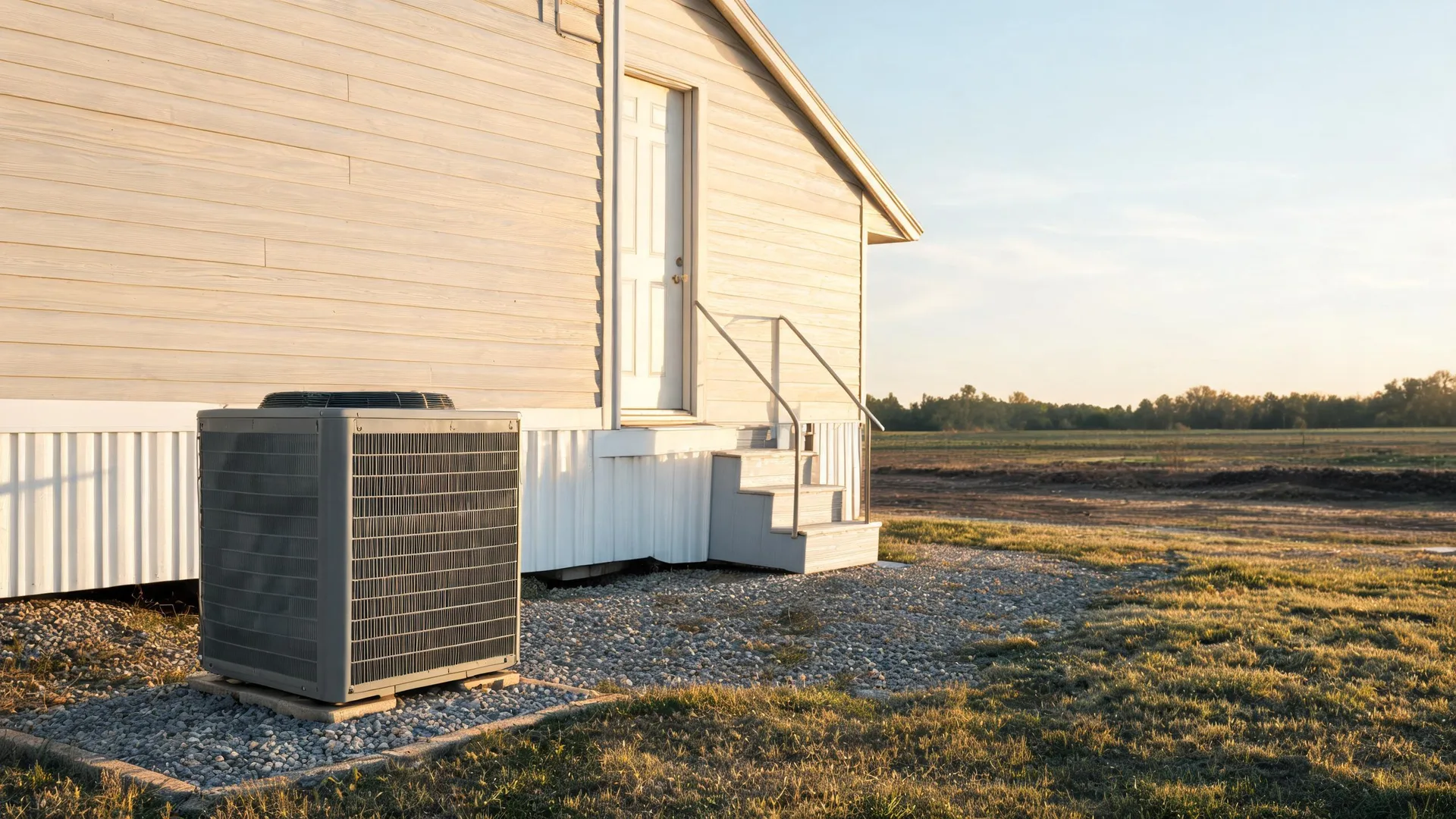
A tune-up starts outside, at the outdoor coil. Dirt and grass clippings build up between those fins where you can't see it, and once airflow through the coil drops, the system has to work harder to move heat in either direction. A tech will also check refrigerant charge, because a heat pump that's low won't heat or cool the way it should, and the only way to catch that early is to put gauges on it. Inside, the reversing valve gets checked too. That's the part that switches the system between heating and cooling, and when it sticks, you can end up with a unit blowing cold air in the middle of winter. None of this shows up as a strange noise or a smell. It shows up as a system that runs longer than it used to, working harder to do the same job, until the day it stops doing the job at all.
Keep the area around the outdoor unit clear, at least a couple feet on every side.
Grass clippings and leaves pulled against the coil choke airflow faster than anything a tech sees on a visit.
Half these homes are old enough that a yearly check is the only way to know what's changed
Half the homes here were built by 1974Power costs 12.32 cents a kWh statewideClimate zone 3A
Ouachita County has had 62 severe weather events over the last ten years, and 30 of those were damaging wind. A heat pump's outdoor unit sits right in that path. Wind-blown debris can bend a fin or knock the cabinet slightly out of true without leaving a mark anyone would notice from the house. None of that shows up as a problem right away. It shows up months later as a system that's lost some airflow or some charge, working harder than it should. A yearly check catches that before it turns into a breakdown, which is really all this system needs here.
A system left alone doesn't fail quietly, it fails slowly
A heat pump doesn't get a season off. It runs for heat, it runs for cooling, and that reversing valve switches back and forth every time the job changes. Skip the yearly check and nothing fails on day one. The coil stays a little dirtier than it should be, so the system pulls harder to move the same amount of heat. A refrigerant leak that would have shown up on gauges keeps bleeding slowly instead, and the compressor keeps running anyway, doing more work for less effect. That's the part that wears out early when the system runs low on charge for months at a time, and it's the hardest part to replace on its own. None of this announces itself. The unit still turns on, still blows air, still seems fine, right up until the day the compressor can't keep up with how long it's been struggling.
A thorough visit ends with numbers, not a glance
A tech checking refrigerant charge connects gauges and writes down what they read. Checking static pressure means a probe in the ductwork, not a hand held near a vent. A quick visit skips the gauges and goes by feel, and a heat pump can run low on charge for a long time before it actually struggles.
The reversing valve has to be tested, not assumed
The reversing valve can hold a system in heating or cooling even when it's told to switch. The only way to catch a sticking valve is to run the system in both modes during the visit and watch what the air coming out actually does. Skipping that step means finding out on the first cold morning that the system won't get out of cooling mode.
A few signs are worth paying attention to between visits. Warm air out of the vents when the system's set to heat, even right after it kicks on, usually means the reversing valve is slow to switch over. Ice forming on the outdoor unit and staying there instead of melting off during the defrost cycle points to the same valve, or a charge that's run low. A system that used to cycle off and now just runs without stopping isn't doing more work for you, it's struggling to move the same heat it used to move easily. Listen for the outdoor unit too. A new rattle or a hum that wasn't there before usually means something's loose or a motor's bearing is going, and neither gets better on its own.
Inside, the filter is the cheapest thing to check and the easiest to forget. A clogged filter starves the indoor coil of airflow, and that coil needs steady airflow to do its job whether the system is heating or cooling. Once airflow drops, the coil can get cold enough to ice over, and ice on that coil blocks even more air, so the problem feeds itself. The condensate drain matters just as much and gets looked at a lot less. That line carries away the water the indoor coil pulls out of the air, and it's narrow enough that algae or a bit of dirt can clog it over time. A blocked drain backs water up into the pan beneath the coil, and from there it finds the nearest way out, usually down through the ceiling below. None of this takes a gauge to catch. It takes someone pulling the filter and looking at it, and running water down the drain line to see that it still flows.