





Single-story brick and cream-sided houses with covered porches behind a trimmed hedge and lawn, shaded by large oak trees draped with Spanish moss under an overcast sky.

Heat Pump Maintenance in Cherokee Village, AR

Tell us about the job

Takes about a minute. No obligation.

Tune-up, service, or cleaningHeat PumpSharp County, AR
Step 1 of 2

What ZIP code is the job in?

Skip maintenance long enough and a heat pump doesn't fail all at once, it fails a little at a time. The outdoor coil collects dust and film until it can't shed heat the way it should, so the compressor runs longer to do the same job. A clogged filter starves the airflow, and the indoor coil can ice over even when the system is trying to cool the house. A slow refrigerant leak often goes unnoticed because the unit still blows air, just not enough to keep up with the thermostat. None of this trips a breaker or throws an error code. The compressor just works harder than it should, season after season, and by the time the house feels the difference, it's already been struggling for a while.

A heat pump in Sharp County switches over to heat in October and starts cooling again in May.

September and April are when a check catches a weak part before that machine has to run on it for months.

Sharp County weather doesn't push a heat pump harder. One check a year still covers it.

60 severe weather events from 2015 to 2024
24% of homes statewide lost power a day or more in 2024
28 damaging wind events from 2015 to 2024

Book it before the season

It starts running hard in the first month of the season here. Book the check the month before.

Find a contractor
A man in a cap, gray long-sleeved shirt and brown work pants walks up concrete steps toward a dark blue front door, carrying a worn canvas tool bag beside a potted shrub.
A dark gray heat pump unit mounted on a concrete pad next to a house with gray siding and a stone veneer wall.

The filter, the coils and the drain do the quiet work

The outdoor coil, the filter and the condensate drain all work against the same clock. A heat pump moves day after day, year after year, and every hour it runs, air passes through the filter, across the coils, and moisture collects and has to drain off somewhere. A dirty filter chokes that airflow first, and the indoor coil behind it starts picking up dust it would otherwise shed. Once the coil's got a film on it, it can't transfer heat the way it's built to, so the system runs longer to hit the same temperature. The outdoor coil has the harder life, sitting outside through wind, pollen and whatever else settles on it, and it needs clear fins to dump heat in cooling mode and pull heat in heating mode. The drain is the quiet one. It only matters when it's blocked, and then it matters a lot, since water backs up into the pan and can shut the system down or spill where it shouldn't. None of these parts fail on their own schedule. They fail on however long they've gone unchecked.

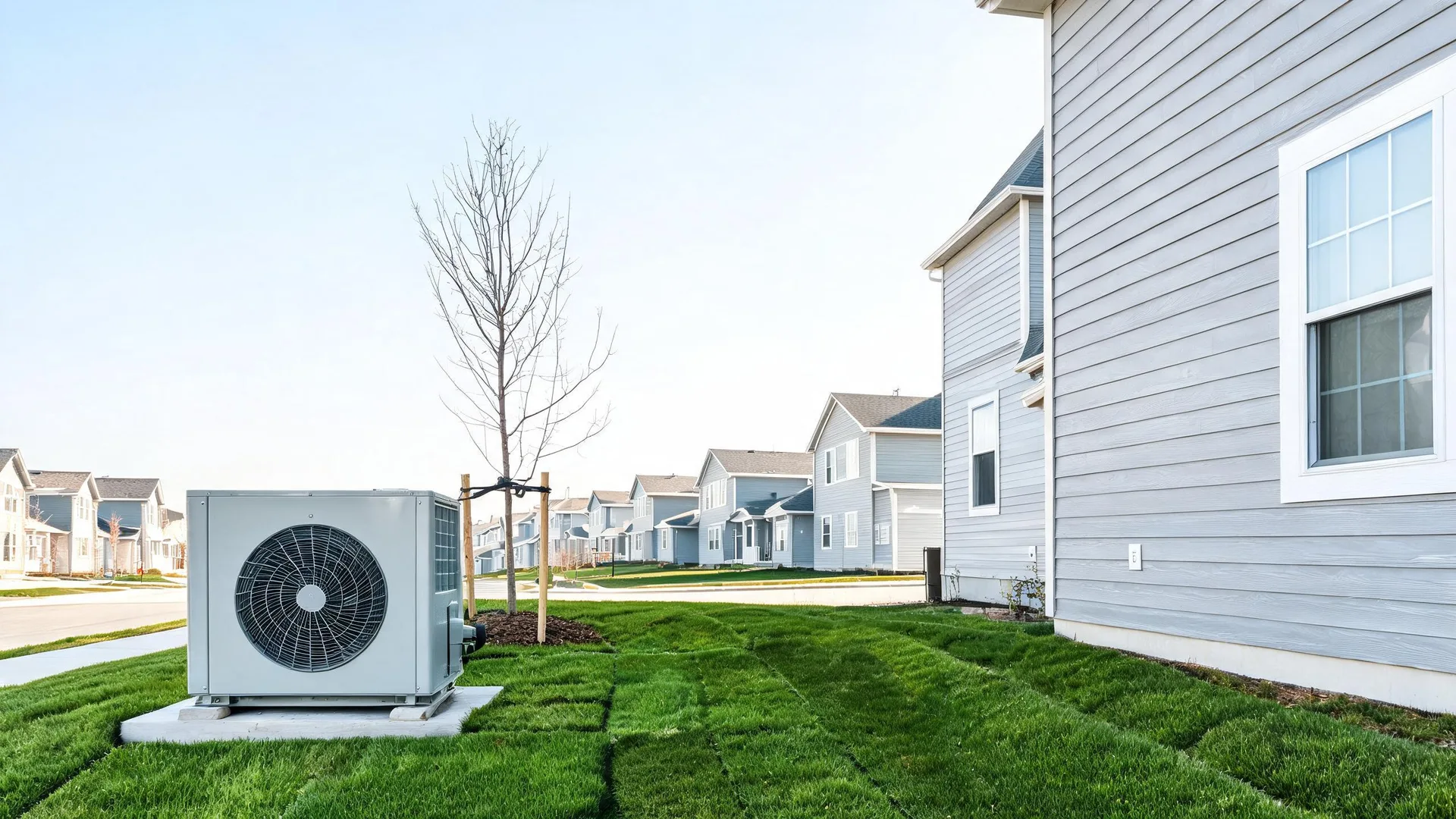
Keep the outdoor unit clear

Keep leaves, grass clippings and anything else from piling up against the outdoor cabinet, and leave open space around it so air can move through the coil. A hose can rinse off loose dirt on the fins from the outside in, but bent fins or anything inside the cabinet is a job for the check, not for the homeowner.
Check the filter, leave the rest shut

Look at the filter monthly and swap it when it's dirty, since that's the one part feeding the whole system and the one thing that's safe to handle alone. The refrigerant lines, the contactor and anything behind the access panel should stay closed up between visits. Opening those doesn't catch a problem early, it just adds a new one.

A quick visit checks that the system runs and the air coming out feels right. A thorough one pulls the panel and looks at what's underneath. That means washing the outdoor coil instead of glancing at it, checking refrigerant pressure against what the system actually calls for, and testing the contactor and capacitor under load instead of just eyeing them for damage. It means pulling the blower wheel to check for dust buildup that cuts airflow even when the filter's clean. A thorough check also tests the reversing valve both ways, since that's the part that lets a heat pump switch between heating and cooling, and a valve that's starting to stick won't always show it on a mild day. If the visit takes about as long as it would to glance at a furnace and call it done, parts underneath likely went unchecked.

A proper tune-up starts outside, with the coil washed clean rather than hosed from the top, since dirt packed between the fins doesn't rinse out from the outside. Refrigerant gets checked against the pressures that system is supposed to run at, not just glanced over, because a unit can be low on charge and still blow cold air while the compressor strains to make up for it. The contactor and capacitor get tested under load, since a capacitor can read fine sitting still and still fail the moment the compressor tries to start. The reversing valve gets run both directions, switching the system into heat and back into cooling, because that's the part that lets a heat pump do both jobs and a valve that's starting to stick can pass a one-direction test and still fail the first cold morning it's asked to switch. The blower wheel comes out for a look too, since dust builds up on the blades themselves even when the filter upstream is clean, and that buildup cuts airflow the same way a clogged filter does. Skip any of that and the visit checked that the system runs, not that it's ready to carry the season.