




Three white clapboard houses with wraparound porches glow with warm interior and landscape lighting beneath Spanish moss-draped oak trees at dusk.

Heat Pump Maintenance in Conway, AR

Tell us about the job

Takes about a minute. No obligation.

Tune-up, service, or cleaningHeat PumpFaulkner County, AR
Step 1 of 2

What ZIP code is the job in?

Faulkner County saw 174 severe weather events between 2015 and 2024, and most of that was wind and hail. Both hit the outdoor unit straight on, since it sits outside with nothing around it for cover. A dented coil or a fan full of debris has to work harder to move air, and it will keep working harder until someone looks at it. Winter storms show up here too, so the cold months carry their own risk. Almost a quarter of Arkansas households lost power for a day or more in 2024, and a heat pump that sat through a storm needs a look before you lean on it again.

Half the homes in Faulkner County were built in 1998 or later.

A heat pump that age still has years ahead of it, and a yearly check is what gets it there.

Heat pumps here work year round, so October and April are when a check pays off

Cooling runs May through September
Heat runs November through April
90 damaging wind events from 2015 to 2024

Check it before storm season

Storm season beats up outdoor units here. Have it checked for damage and debris before you need it.

Find a contractor
A white mini-split heat pump outdoor unit mounted on a concrete pad beside a gray-sided house, surrounded by gravel and green shrubs.

A newer system still needs the yearly check

A system installed new with a house built in 1998 or later still has a long run ahead of it. What decides how much of that run you get is whether someone looks at it every year. The yearly check is where a tech catches a weak capacitor or a refrigerant charge that's drifted low, before either one forces the compressor to work past what it should. A system that age has no business breaking down early. It only does that when years of checks get skipped.

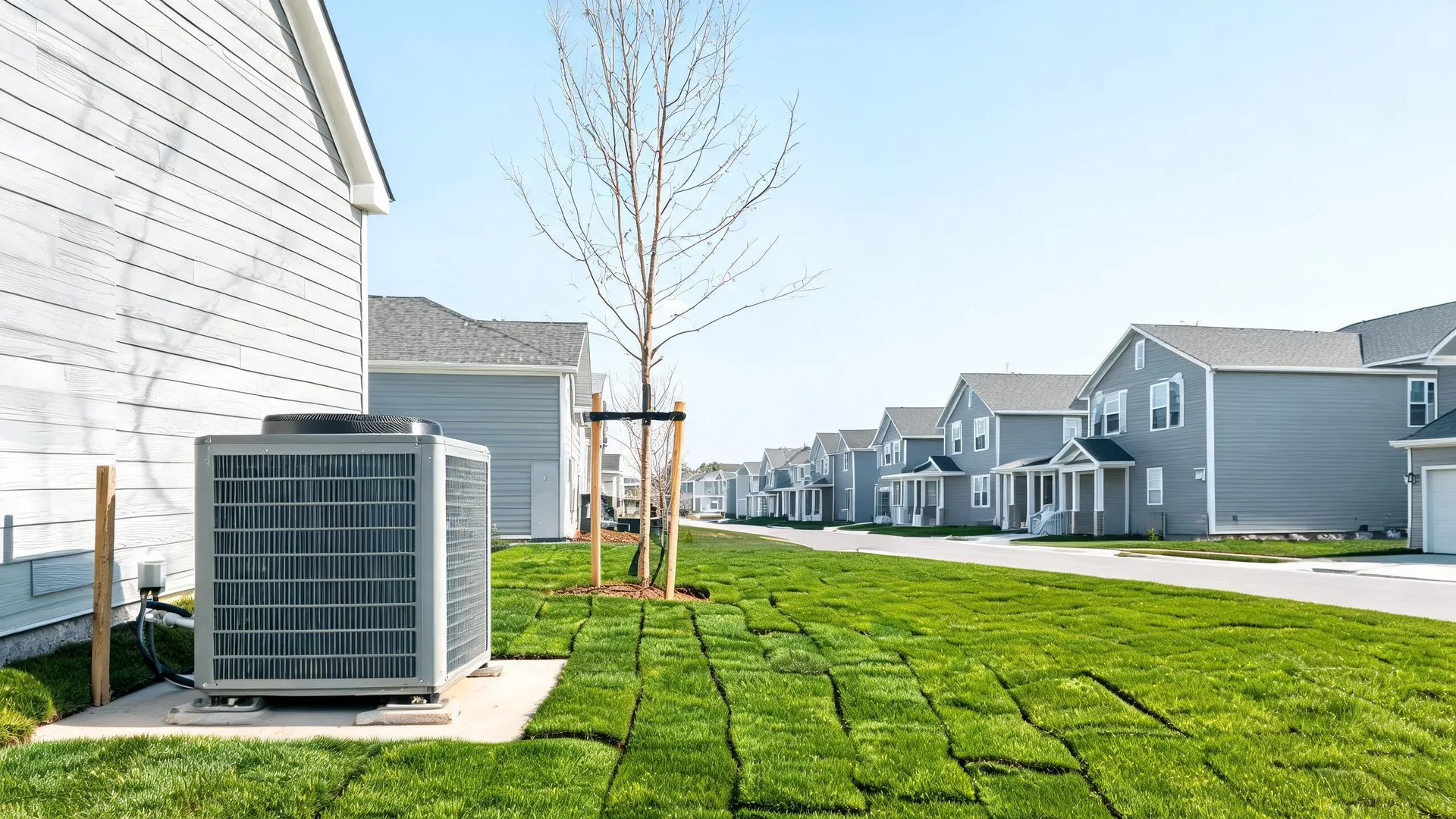
Keep the outdoor unit clear

Grass clippings, leaves, and anything growing up against the cabinet block airflow across the coil. Walk around the unit now and then and pull back anything touching it. A clear foot of space on every side lets it breathe the way it was built to.
Mind the filter and the vents

The filter is the one part of this system you're meant to handle yourself. A clogged filter starves the indoor coil of airflow and makes the whole system work harder to move the same amount of air. Check it monthly and swap it when it looks gray or packed with dust. While you're at it, make sure furniture or rugs aren't blocking the supply and return vents in each room.

A heat pump that never gets checked doesn't fail all at once. The refrigerant charge drifts down a little at a time, and the system keeps running, just harder, to move the same heat. Oil in the compressor breaks down. Contacts in the electrical parts pit and wear from years of cycling on and off. None of that shows up as something you can see. It shows up as a system that runs longer to hit the same temperature, until the compressor seizes or the coil ices over and stops moving air at all. A yearly check catches the drifting charge and the worn contacts while they're still small problems. Skip enough of those checks and the system is still working right up until it isn't.

A proper tune-up starts outside, with the coil and fan. A tech washes the coil clean so it can give up and pull in heat the way it's supposed to, and checks the fan motor and blades for wobble or wear. From there it's the refrigerant charge, checked against what the system calls for. Too little makes the compressor work harder, and too much is just as hard on it. The electrical side gets checked too. Contactors, capacitors and the wiring between them all get a look, since a weak capacitor is one of the more common reasons a heat pump won't start. Indoors, the tech checks the coil, the blower wheel and the drain line, and runs the system in both heating and cooling to make sure it switches over the way it should. A heat pump has to reverse itself to heat a home. That reversing valve is one more thing worth testing before the season that depends on it.