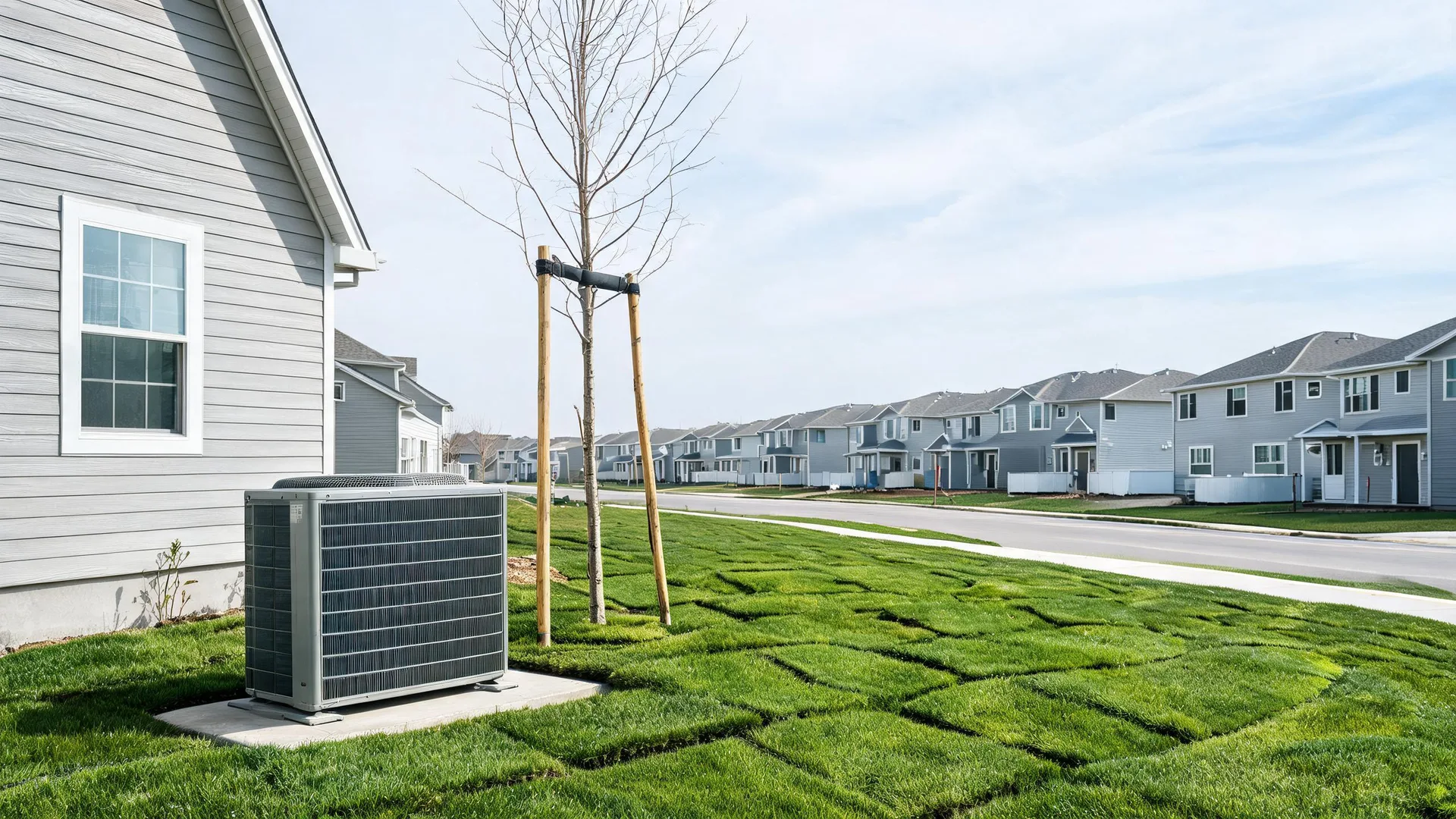
An outdoor heat pump unit mounted on a concrete pad beside a house with beige siding and a landscaped garden bed.

Heat Pump Maintenance in Dardanelle, AR

Tell us about the job

Takes about a minute. No obligation.

Tune-up, service, or cleaningHeat PumpYell County, AR
Step 1 of 2

What ZIP code is the job in?

Your heat pump works both sides of the year here

A heat pump in Dardanelle doesn't get an off season. It runs heat from November through April, then switches over and runs cooling from May through September. That's most of the year on one machine, with only brief changeover stretches to rest.


Book the check before the switch, not after

October is the month before heat starts, and April is the month before cooling starts. A check done then catches a weak part before the system leans on it for months straight, instead of after it's already struggled through a cold snap or a stretch of hot days.

A real tune-up checks the reversing valve in both directions, not just one

A tech who only runs the system in cooling mode never finds out if it heats right

Yell County doesn't give this machine a reason to fail, the weather does that

66 severe weather events from 2015 to 2024
24% of homes statewide lost power a day or more in 2024
43 damaging wind events from 2015 to 2024

Half the homes in Yell County were built in 1984 or later, so a lot of the heat pumps in them haven't had decades to wear down. A newer system still depends on a yearly check to stay that way. The refrigerant charge, the reversing valve, the outdoor coil, all of it can drift out of spec a little at a time without ever throwing an obvious fault. Catching that early on a newer unit means it keeps running efficiently for years instead of losing ground quietly. If your system came with the house, find out its age and get it checked before the season that works it hardest.

Book it before the season

It starts running hard in the first month of the season here. Book the check the month before.

Find a contractor
A man in a cap, gray shirt and brown work pants, seen from behind, carries a canvas tool bag up steps toward a dark navy front door beside a potted shrub.
A white mini-split heat pump outdoor unit mounted on a concrete pad beside a gray-sided house, surrounded by gravel and green shrubs.

The system tells you before it fails

A heat pump that needs a look rarely stops outright. It gives you something smaller first. Air coming out warm in heating mode but not as warm as it used to, or a cycle that runs longer to reach the same setpoint. Frost building up on the outdoor coil and staying past a defrost cycle instead of clearing. A hissing or bubbling sound near the lines, which points to refrigerant that's low. Short cycling, where the system kicks on, runs a few minutes, and shuts off again before it's done anything. Ice on the indoor coil in cooling mode. A reversing valve that clunks or hesitates when the system switches between heating and cooling, or doesn't switch at all. Any of these on their own might not mean much. Together, or left alone, they mean the system is already working harder than it should to do the same job.

The filter and coil work against each other when nobody cleans them

A dirty filter chokes airflow across the indoor coil. The coil gets starved, the system runs longer to move the same air, and in cooling mode that coil can ice over. In heating mode the same restriction makes the system strain to push air through, so it leans harder on the backup heat strip to make up the difference.

A low refrigerant charge doesn't fix itself, it just gets quieter

Refrigerant doesn't get used up, so a system low on charge has a leak somewhere in the lines or the coil. Left alone, the compressor keeps working against a charge that's too low, which wears it down faster than running at the right charge ever would. By the time it's noticeably low, the compressor has already been working harder than it should for a while.

Between visits, the filter is the one thing worth checking yourself. Pull it out, hold it up to a light, and if you can't see through it, swap it or wash it depending on the kind you have. Keep the area around the outdoor unit clear too. Leaves, grass clippings, a stack of firewood too close to the cabinet, anything that blocks airflow into those coils makes the system work harder on both sides of the year. After a storm, take a look and clear off any branches or debris that landed on top of it. Inside, leave the reversing valve, the refrigerant charge and the electrical connections alone. Those need a gauge set and training to check safely, and opening up the cabinet yourself risks a shock or a refrigerant release. If the outdoor coil has frost on it that isn't gone within an hour or so after the system cycles, that's worth a call, not a wait and see.

A real tune-up means hands on the system, not just a glance at the thermostat. The tech pulls the panels and checks refrigerant charge against what the system is supposed to run, because low charge shows up as weak heating or cooling long before it shows up as a leak you can see. The electrical connections get checked too, since a loose one heats up over time and can take out a contactor or a capacitor. The outdoor coil gets cleaned, not just looked at, because dirt and matted debris between the fins cut airflow the same way frost does. The condensate drain gets cleared so it doesn't back up later. And the reversing valve gets run both ways, heating and cooling, because that's the part that fails quietly and only shows itself when the season already needs it working.