




A lit antebellum-style two-story house with white columns and a wraparound porch at night, framed by live oak trees draped in Spanish moss.

Heat Pump Maintenance in Fort Smith, AR

Tell us about the job

Takes about a minute. No obligation.

Tune-up, service, or cleaningHeat PumpSebastian County, AR
Step 1 of 2

What ZIP code is the job in?

Sebastian County logged 206 severe weather events between 2015 and 2024, counting damaging wind, hail and tornadoes. A heat pump's outdoor unit sits outside year round, right in the path of all of it. Hail can dent the cabinet and bend the fins on the coil. Wind-driven branches and debris can do the same. That kind of damage is easy to miss until the system has to run hard on a very cold or very hot day. Maintenance is when a contractor gets eyes on the coil and cabinet and catches it before then.

Your heat pump switches to heating in November and runs through April.

Have it checked in October, so storm damage from the months before gets caught before the cold sets in.

122 days of wind and 61 of hail a year, this unit sits through all of it

122 damaging wind events from 2015 to 2024
61 hail events from 2015 to 2024
Power costs 12.32 cents a kWh statewide

Half the homes in Sebastian County were built in 1981 or later. If yours is one of them, there's a good chance your heat pump is newer too, with most of its working life still ahead of it. A yearly check is what keeps it on that track. Left alone, a loose electrical connection or a slow refrigerant leak can wear on a compressor for years before the system finally fails on a hard winter morning. Caught early, the same issue is a small repair. The newer the equipment, the more a yearly visit is just upkeep, not a rescue.

Have your heat pump checked before storm season catches up with it

Get the outdoor unit looked at before the next round of storms finds the damage for you.

Find a contractor
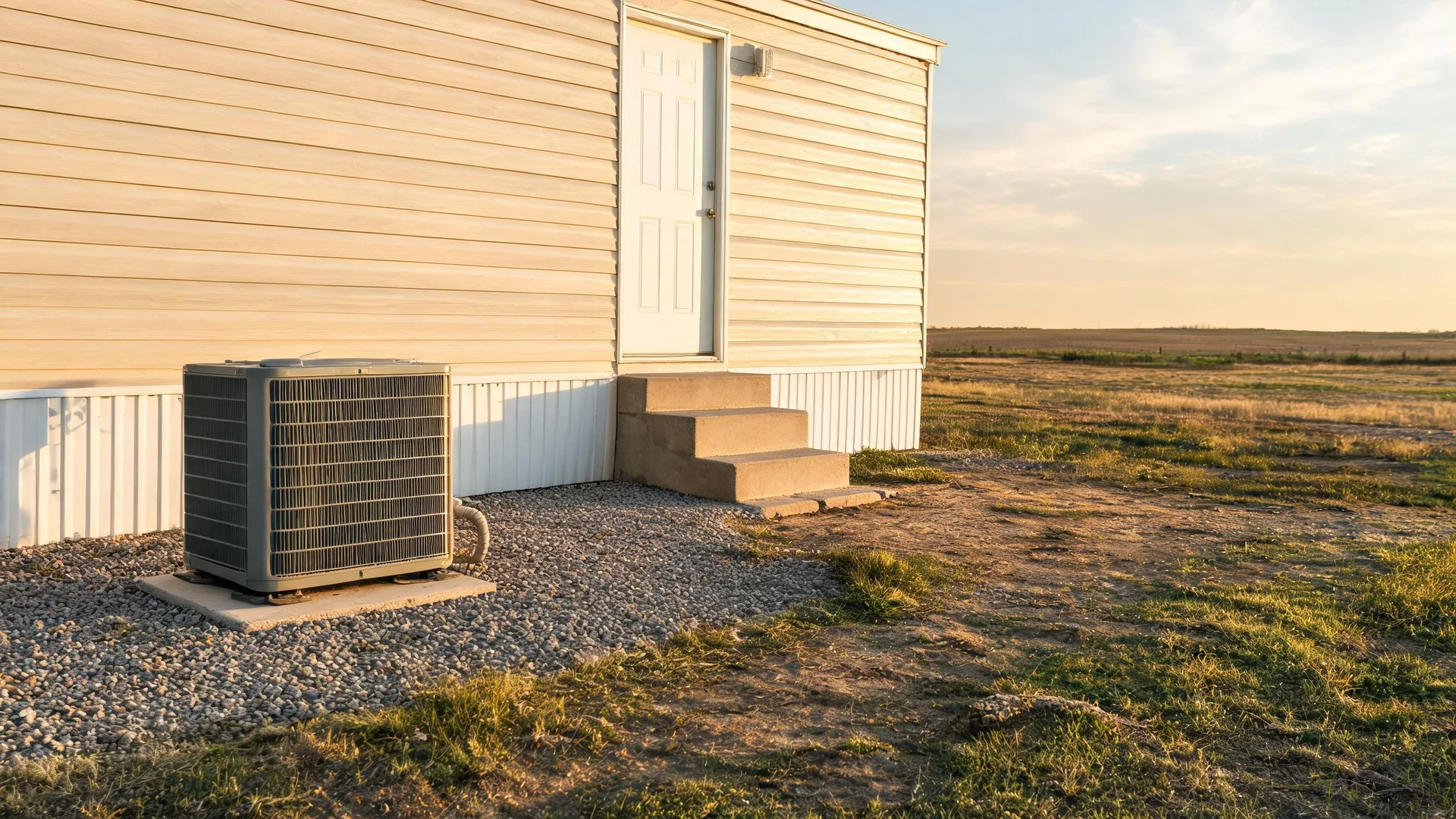
A gray outdoor HVAC unit mounted on a concrete pad beside a house with gray lap siding and a stone foundation.

Keep a newer system on track with a yearly check

Put a yearly check on the calendar now, while the system is new enough that it's upkeep and not a rescue. A contractor can test the refrigerant charge and tighten electrical connections before either one turns into a bigger problem. The same visit is what catches a compressor starting to strain months before it would otherwise quit on you.

The refrigerant charge gets measured, not guessed

A heat pump low on refrigerant can still blow air and still switch between heating and cooling, so there's no way to tell from inside the house. A gauge set on the lines during a tune-up shows the charge is off before the compressor has to work harder for it. Left that way, the compressor is what wears down.
The reversing valve gets tested in both directions

The reversing valve is what switches a heat pump between heating and cooling, and it can start sticking long before it fails outright. A system stuck on one mode might still blow air that feels close enough to right to go unnoticed for weeks. Cycling the valve during a tune-up is how a contractor catches that before the coldest morning of the year does.

A quick visit checks that the system runs and moves air. A thorough one checks why it will keep running. That means pulling the cover and measuring refrigerant charge on a gauge set, not just feeling for cold air at a vent. It means cycling the reversing valve both directions, not just confirming the system turns on. It means checking amp draw on the compressor and fan motor, since a motor pulling more current than it should is a motor on its way out. A fast tune-up tightens nothing and tests nothing, it just looks. Ask what gets measured, not just what gets looked at.

A full tune-up also means pulling the air filter and checking it, since a clogged filter starves the coil of airflow and makes the whole system work harder than it should. The outdoor coil gets rinsed clean of dirt and grass clippings that block airflow the same way. The condensate drain gets checked for algae and slow spots, because a clogged drain backs up and shuts the system down on its own. The contractor should also check refrigerant line insulation, since bare or worn insulation lets the line sweat and waste energy before anyone notices a drop in performance. None of this takes long, but skipping it is how small problems sit unnoticed until they are not small anymore.