Short winter, long summer
Cleburne County gets a short mild winter and summer stretches on for months. A heat pump here spends more of the year pulling heat out of the house than putting it in.

Takes about a minute. No obligation.
Cleburne County gets a short mild winter and summer stretches on for months. A heat pump here spends more of the year pulling heat out of the house than putting it in.
The same unit heats and cools, so one yearly visit can check the coil and the refrigerant charge before the long run of hot months starts.
A heat pump that short cycles, running a few minutes then stopping, over and over, is losing its grip on the thermostat setting.
Short cycling wears a compressor down faster than steady runs do, and it's worth a look before the compressor quits.

Half the homes in Cleburne County were built in 1989 or later, so a lot of the heat pumps out there are still fairly young. A newer unit still benefits from a yearly check. The coil stays clean, the refrigerant charge stays correct, and a loose connection or a worn part gets caught before it fails outright. That holds whether your system came with the house or was put in since. Waiting until something sounds wrong usually means waiting past the point where a check would have caught it.
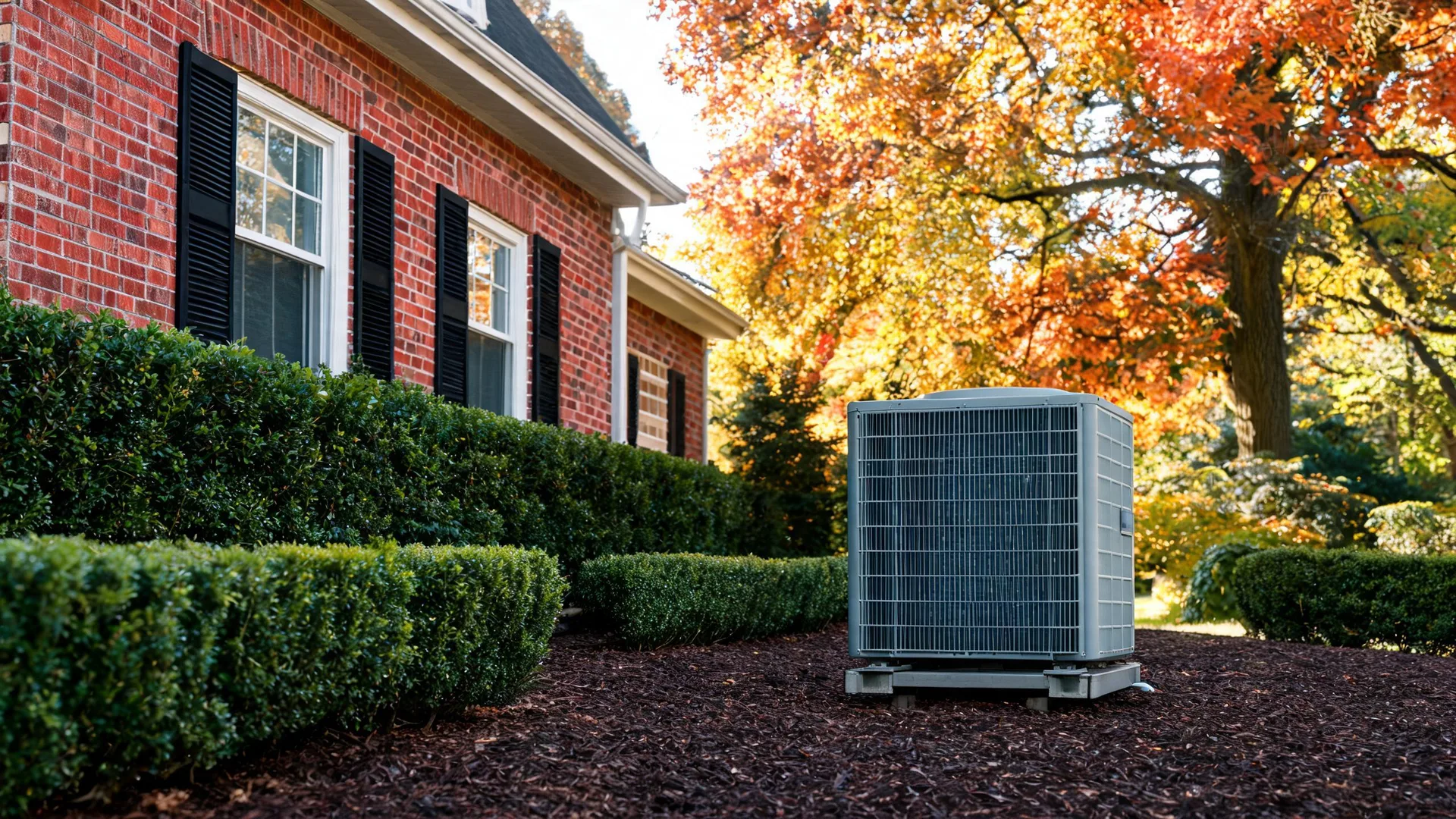
Keep the outdoor unit clear. Leaves, mulch and grass clippings block airflow through the outdoor coil, and a heat pump needs that airflow in both directions, pulling heat out of the air and dumping heat into it. Leave open space around the cabinet and keep the top clear so nothing can drop into the fan. Check the air filter and change it when it looks dirty, since a clogged filter chokes airflow across the indoor coil and makes the system work harder to move the same amount of air. In winter, keep an eye on the outdoor unit after ice or heavy frost. A thin coat that melts off during normal defrost cycles is nothing. Ice that builds up and stays, or a unit caked in frost during a stretch of milder weather, means the defrost cycle isn't doing its job. Inside, make sure vents and returns are open and nothing is stacked in front of them. A closed vent in one room pushes pressure onto the rest of the system and the equipment feels it. None of this replaces a technician going inside the cabinet to check refrigerant charge and electrical connections, but it keeps the system breathing freely between those visits.
A dirty coil or a weak refrigerant charge doesn't stop a heat pump cold. It just makes the system run longer to hit the same setting, and that longer runtime is often the only sign anything's wrong until a part gives out from the extra strain.
A heat pump leans on the reversing valve every time it switches between heating and cooling, a job a straight air conditioner never asks of its valve. Skip maintenance long enough and that valve is one of the first things to stick or fail, leaving the system stuck in one mode.
A technician's visit checks things a homeowner has no way to see from the thermostat. Refrigerant charge is one. Too little and the system runs long and still falls short, but the gauge is the only way to know for sure it's low instead of just working hard on a tough day. Electrical connections are another. A lug that's worked itself loose under vibration runs hot, and a hot connection fails before anything else does. The contactor that switches the compressor on and off wears down with every cycle, and a pitted contactor can stick or stop making contact at all. None of that announces itself ahead of time. The system just runs, until the day it doesn't.》
A tune-up starts outside, with the panels off the outdoor unit. The technician checks the outdoor coil for dirt and bent fins, since a blocked coil can't move heat the way it should in either direction. The refrigerant charge gets checked against the system's specs, not just glanced at. Inside, the indoor coil and blower wheel get inspected, because a dirty blower moves less air even when the motor sounds fine. Electrical connections get tightened and the contactor gets checked for pitting. The reversing valve gets tested in both directions, switching the system between heating and cooling, since that's the part that fails quietly and leaves a heat pump stuck in one mode.