





A row of single-story houses, the nearest of red brick with a covered porch and others with light siding, set behind a mowed lawn and a tall trimmed hedge, with large oak trees draped in Spanish moss overhead.

Heat Pump Maintenance in Malvern, AR

Tell us about the job

Takes about a minute. No obligation.

Tune-up, service, or cleaningHeat PumpHot Spring County, AR
Step 1 of 2

What ZIP code is the job in?

A heat pump in Hot Spring County works both sides of the year, cooling from May through September and heating from November through March. That split matters because the switchover points are when a check does the most good. April is worth booking before cooling starts, since the system is about to run five months straight. October matters the same way on the heating side. Get it looked at before the first cold morning asks the system to switch over and hold steady.

Low refrigerant charge won't trip an error code or shut the system down.

A gauge set catches it early, before the compressor spends a season working harder than it should.

Nothing here puts extra strain on a heat pump, so once a year covers it

Half the homes here were built by 1979
Power costs 12.32 cents a kWh statewide
Climate zone 3A

Hot Spring County sees its share of weather. 83 severe events over the past ten years, between wind, hail and a couple of tornadoes. None of that calls for more visits to your heat pump. What it means is that timing matters more than frequency. A winter storm or a run of high wind is exactly when a weak connection or a low charge turns into a system that won't hold temperature, and a spring or fall check catches that before the weather tests it. Close to a quarter of Arkansas households lost power for a day or more last year. When power comes back on, a heat pump that was due for service is more likely to short cycle or trip its breaker again. One visit a year, timed right, covers it.

Book it before the season

It starts running hard in the first month of the season here. Book the check the month before.

Find a contractor
A man in a cap, dark jacket and tan work pants walks up porch steps toward a dark blue paneled door, carrying a canvas tool bag with tools in its outer pockets, beside a potted shrub.
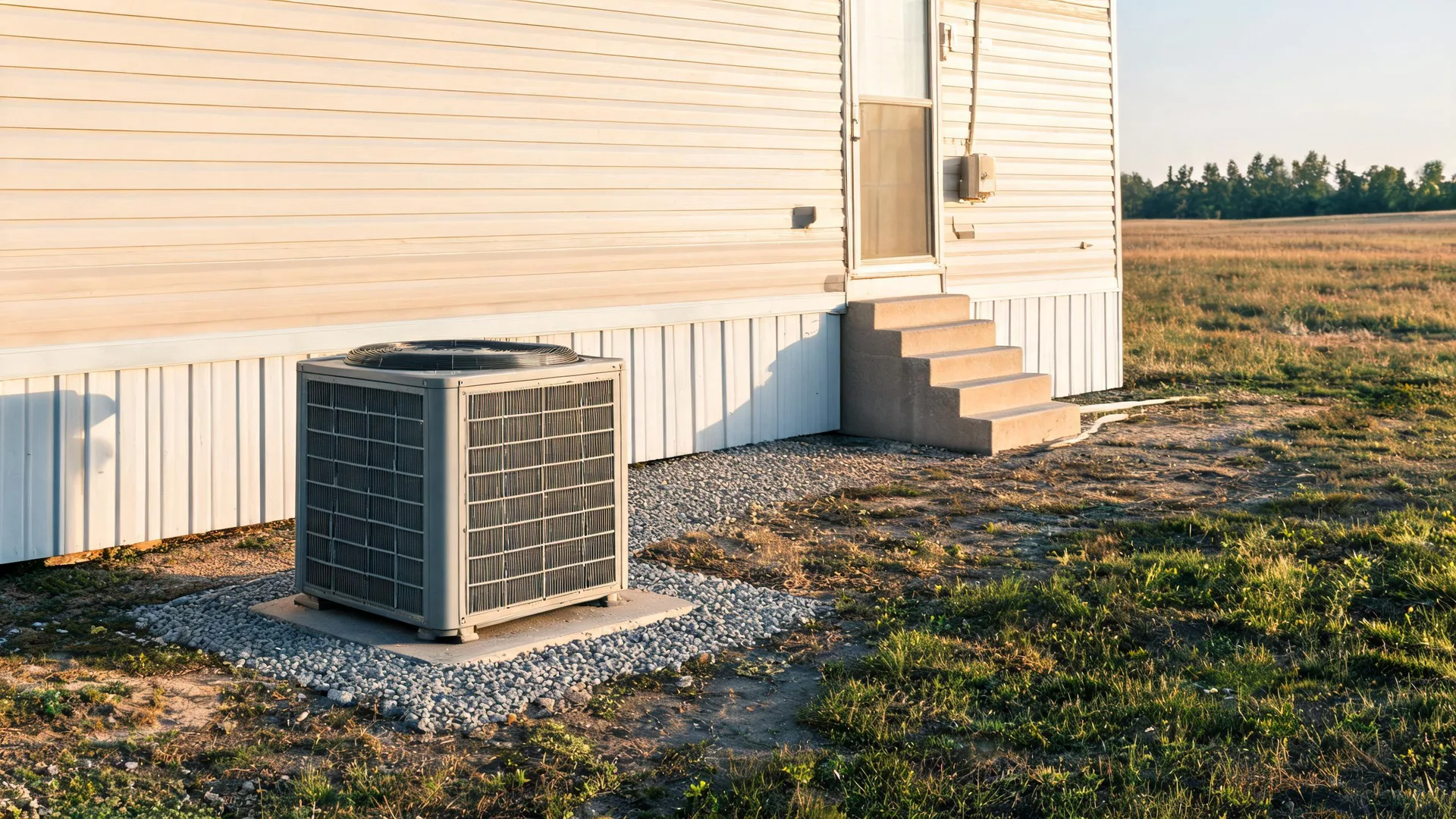
A gray air-source heat pump mounted on a concrete pad next to a house with gray vinyl siding, surrounded by gravel and flanked by green shrubs and white hydrangea flowers.

What you can check, and what to leave to the gauge set

Keep the outdoor unit clear. Leaves, mulch, grass clippings and ice all block the airflow it needs, so give it a couple feet of open space on every side. Check the air filter and swap or rinse it on a regular schedule, since a clogged filter makes the whole system work harder and can ice up the outdoor coil. Walk past the indoor vents now and then and make sure furniture or rugs haven't blocked them. In winter, after a freezing rain or heavy frost, look at the outdoor unit for a thick coat of ice. A thin layer that melts off during defrost cycles is normal. Ice that stays and builds up is not. If the system starts short cycling, blowing air that isn't the right temperature, or making a new noise, that's not a wait and see situation. Those are things to flag at the next check or call in sooner, not fixes to attempt yourself.

Short cycling means something already failed quietly

A heat pump that turns on and off in quick bursts isn't warming up, it's struggling. Usually it's a weak capacitor, a thermostat sensing wrong, or a refrigerant charge that's dropped enough to confuse the system. By the time you notice the pattern, the part behind it has been wearing out for a while.
The reversing valve only shows its problem at the switchover

The reversing valve is what lets one unit cool the house part of the year and heat it the rest. A valve that's starting to stick won't act up while the system is just running one direction. It shows up when the system tries to flip and doesn't catch. A check timed before that switch catches a sticking valve before the season does.

A heat pump only moves air and refrigerant, and the filter, the coils and the drain are what let it do that cleanly. The filter sits in the path of every bit of air the system handles. Once it loads up with dust, the blower has to pull harder to push the same air through, and that strain doesn't stay in one place. Starved airflow lets the indoor coil get too cold, and moisture that should drain off starts freezing to it instead. Ice on that coil blocks airflow further, so the problem feeds itself. The outdoor coil has its own version of this. Sitting outside, it picks up dirt and grass clippings, and a dirty outdoor coil can't release heat the way it should in cooling or pull it in during heating. The condensate drain is the quiet one. It carries away the water the indoor coil pulls out of the air, and when it clogs, that water backs up instead of draining, turning a coil problem into a wet one.

A tune-up starts with the refrigerant charge, checked with gauges rather than guessed at, since a system low on charge will still blow air without ever saying so. The technician checks the reversing valve too, cycling it both ways to make sure it actually catches instead of just assuming it will when the season asks. Electrical connections get tightened, since a loose one creates resistance, and resistance creates heat where there shouldn't be any. The capacitor gets tested under load, not just looked at, because a capacitor can read fine sitting still and still fail the moment the compressor asks something of it. Both coils get cleaned, indoor and outdoor, since a coil caked with dust or grass clippings can't move heat the way it's supposed to. The condensate drain gets cleared so water has somewhere to go. None of this is guesswork. It's the same checks, done in order, whether the system is heating or cooling.