





White two-story houses with wraparound porches and Spanish moss-draped oak trees photographed along a residential street at night.

Heat Pump Maintenance in Ozark, AR

Tell us about the job

Takes about a minute. No obligation.

Tune-up, service, or cleaningHeat PumpFranklin County, AR
Step 1 of 2

What ZIP code is the job in?

A heat pump only works as well as the air can move through it. A dirty filter chokes that airflow, and the system has to run longer to move the same amount of heat. The indoor coil picks up what the filter misses, and once dust builds up on those fins, it acts like a blanket wrapping the coil, so heat transfer drops even though the unit is running fine otherwise. Outside, the condenser coil needs open fins too, clear of leaves, grass clippings and dirt, or it can't release heat in cooling mode or pull it in during heating mode. The condensate drain matters just as much. If it clogs, water backs up into the pan and can shut the system down or spill out where it shouldn't. None of these parts fail loudly. They just make the system work harder until something else gives out.

A heat pump left alone keeps running even after something inside has started to fail.

The compressor usually gives out last, after it's spent a season or more carrying a load the rest of the system stopped pulling its share of.

Heat pump works both seasons here, so it earns a check every fall

Cooling runs May through September
Heat runs October through April
88 damaging wind events from 2015 to 2024
Newer homes here still have young systemsHalf the homes in Franklin County were built in 1985 or later.

A tune-up gets inside parts of the system a homeowner never sees in daily use. The refrigerant charge is one of them. Too little and the compressor works harder to move the same heat, too much and it can flood back into the compressor and damage it over time, and neither shows up as a visible sign until the system is already struggling. A tech also checks the reversing valve, the part that switches the system between heating and cooling, since a valve that sticks can leave the system stuck in one mode without the thermostat knowing anything is wrong. Electrical connections get checked too. A loose wire or a connection that's started to corrode can cause the system to cycle oddly or trip a safety switch, long before it causes an outright failure. None of this is damage you'd find by looking at the unit from across the room.

Keep a young system young

A system built in 1985 or later still has a lot of working life in it, and a yearly check is what keeps it on track to use all of it. Caught early, a low charge or a sticking reversing valve is a quick fix. Left alone, it's a compressor replacement.

Find a contractor
A gray air-source heat pump mounted on a concrete pad next to a house with gray vinyl siding, surrounded by gravel and flanked by green shrubs and white hydrangea flowers.

Between visits, the filter is yours, the rest isn't

The filter is the one job that belongs to the homeowner, not the tech. Check it monthly, and swap or rinse it when it looks gray. A clean filter protects everything downstream of it. Outside, keep the area around the condenser clear. Pull weeds back, rake leaves away, and give it room on all sides so it can breathe. After a storm, look for branches or debris sitting against the fins. Indoors, make sure furniture or curtains aren't blocking a vent, and keep the area around the indoor unit open. Beyond that, leave the cabinet closed. The refrigerant circuit, the electrical connections and the reversing valve aren't something to check or adjust without training, and opening the system up without the right tools tends to cause the problem it was meant to prevent.

The system will still run with a problem brewing

A heat pump doesn't shut itself off because the charge is low or a contactor is pitted. It just keeps going, pulling harder to do the same job. That's why a system can seem fine right up until the day it isn't. A check catches what running the system normally never will.
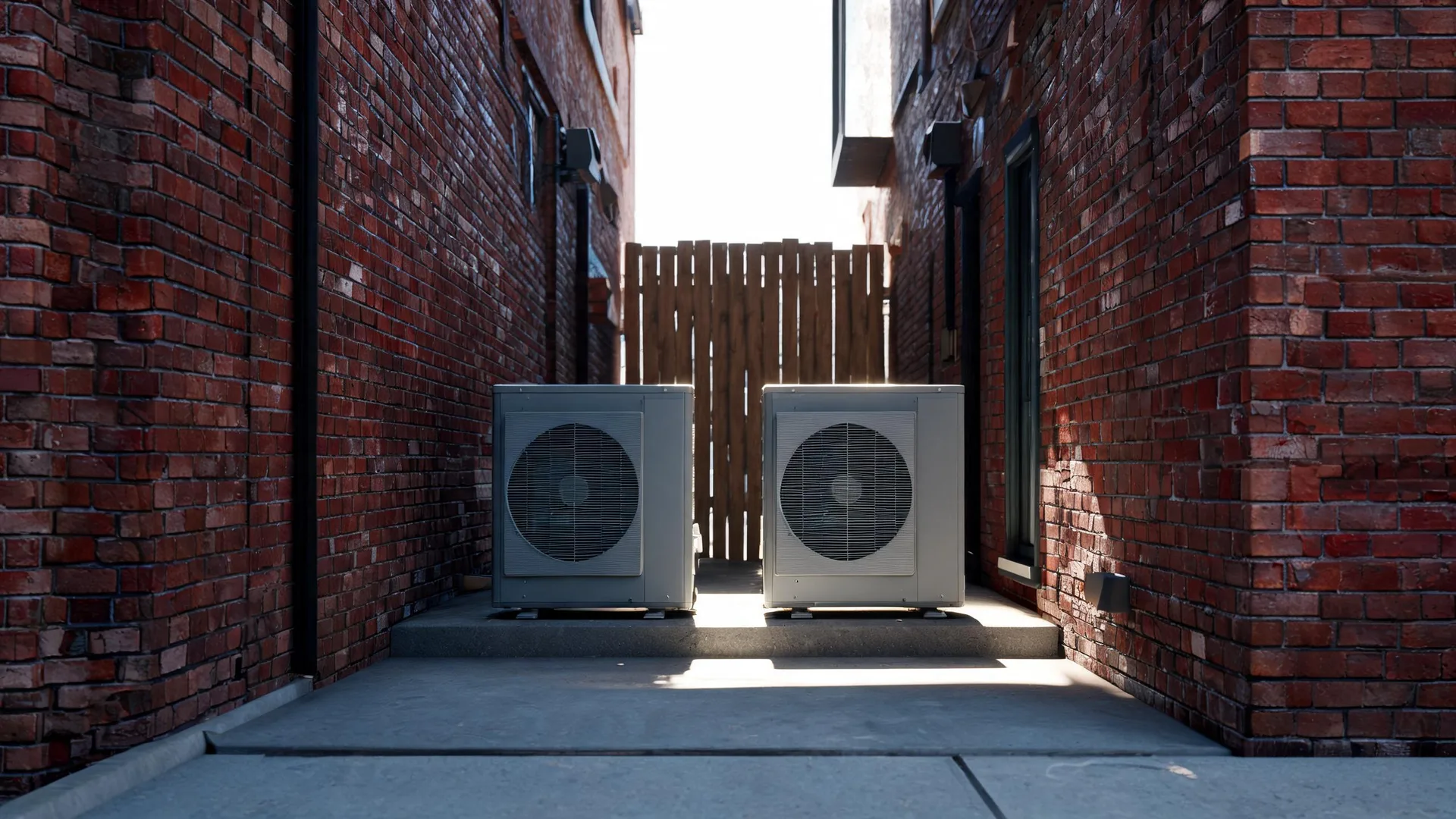
A few signs are worth a call on their own

Short cycling, where the system kicks on and off more than it used to, points to a problem even if the house still feels comfortable. So does a system that runs long stretches without ever quite hitting the thermostat setting. Ice on the outdoor unit outside of a defrost cycle, or air coming from the vents that's cooler than it should be in heating mode, are both worth having looked at rather than waited out.

A quick tune-up checks that the system runs, looks at the filter, and moves on. A thorough one puts gauges on the lines to measure refrigerant charge against what the system is supposed to carry, not just whether the air feels cold or warm. It checks the temperature split across the indoor coil, which tells you whether the system is actually moving the heat it should. It tests capacitor strength rather than assuming the compressor and fan motor are getting a clean start, since a weak capacitor still lets the system run while making the motor work harder every cycle. It checks amp draw on the compressor against what that compressor is rated for. Ask what was measured, not just what was looked at. If the answer is readings and numbers, the system got a real check. If the answer is that everything looked fine, it probably got a glance.

A defrost cycle is worth understanding before a tech ever shows up, because it looks like a malfunction when it isn't. In heating mode, the outdoor coil picks up frost the same way a freezer does, and the system has to reverse itself every so often to melt that off before it chokes the coil entirely. Done right, that cycle is short, and the fan outside pauses while it happens. A tune-up checks the defrost board and sensor that control when this kicks in. A sensor reading wrong can leave the system defrosting too often, wasting heat it already made, or not often enough, letting frost build into solid ice that blocks airflow across the coil for good. Either way the homeowner usually just notices the house feels cooler than it should, with no idea the outdoor unit is the reason.