




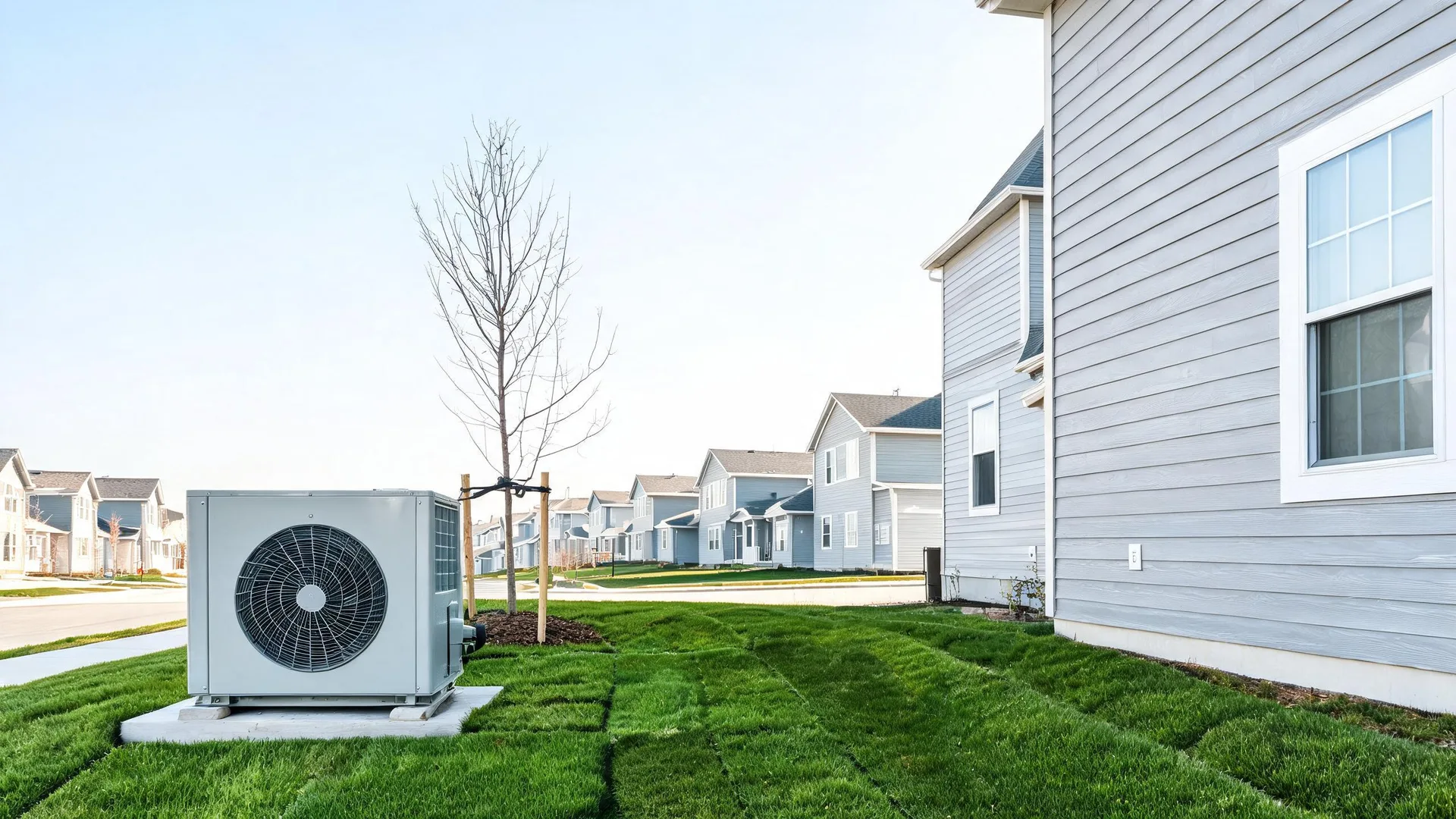
A grey outdoor HVAC unit mounted on a concrete pad beside the beige-sided exterior wall of a suburban house.

Heat Pump Maintenance in Paragould, AR

Tell us about the job

Takes about a minute. No obligation.

Tune-up, service, or cleaningHeat PumpGreene County, AR
Step 1 of 2

What ZIP code is the job in?

One visit a year covers it for a heat pump in Paragould. Spring or fall, before the system has to work hard in either direction, a tech can check the refrigerant charge, clean the outdoor coil and make sure the reversing valve is switching the way it should. It's also worth having the outdoor unit's cabinet and coil fins checked after a hail event. Greene County saw 35 hail events between 2015 and 2024, and a hard enough hit can dent fins or ding the cabinet without you noticing from the kitchen window. That's worth a look at the yearly visit. It isn't a reason for a second one.

A heat pump in Greene County works both sides, cooling from May through September and heat from October through April.

Book the yearly check in April or September, before whichever season is about to start.

Nothing here calls for more than one visit a year

99 severe weather events from 2015 to 2024
24% of homes statewide lost power a day or more in 2024
42 damaging wind events from 2015 to 2024

Half the homes in Greene County were built in 1991 or later. A heat pump that age has plenty of working life left in it, and the yearly check is what keeps it getting there without a breakdown along the way. Skipping years doesn't show up right away. It shows up as a part that wore down further than it needed to because nobody caught it early. Mobile homes make up 12.7% of the housing here, and the same visit covers the outdoor unit whether it sits on a slab or on blocks.

Keep a newer system on track with the yearly check

Keep that yearly visit on the calendar every spring or fall. That's what a heat pump this age needs to run the full stretch of its working life without a breakdown catching you off guard.

Find a contractor
A dark gray heat pump unit mounted on a concrete pad next to a house with gray siding and a stone veneer wall.

What's yours to do, and what isn't

Between visits, the main thing worth doing is keeping the outdoor unit clear. Grass clippings, leaves and pollen build up on the outdoor coil and block airflow, so keep a couple feet of open space around the cabinet and hose the fins off gently if you see debris packed into them. Don't use a pressure washer, it bends the fins. Inside, check the air filter monthly and swap it when it looks gray or clogged. A dirty filter makes the system run longer to move the same air, and that extra runtime wears on the compressor over time. Keep an eye on the vents and registers too, if furniture or rugs are blocking them, the system can't move air the way it's supposed to. If you ever see ice built up on the outdoor coil that doesn't clear on its own during a defrost cycle, or the unit is making a new noise, that's not a between-visit fix. That's worth a call before the next scheduled check.

The coil gets dirty either way

A heat pump moves heat through the outdoor coil whether it's running in cooling or heat, so a coil caked with dirt or pollen hurts it either way. Airflow drops, the system runs longer to do the same job, and the compressor takes the strain. Nobody's checking that coil between visits, so it just keeps losing ground until the yearly cleaning catches it.
A sticking reversing valve waits for the wrong moment to show itself

The reversing valve is what switches a heat pump between cooling and heating. A valve that's starting to stick doesn't announce itself on a mild day. It shows up the first cold morning when the system kicks on and blows cool air instead of warm. A tech can test that valve before it fails, which is the only time testing it does any good.

A heat pump doesn't usually fail outright. It loses ground a little at a time, and most of the signs are things you'd feel before you'd see. Rooms that used to hold their temperature now drift. The system runs longer to get there, or it runs and the air coming out doesn't feel as warm or as cool as it should. Short cycling, where it kicks on and off in quick bursts instead of settling into a steady run, is another one worth paying attention to. None of these stop the system cold, which is exactly why they're easy to live with for months before anyone calls someone. A yearly check catches what daily use can't.

A tune-up is more than a filter swap and a glance at the thermostat. A tech checks refrigerant charge against what the system calls for, since too much or too little makes the compressor work harder either way. The outdoor coil gets cleaned so it can transfer heat the way it's supposed to, not just rinsed on the surface. Electrical connections get checked and tightened, because a loose connection generates heat of its own and wears out whatever it's touching. The reversing valve gets tested going both directions, not just the direction the system happens to be running that day. Capacitors get checked under load, since a weak one can still start the compressor some mornings and fail on others. None of this takes the place of a repair once something's actually broken, but it's what keeps a working system working.