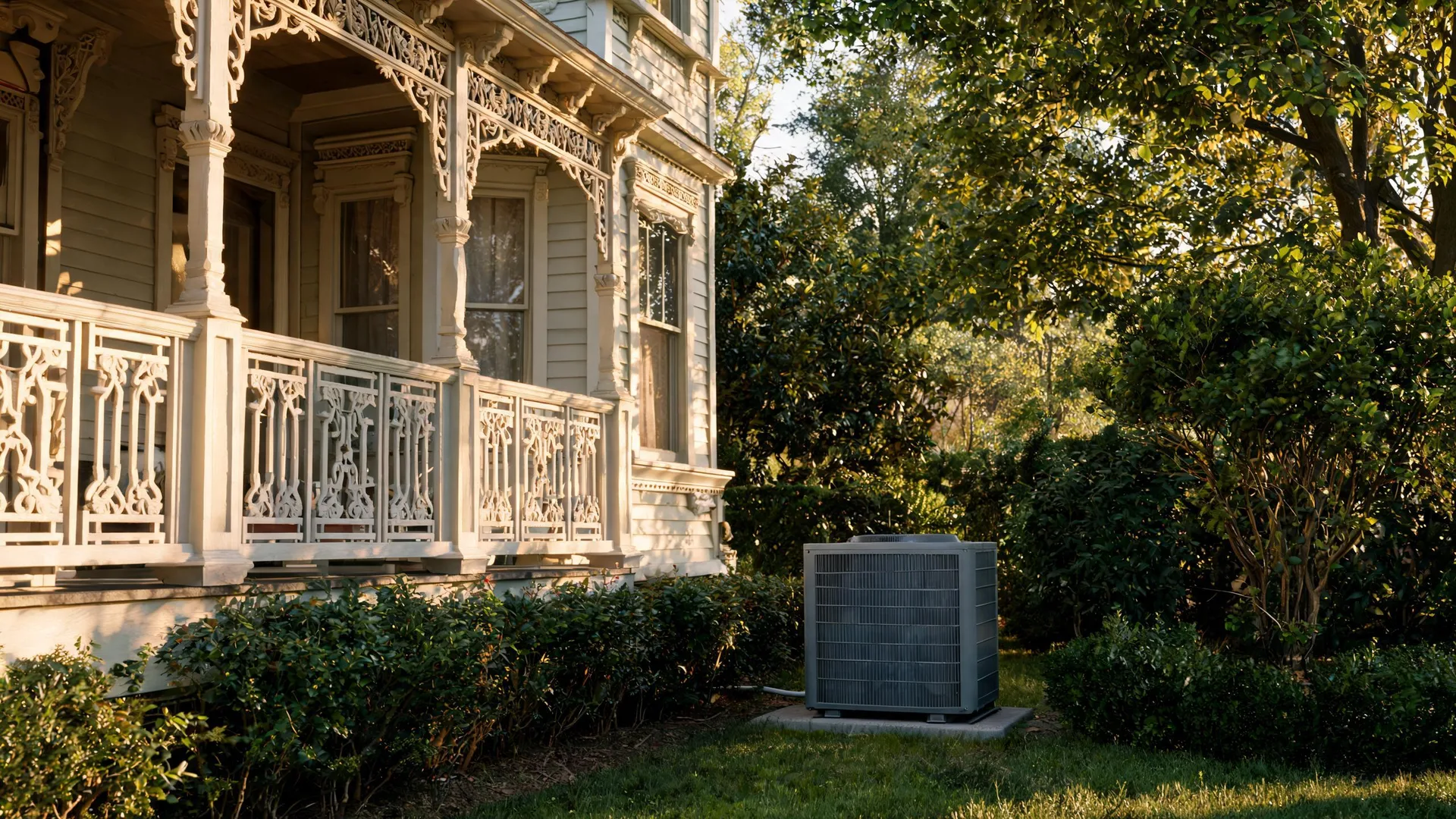
An outdoor heat pump unit mounted on a concrete pad in front of a two-story suburban house.

Heat Pump Maintenance in Searcy, AR

Tell us about the job

Takes about a minute. No obligation.

Tune-up, service, or cleaningHeat PumpWhite County, AR
Step 1 of 2

What ZIP code is the job in?

White County sees more than its share of storms

White County logged 107 severe weather events between 2015 and 2024, including damaging wind, hail and tornadoes. A heat pump's outdoor unit sits outside through all of it, exposed to wind-blown debris and hail.


Power doesn't always come back right away

Nearly a quarter of Arkansas households went at least 24 hours without power in 2024. A heat pump depends on electricity to heat and cool, so an outage that long leaves a home without either until the power is back.

A heat pump here starts heating in November and runs through April.

Have it checked in October, before it has to carry the first cold snap.

Half the heat pumps in White County are still young enough for upkeep to pay off

Half the homes here were built by 1992
39 hail events from 2015 to 2024
Power costs 12.32 cents a kWh statewide
One checkup a year is enoughWhite County logged 39 hail events between 2015 and 2024, and the outdoor unit sits through every one of them.

Wind and hail account for most of what an outdoor unit takes here, fifty-two wind events and thirty-nine hail events on this county's count. The cabinet, the fan blades and the coil fins have had plenty of chances to take a hit. Bent fins slow the airflow the system needs to heat and cool. A cracked or dented cabinet can let water reach parts that should stay dry. A technician doing fall maintenance checks the outdoor unit for exactly this before cold weather gives it real work to do. If a storm has come through since the last check, that is reason enough to have it looked at now.

Keep a newer system working the way it should

Half the homes in White County were built in 1992 or later, so there's a good chance your heat pump is too. A yearly checkup is what keeps a system that age running well, instead of losing ground to the next storm that comes through.

Find a contractor
A white mini-split heat pump outdoor unit mounted on a concrete pad beside a gray-sided house, surrounded by gravel and green shrubs.

It works through every season, not just one

A heat pump runs for both heating and cooling, so the filter, the coils and the drain see work across both seasons, not just one. A dirty filter chokes airflow, and the system has to run longer to move the same amount of air. That strain lands on the indoor coil first. Caked in dust, it can't absorb or release heat properly, and it's more likely to ice over. The outdoor coil has its own job, pulling heat from the outside air or shedding it there, and flattened or dirty fins make the whole system work harder for less result. The drain matters just as much. Moisture the indoor coil pulls from the air has to go somewhere, and if that line clogs with algae or debris, water backs up and finds the nearest way out, usually the cabinet around it or the ceiling below. None of this announces itself right away. A system can run on weak airflow or a slow drain for a long stretch before it finally stops cooling or heating altogether. Checking the filter, both coils and the drain each year is how a technician catches that slow decline before it turns into a breakdown.

The reversing valve has to work both ways

A heat pump depends on the reversing valve to switch between heating and cooling, and that valve only gets exercised when the system runs in both modes. One that sits unused or sticks from built-up debris can leave the system stuck heating when it should cool, or stuck cooling when it should heat. A technician testing it during a checkup catches a sticking valve before the day it fails to switch at all.

A skipped checkup lets small wear turn into failure

A heat pump that loses refrigerant or runs on a failing part still works, just harder. The compressor carries that extra strain, and the compressor is the one part that usually means replacing the whole outdoor unit when it finally gives out. A yearly check catches the slow wear while it's still just wear, not a breakdown.

A refrigerant charge that's a little low doesn't announce itself. The system still blows warm air in winter and cool air in summer, so nothing seems wrong. Underneath that, the compressor is working harder than it should to move heat, and it keeps working that hard for as long as the charge stays low. A technician checks the charge against what the system is supposed to have, not just whether it's blowing air. Electrical connections get the same kind of look. A loose connection at the contactor or a terminal that's started to corrode can run for months before it finally fails, usually at the worst time. Catching it during a checkup means tightening a screw instead of diagnosing a no-start call later.

A fall checkup on a heat pump covers more than a filter swap. The technician checks the reversing valve under actual load, switching the system between modes to see that it moves cleanly instead of sticking. The refrigerant charge gets measured against what the system was built to carry, since a system can run low and still blow air without any sign something's wrong. Electrical connections at the contactor and the terminals get checked for the kind of looseness or corrosion that builds slowly and fails all at once. Outside, the coil fins and the cabinet get a look for anything that's bent airflow or opened a path for water. None of these are things a homeowner can see from across the room, which is the point of having someone check them before cold weather asks the system to work.