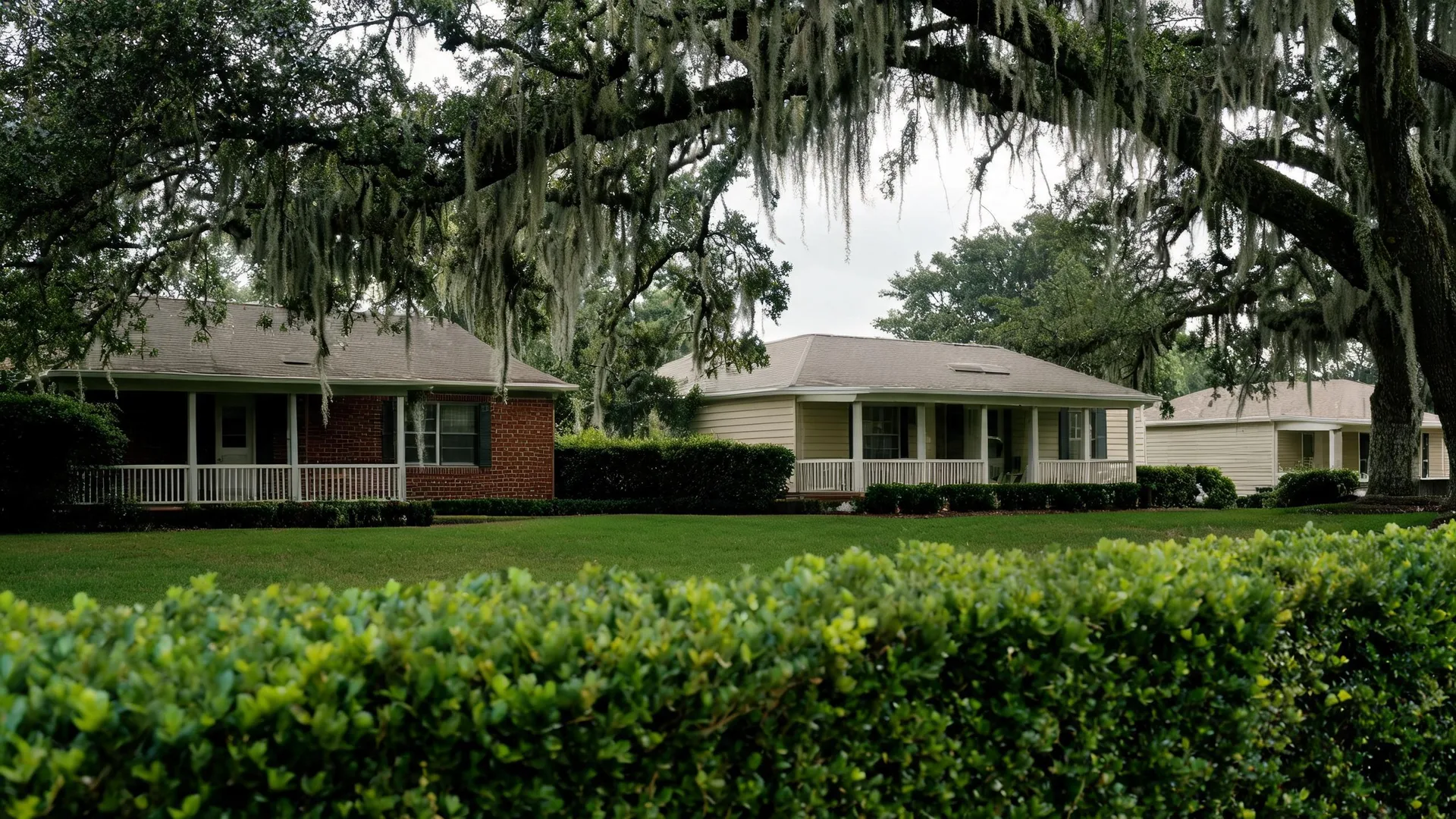



Single-story houses, one brick and one with light siding, both with covered porches, behind a mowed lawn and trimmed hedge, under large moss-draped oak branches.

Heat Pump Repair in Dardanelle, AR

Tell us about the job

Takes about a minute. No obligation.

RepairHeat PumpYell County, AR
Step 1 of 2

What ZIP code is the job in?

A heat pump in Yell County switches over in November and runs through April. The first cold snap is when a weak part finally gets tested. A capacitor or contactor that was marginal all summer can fail the moment the system has to work hard for heat. If your heat pump is struggling now, right as the season starts, that timing is a clue. It points to something that was already wearing out, not something new.

6 months
November through April, your system heats
5 months
May through September, it cools
32°F
the average winter night it heats against
91°F
the average summer afternoon it cools against
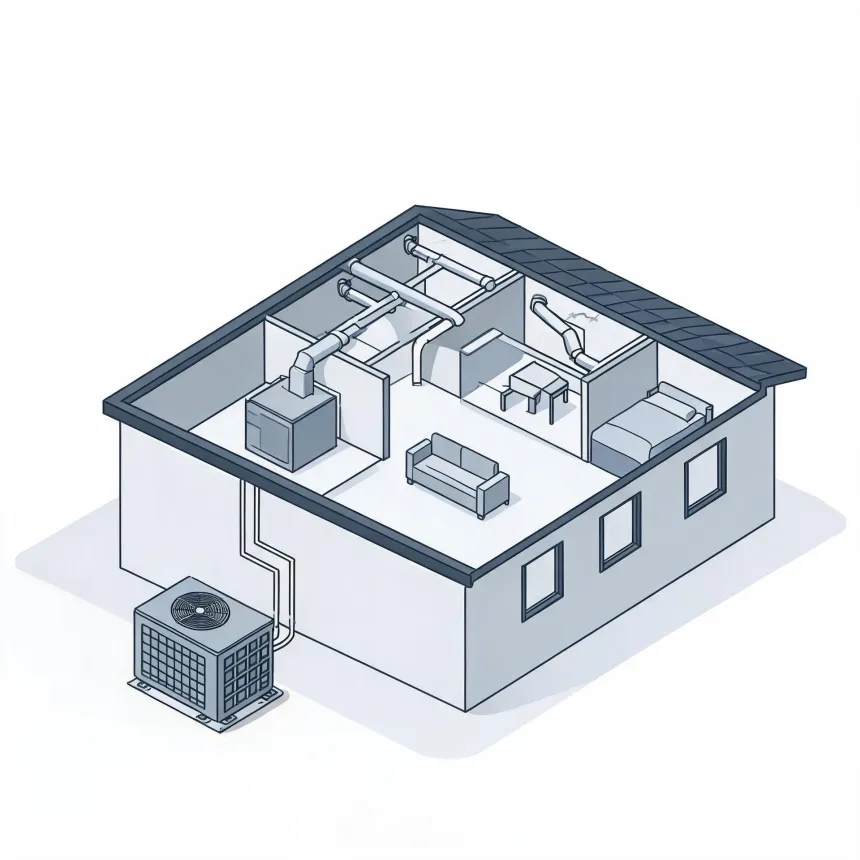
Isometric line illustration of a cutaway single-story house showing interior rooms with ducted air distribution, an indoor air handler, furniture, and an outdoor condenser unit connected by lines outside the wall.
Your system heats November through April and cools May through September.

NOAA nClimDiv, 1991–2020 normals

A heat pump that's short on refrigerant will keep running, just to protect itself the compressor works harder and harder.

Let that go on and the compressor overheats for good, turning a refrigerant leak into a full system replacement.

Yell County weather isn't what's breaking your heat pump66 severe weather events hit the county between 2015 and 2024, but wind and hail aren't what wears out a heat pump.

A diagnostic visit starts outside at the unit, not in the basement or the attic. A tech checks the readings first, the pressures, the temperature split between the air going in and the air coming out, the amp draw on the compressor and fan motors. Those numbers point at a part before anything gets opened up. Then it's a visual check of the suspects, the capacitor, the contactor, the wiring at the connections, looking for the bulge, the pitting, the scorch mark that confirms what the readings already suggested. If the system is blowing the wrong temperature of air, the reversing valve gets tested directly, since that's the one part that fails in a way unique to a heat pump. Refrigerant level gets checked last, because low refrigerant always means a leak, and finding where it's coming from takes more than a gauge reading. By the end you know which part failed and why, not just that something did.

Get it looked at early

Problems tend to show up in the first weeks of the season, when the load hits a part that was already weak.

Find a contractor
A man in a cap, dark shirt and tan work pants walks up stone steps toward a dark blue front door, carrying a canvas tool bag, with a potted shrub beside the entry.
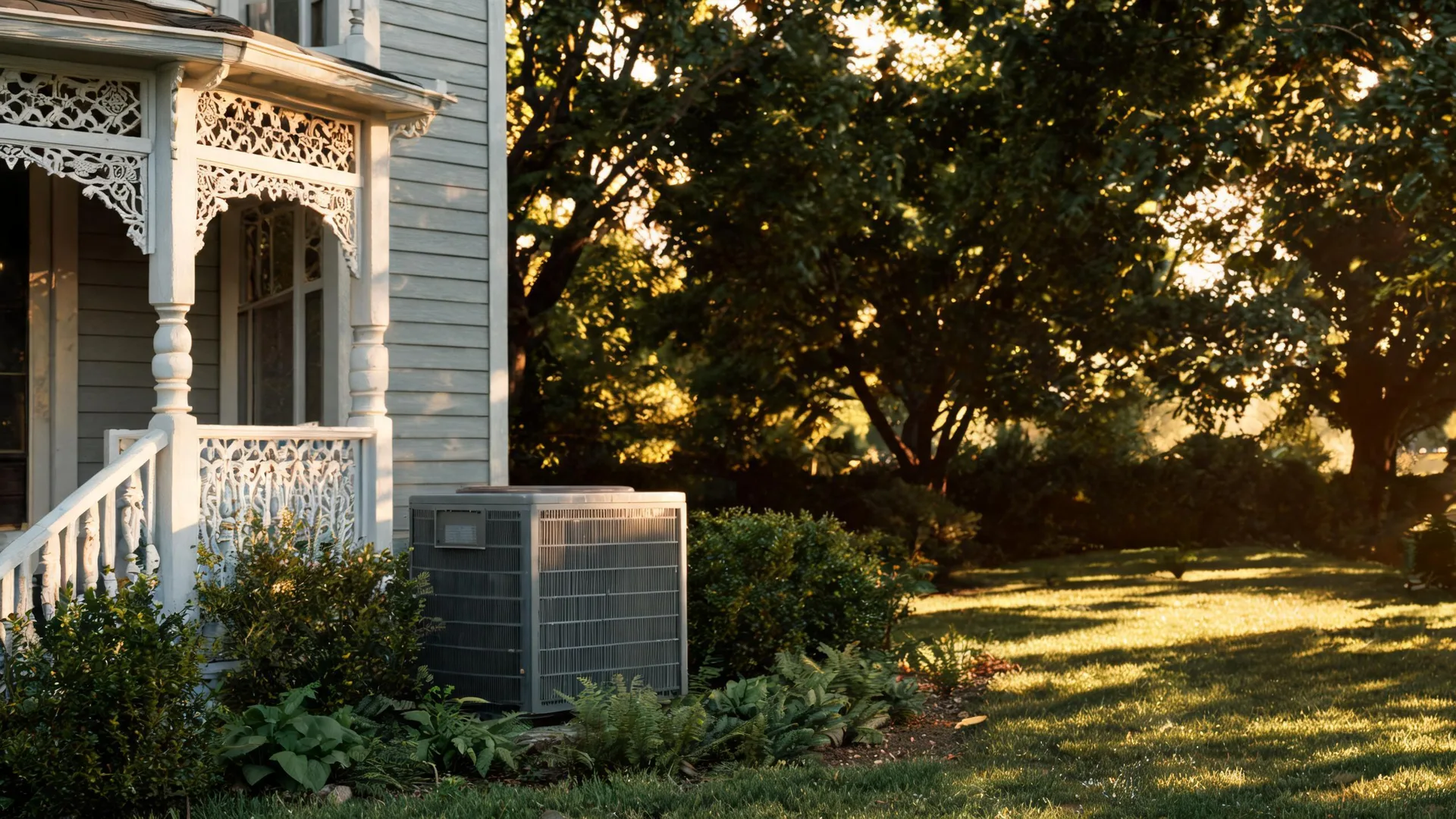
A residential heat pump outdoor unit mounted on a concrete pad next to a house with gray vinyl siding.

What a heat pump tells you before it fails

A heat pump that's starting to fail usually tells you before it quits outright. It runs longer than it used to, cycling on and staying on instead of shutting off and resting. The air coming out of the vents feels cooler than it should for a heating cycle. Outside, the unit might be caked in frost well past a normal defrost cycle, or it never seems to defrost at all. You might hear it too. A clicking at startup that wasn't there before. A hum with no fan movement. A rattle that wasn't there last season. Some of these signs mean a part is wearing out and worth watching. A few mean stop running it and get someone out now, especially if you smell something burning or the outdoor unit won't start at all.

Check the thermostat settings first

Make sure it's set to heat, not auto or cool, and that the set point is actually above room temperature. A heat pump thermostat with an emergency heat option tells you something if flipping to it changes anything. If the system runs fine on emergency heat but not regular heat, that points at the outdoor unit rather than the thermostat itself.
Look at the outdoor unit and the filter

Walk outside and check that the outdoor unit isn't blocked by anything piled against it or buried under leaves and debris. Airflow in and out of that unit matters as much as airflow inside the house. Then pull the air filter and hold it up to a light. If you can't see light through it, it's restricting airflow to the point where the system has to strain, and that alone can look like a bigger problem than it is.

Most heat pump failures trace back to a handful of parts, and they're the same ones whether the system is heating or cooling. The capacitor gives the compressor and fan motors the jolt they need to start, and it weakens slowly before it quits. A contactor can pit and stick from years of opening and closing, until one day it doesn't close at all. The reversing valve is the part that's unique to a heat pump, and when it sticks, the system runs but blows cold air during a heating cycle, or won't switch over at all. Low refrigerant almost always means a leak somewhere in the line set or coil, not the refrigerant burning off, and it shows up as frost that won't clear or a system that runs long and still can't keep up. None of these are wear from one hard season. They're wear from every season before it.

When a repair makes sense comes down to what actually broke, not how the system is acting right now. A failed capacitor, a stuck contactor or a bad control board are single parts doing one job each, and replacing one of them brings the whole system back to normal. None of those failures spread or shorten what's left of the system's life. A compressor is different. It's the one part that isn't really repaired, only replaced, and on most systems that cost sits close enough to a new outdoor unit that it changes the conversation. So the real question after a diagnosis isn't how old the system is. It's whether what failed was a part built to be swapped out, or the one part that wasn't.