






A illuminated white antebellum-style house with a wraparound porch, white columns, and Spanish-moss-draped oak trees, photographed at dusk.

Heat Pump Repair in Heber Springs, AR

Tell us about the job

Takes about a minute. No obligation.

RepairHeat PumpCleburne County, AR
Step 1 of 2

What ZIP code is the job in?

A tech starts outside at the heat pump, checking the refrigerant lines, the outdoor coil and the compressor before ever touching the thermostat. They'll run the system in whichever mode it's struggling with, heating or cooling, and watch how it responds. Low airflow, a coil caked with dirt, or a failing reversing valve all show up differently, so they rule things out one at a time rather than guessing. Inside, they check the air handler, the filter and the supply vents, since a heat pump problem often isn't the unit outside at all. Once they find the actual cause, they'll explain what's worn out versus what still has life in it, so the decision to repair is based on what's really failing.

7 months
October through April, your system heats
5 months
May through September, it cools
31°F
the average winter night it heats against
89°F
the average summer afternoon it cools against
Isometric line illustration of a cutaway single-story house showing interior rooms with furniture and ceiling ductwork, connected to an outdoor condenser unit on the ground outside the left wall.
Your system heats October through April and cools May through September.

NOAA nClimDiv, 1991–2020 normals

Check the outdoor unit first. If ice is building up on the coil or the fan isn't turning, that's worth noting before anyone shows up.

A thermostat set to heat but blowing cool air doesn't always mean the heat pump is broken. Check the breaker and the filter before assuming the worst.

Half the homes here were built in 1989 or later, so a lot of heat pumps still have life left

Half the homes here were built by 1989
Power costs 12.32 cents a kWh statewide
Climate zone 3A
Nothing unusual about the climate hereCleburne County gets a long cooling stretch and a short mild winter, humid most of the year. Most heat pump problems are still the usual ones.

Half the houses in Cleburne County were built in 1989 or later, which means plenty of heat pumps out there are nowhere near the end of their working life. If yours came with the house, that's worth finding out before anyone talks replacement. A reversing valve, a failing capacitor or a low refrigerant charge are all repairable, and none of them mean the unit is done. Worth asking the contractor straight out how many years a system like yours has left before deciding which way to go.

Repair it

If your system came with a newer house, it likely has plenty of life left. Repair is usually the right call.

Find a contractor
A gray heat pump outdoor unit mounted on a concrete pad next to the stone-accented exterior wall of a house.

It runs in both directions, so it wears in both directions

A heat pump does not get an off season. It runs in cooling mode for months, switches over, and keeps running in heating mode, so the parts inside wear from both directions instead of one. That shows up first as signs you can notice without opening anything up. In cooling, listen for the outdoor fan cycling on and off more than it used to, or the system running long stretches without the house actually cooling down. In heating, watch for air coming out that feels cool rather than warm, or the outdoor coil icing over and not clearing on its own. A reversing valve that is starting to go often gets the system stuck in one mode, or makes a hard clunk when it tries to switch. Short cycling, the unit kicking on and off every few minutes, points to something else entirely but wears on the compressor just the same. None of this means the unit is finished. It means something specific is worn, and the sooner it gets looked at, the less it drags down the parts working around it.

The reversing valve is the part most specific to a heat pump

The reversing valve is what lets a heat pump switch between heating and cooling, and it fails in ways a furnace or straight air conditioner never does. A stuck valve leaves the system blowing the wrong temperature, or chattering and clunking when it tries to switch over. Because a heat pump does double duty every day of the year, the valve sees more cycles than almost anything else in the system.
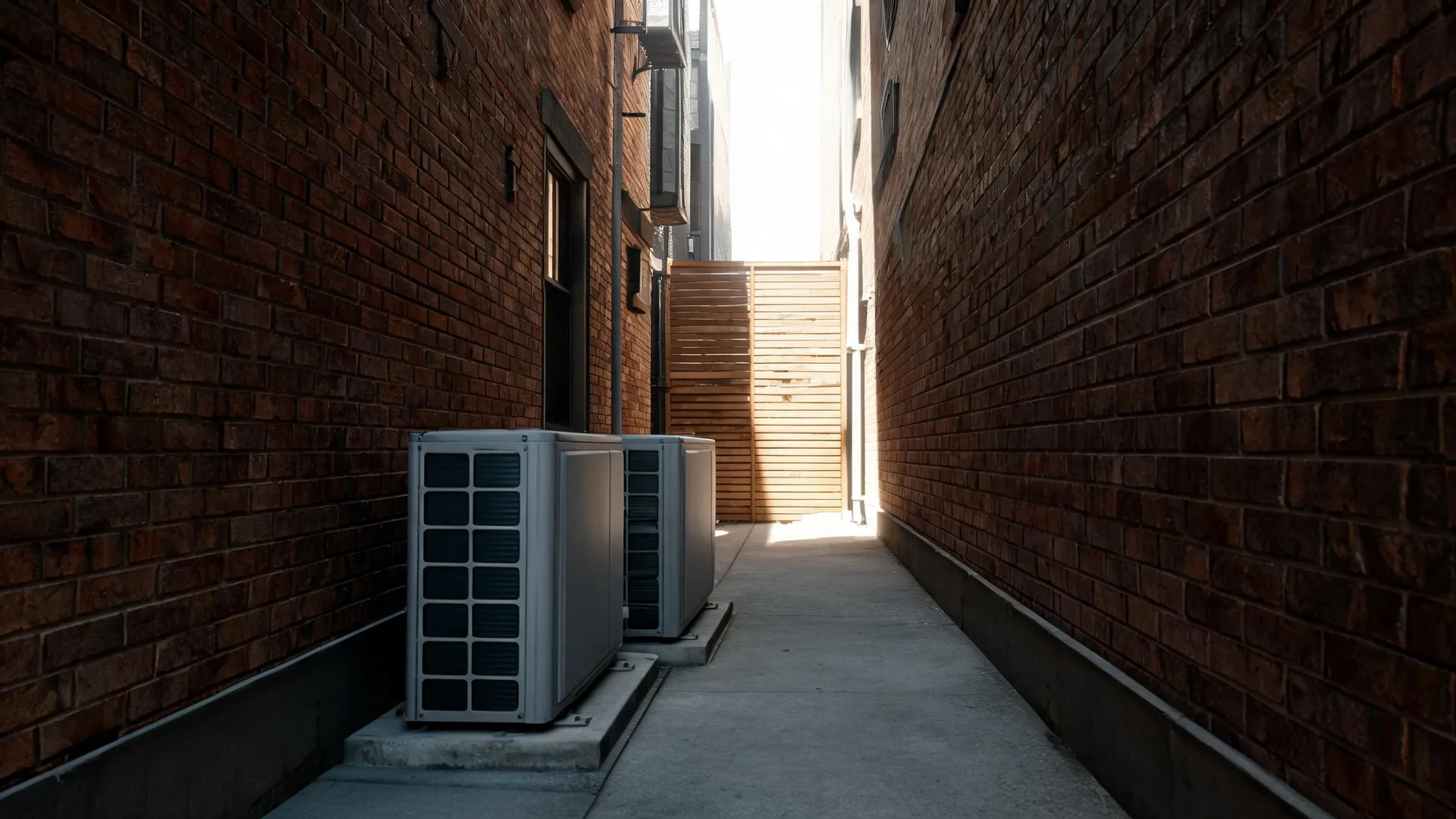
The outdoor coil works against itself in both directions

The outdoor coil has to give up heat in cooling mode and pull heat in from the outdoor air in heating mode, so dirt or a bent fin on it hurts the system either way. A coil that can't transfer heat properly forces the compressor to work harder to reach the same temperature, and that extra strain is usually what wears the compressor out before its time.

A heat pump that's icing over or stuck in one mode will keep trying to do its job, and that's the problem. The compressor pushes harder to make up for what the system can't deliver on its own, and that extra load is what shortens its life. A reversing valve that chatters instead of switching cleanly will keep chattering every time it's asked to change modes, and each time adds a little more wear to the same spot. Ice on the outdoor coil blocks the airflow the system needs to pull heat from outside, so the unit runs longer to do less, and a coil that can't defrost properly just builds more ice the next cycle. Short cycling is the same story. Every extra start puts more load on the compressor than letting it run a normal cycle would. None of this fixes itself by waiting. The part that's struggling keeps struggling, and everything connected to it picks up the strain in the meantime.

A repair decision usually comes down to what's actually failing versus what's just old. A capacitor, a contactor, a low refrigerant charge, these are normal wear items, and replacing one doesn't say anything about the rest of the system. A compressor is a different story. It's the most expensive part to replace and often the labor involved gets close to a new unit anyway, so a failing compressor is usually where repair stops making sense. Age matters too, but not on its own. A unit near the end of its expected life that also needs a major part replaced is a different conversation than a younger system with the same failure. Ask what's actually broken before asking what it costs to fix, because the answer changes depending on which part failed and what else is still sound.