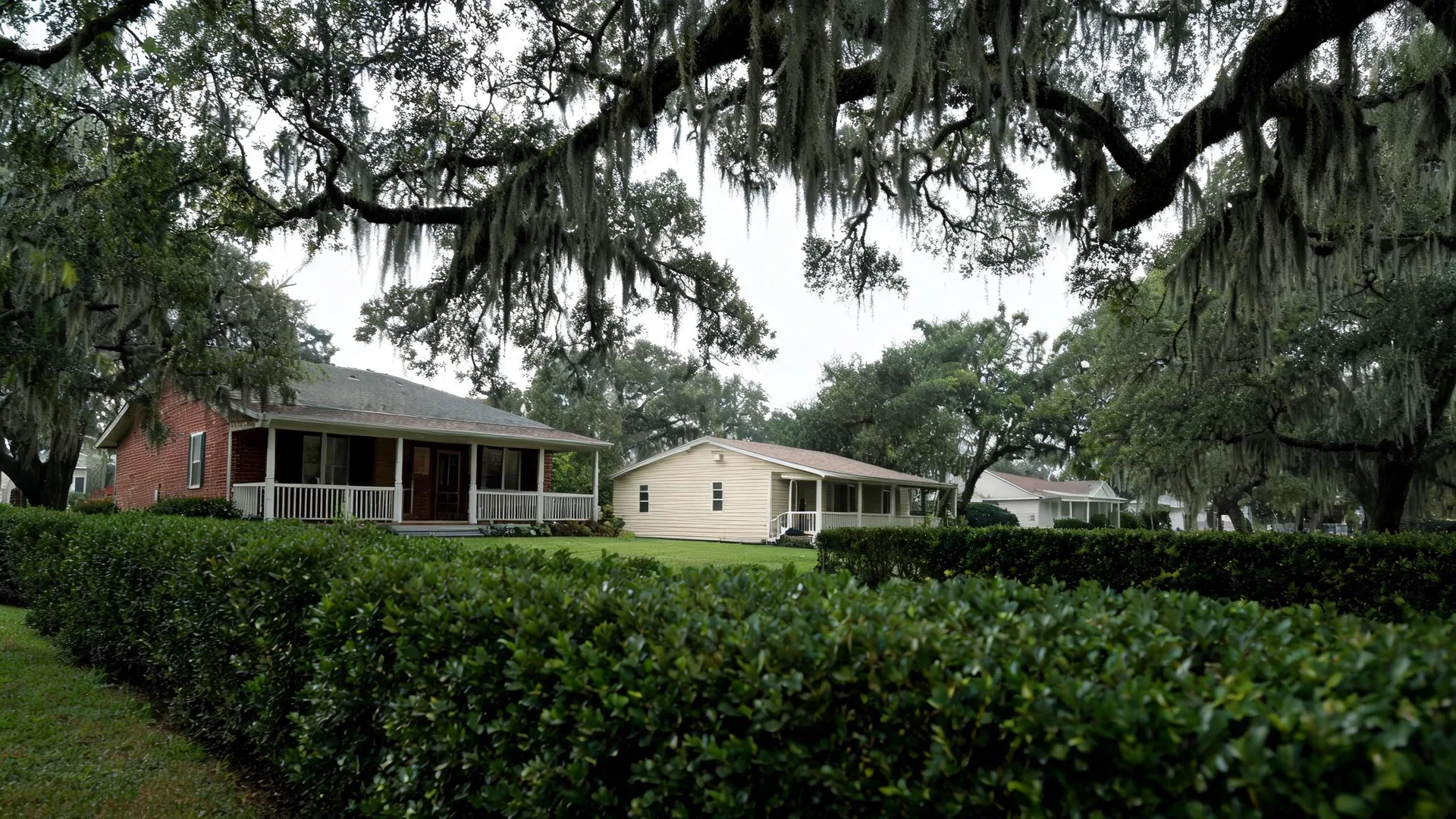
A brick house with a white porch and a light-colored single-story house behind a trimmed hedge, framed by large oak branches draped with Spanish moss.

Heat Pump Repair in Malvern, AR

Tell us about the job

Takes about a minute. No obligation.

RepairHeat PumpHot Spring County, AR
Step 1 of 2

What ZIP code is the job in?

The first hot stretch finds the weak part

A heat pump here sits mostly idle through April. When May comes and it has to run hard for the first time, a failing capacitor or a low charge finally gives out. That is why repair calls cluster right at the start of the season rather than in the middle of it.


October matters just as much

The same thing happens in reverse. A heat pump that limped through March without quite working right will get asked to run all winter starting in November. Getting it checked in October catches the problem before the house is cold and the part has already failed.

5 months
November through March, your system heats
5 months
May through September, it cools
33°F
the average winter night it heats against
91°F
the average summer afternoon it cools against
Isometric line illustration of a cutaway house showing interior rooms with furniture, ceiling ductwork under a dark shingled roof, and an outdoor condenser unit connected by lines on the right.
Your system heats November through March and cools May through September.

NOAA nClimDiv, 1991–2020 normals

A diagnostic visit starts with the tech asking what the system is doing, not with a screwdriver.

Knowing whether it blows warm air, cold air, or no air at all narrows the search before the panel ever comes off.

Hot Spring County sees its share of rough weather. Damaging wind hit 45 times over the past ten years, with hail, a couple of tornadoes, and winter storms mixed in. None of that is unusual, and none of it is hard enough on a heat pump to explain why yours is acting up now. Storms do knock the power out, and plenty of Arkansas households went a full day without it last year. But a heat pump comes back on by itself once power returns. If yours didn't, the weather isn't the reason. What usually brings a unit down is simpler, a weak capacitor, a low charge, a contactor worn from ordinary use.

Get it looked at early

Problems tend to show up in the first weeks of the season, when the load hits a part that was already weak.

Find a contractor
A gray heat pump outdoor unit mounted on a concrete pad next to the stone-accented exterior wall of a house.

The unit tells you before it fails

A heat pump rarely just stops. It gives you a sign first. Warm air on a cold morning when it should be blowing hot means something is off with the reversing valve or the defrost cycle. Short cycling, where it kicks on and off every few minutes instead of running a steady stretch, points to a sensor or a control board problem, and it wears the compressor down faster the longer it goes on. Ice building up on the outdoor unit and not melting off during defrost is another one worth acting on, not waiting out. A hissing or bubbling sound near the lines usually means refrigerant escaping, and the system will keep losing capacity until that's sealed. If the outdoor fan isn't turning while the indoor blower runs, don't assume it'll start back up on its own. Any of these mean the unit is already struggling, not about to.

What you can check yourself

Look at the outdoor unit first. Leaves, grass clippings or ice packed around the coil block airflow and make the whole system work harder than it should. Check the thermostat batteries and the setting, since a heat pump left on 'cool' won't blow warm air no matter what else is right. Inside, pull the filter and hold it up to a light. If you can't see through it, air isn't moving the way it needs to, and that alone can cause a lot of what looks like a bigger problem.

What to leave alone

Don't open the outdoor cabinet or touch the refrigerant lines. There's a capacitor in there that holds a charge even with the power off, and the lines carry refrigerant under pressure that needs the right gauges and training to handle safely. If the breaker tripped, you can reset it once. If it trips again, stop and leave it for the tech, since that usually means something is drawing more current than it should.

A refrigerant leak never fixes itself. A system low on charge keeps running, but it leans on the compressor harder to move heat with less refrigerant to carry it, and the compressor is the part that keeps the whole system alive. Short cycling does similar damage over time. Each start draws a surge of current, and a unit that starts and stops every few minutes is pulling that surge over and over instead of settling into a steady run. Ice on the outdoor coil cuts off airflow, and a system that can't move air across that coil has to work harder to do anything at all. None of these clear up by running the system more. They clear up when something gets fixed.

A tech can tell you a lot by how old the unit is and what's failed before, but the compressor is what decides the question. That part doesn't get replaced on its own. If it's going bad, the cost runs close to a new system, and most homeowners put the money toward the new one instead of the old one. A failed capacitor, contactor, or control board is a different story. Those are small, separate parts, cheap to swap compared to the system around them, and fixing one brings a unit back to full strength. The age of the equipment matters too, since a unit near the end of its expected life that needs a major repair is a worse bet than the same repair on a younger system. Ask what's failing before asking what it costs to fix.