






Two illuminated white Southern-style houses with wraparound porches and staircases, framed by a Spanish moss-draped tree on a quiet street at night.

Heat Pump Repair in Ozark, AR

Tell us about the job

Takes about a minute. No obligation.

RepairHeat PumpFranklin County, AR
Step 1 of 2

What ZIP code is the job in?

A heat pump that's struggling usually tells you before it quits outright. Air coming from the vents that feels barely warm, or just a notch above room temperature, often means the system has shifted into backup heat and isn't pulling warmth from outside anymore. Ice building up on the outdoor unit beyond what a normal defrost cycle clears is another sign, especially if the coil stays frosted over for hours. Listen for the unit short cycling, shutting off and restarting again and again instead of running a steady stretch. A hissing sound near the lines can point to a refrigerant leak, and that's not something to leave alone since it can damage the compressor over time. If the outdoor fan isn't spinning when the system calls for heat or cooling, that's worth a call right away rather than waiting to see if it starts on its own.

7 months
October through April, your system heats
5 months
May through September, it cools
31°F
the average winter night it heats against
89°F
the average summer afternoon it cools against
Isometric line illustration of a cutaway house showing interior rooms with furniture, ceiling ductwork connected to an indoor air handler, and an outdoor condenser unit linked by refrigerant lines.
Your system heats October through April and cools May through September.

NOAA nClimDiv, 1991–2020 normals

Heat pumps in Ozark run heat from October through April.

A weak part can get through mild days in September but fail once the system has to run hard and steady in October.

Half the homes here were built in 1985 or later

Half the homes here were built by 1985
88 damaging wind events from 2015 to 2024
46 hail events from 2015 to 2024

A heat pump fails for a handful of reasons, and most trace back to parts that wear from constant cycling. The reversing valve switches the system between heating and cooling, and when it sticks, the unit can get stuck blowing the wrong temperature air or stop switching modes at all. Capacitors wear out from starting the compressor and fan motors over and over, and when one goes weak, the outdoor unit may hum but not start, or start and then stall. The defrost control board tells the system when to melt ice off the outdoor coil, and if the sensor or board fails, frost builds up and chokes airflow until the unit can't pull heat from the air anymore. Refrigerant leaks don't fix themselves, and a system low on charge has to run longer to move the same amount of heat, which puts more strain on the compressor. The compressor is the part that usually fails last, after smaller problems went unaddressed for a while, and it's the heart of the whole system.

Get it looked at early

Problems tend to show up in the first weeks of the season, when the load hits a part that was already weak.

Find a contractor
A man in a cap, navy long-sleeve shirt and tan work pants carries a canvas tool bag up steps toward a dark front door, with a potted shrub beside the porch.
A white mini-split heat pump outdoor unit mounted on a concrete pad beside a gray-sided house, surrounded by gravel and green shrubs.

What a tech actually checks

A diagnostic starts outside, not inside. A tech will check the outdoor unit first, looking at the coil for frost, listening to whether the fan and compressor are running together or if one's working and not the other. Gauges go on the lines to check refrigerant pressure, since that number tells them right away if the charge is low or if something downstream is restricting flow. Inside, they'll pull the cover off the air handler and test the capacitor with a meter rather than guessing from how it looks, because a capacitor can look fine and still be weak. They'll check the reversing valve by running the system in both modes and feeling whether it actually switches. If the defrost board is suspect, they'll check the sensor readings against what the board is doing with them, since a board can be fine while the sensor feeding it bad information. The point of all this is to find the one part that's actually failing instead of swapping parts and hoping. A tech who's done this a while can usually tell within the first few minutes which of these it's likely to be, just from how the unit is behaving, but the gauges and the meter are what confirm it before anything gets replaced.

What you can check safely

Look at the outdoor unit and clear away leaves, mulch or anything stacked against it, since blocked airflow alone can make a heat pump struggle. Check the air filter and swap it if it's gray or clogged, because restricted airflow across the indoor coil can mimic a bigger failure. Check your thermostat is set to heat and the temperature is actually above room temperature. Look at circuit breakers if the system seems dead, since a tripped breaker is sometimes the whole story.
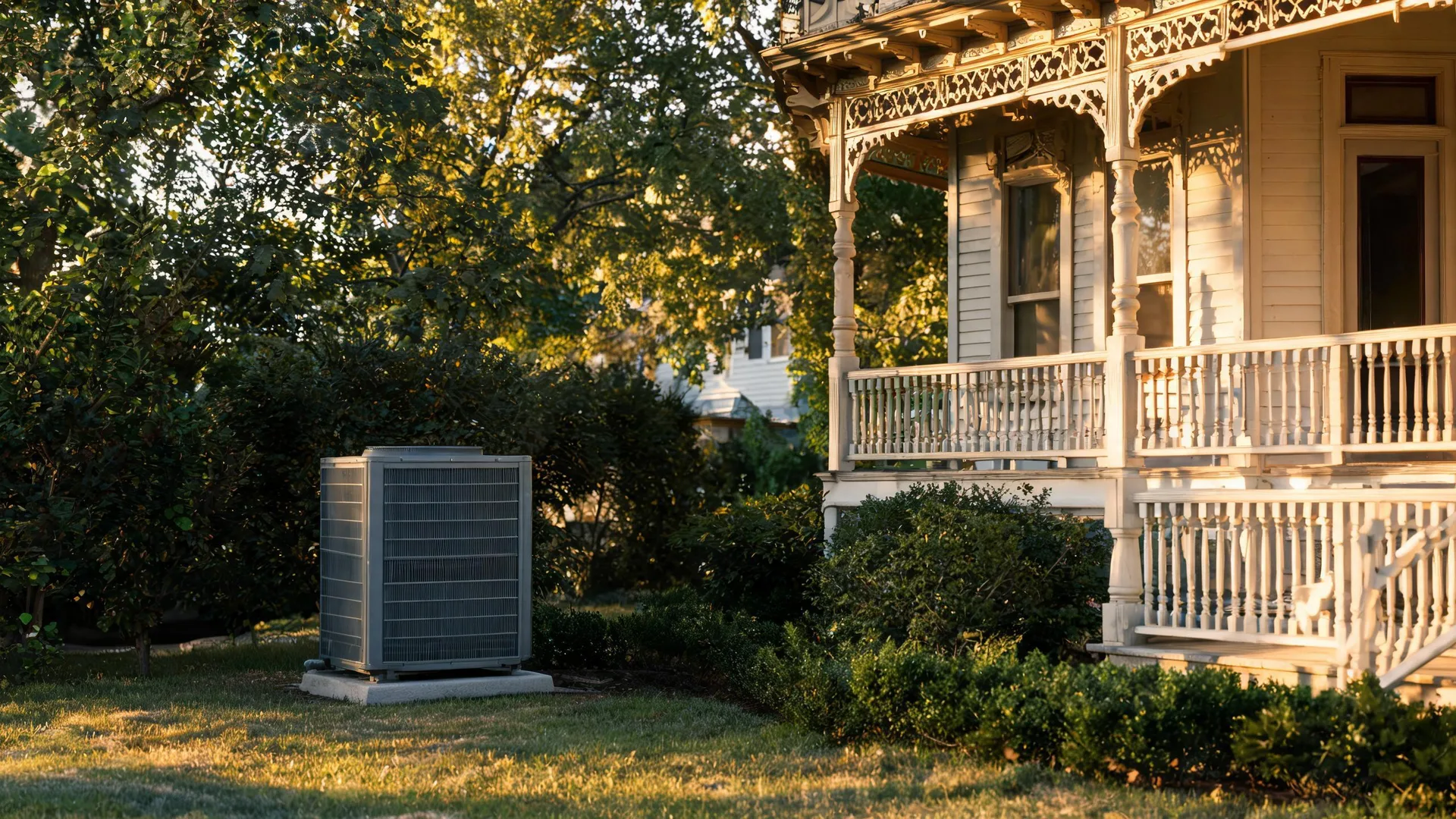
What to leave alone

Don't take panels off the outdoor unit or touch anything inside the cabinet. Don't try to chip ice off the coil or hose it down, since forcing a defrost cycle can damage the fins or the fan. Don't keep flipping the system between heat and emergency heat trying to fix it yourself, since that can mask what's actually failing. If you've checked the filter, the thermostat and the breaker and the problem is still there, it's a call, not a project.

Running a heat pump through a failure usually turns a small repair into a bigger one. A system low on refrigerant has to run longer to move the same heat, and that extra runtime pushes a compressor that's already working harder than it should. Ice that isn't clearing properly adds weight and blocks airflow across the coil, and a fan motor straining against that can burn out. A failing capacitor makes the compressor draw a hard start again and again, and each one of those stresses the windings a little more until they short. None of these fix themselves by waiting. A part that could have been swapped on its own ends up taking the compressor down with it, and the compressor is the one piece nobody wants to replace.

Repair versus replacement comes down to what's actually failing, not how old the system sounds. A reversing valve, a capacitor, a defrost sensor, these are parts a contractor swaps out and the system runs like normal again. A compressor is different. Once it's worn or starting to fail, there's no small fix for it, and replacing just the compressor on an aging system often costs close to what a new system would. So the real question isn't whether the repair is worth it. It's whether the part that's failing is one that fails alone, or one that takes the whole system down with it.