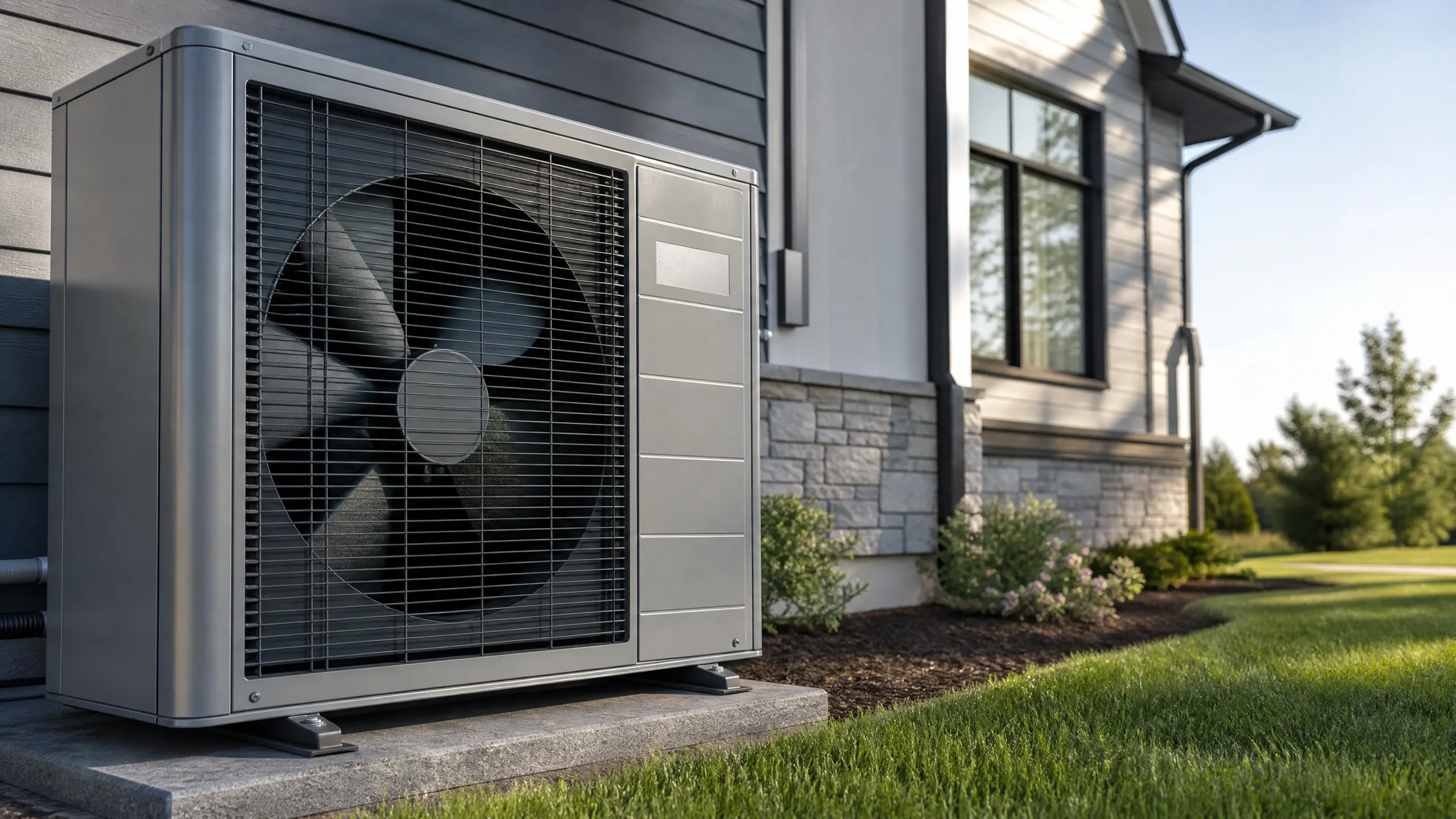
A grey heat pump outdoor unit mounted on a concrete pad against the exterior wall of a house with grey siding and stone veneer.

Heat Pump Repair in Paragould, AR

Tell us about the job

Takes about a minute. No obligation.

RepairHeat PumpGreene County, AR
Step 1 of 2

What ZIP code is the job in?

October is when weak units show up

Heat pumps in Greene County switch over to heat in October, after sitting idle most of the year. A part that was already marginal, a weak capacitor or a contactor going bad, tends to fail once the system has to work on the first cold mornings.

What that means for getting it fixed

If your heat pump is struggling now, the cause is probably something that was already wearing out before the weather turned. A contractor can find that part and replace it rather than treating the whole system as suspect.

7 months
October through April, your system heats
5 months
May through September, it cools
31°F
the average winter night it heats against
89°F
the average summer afternoon it cools against
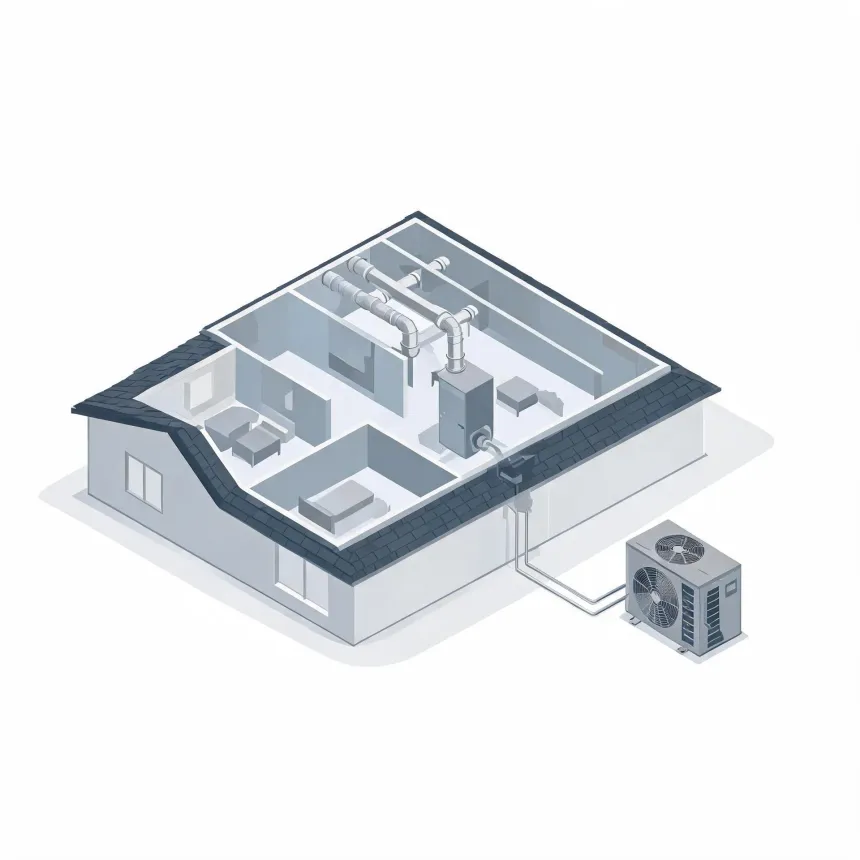
Isometric cutaway illustration of a single-story house showing interior rooms with ductwork, a furnace or air handler, and refrigerant lines running outside to a condenser unit on a pad.
Your system heats October through April and cools May through September.

NOAA nClimDiv, 1991–2020 normals

Greene County has logged 35 hail events over the past decade.

Hail that frequent damages roofs and siding, not the outdoor heat pump unit. The cause of a breakdown is almost always inside the system itself.

Greene County sees its share of rough weather, 42 damaging wind events and 9 tornadoes over the past decade, plus the usual share of winter storms. None of that is aimed at your heat pump any more than at anyone else's. The outdoor unit is built to sit outside and take wind and cold. A power blink during a storm does not damage it either. Most units come back on by themselves once power is restored. So if your heat pump is not working right now, weather is probably not why. Something inside the system needs a look, the same as it would any other year.

Half the homes in Greene County were built in 1991 or later

Half the homes in Greene County were built in 1991 or later. If your house falls on that side of the line, your heat pump likely isn't that old either. A broken part is worth finding and fixing rather than a reason to think about replacing the whole system.

Find a contractor
A gray heat pump condenser unit mounted on a concrete pad against the gray lap-siding exterior wall of a house.

A diagnosis rules things out, it doesn't guess

A diagnostic visit starts outside, not at the thermostat. The contractor checks refrigerant pressure and the temperature split across the outdoor coil before touching anything inside. Then it's electrical readings on the capacitor and contactor, amp draw on the compressor, a check of whether the reversing valve actually shifts when it's told to. Each test rules something out. A bad capacitor usually shows up fast. A weak one sometimes only shows under load, which is why a contractor runs the system for a while instead of trusting a single reading. The goal isn't to start swapping parts and see what helps. It's to find the one thing that's actually wrong and leave the rest of the system alone.

Running on a bad reversing valve can ruin the compressor

When the reversing valve sticks halfway, refrigerant doesn't flow the way the compressor expects. Keep running the system like that and the compressor is pushing against pressures it isn't built for. A reversing valve is a repair. A failed compressor is most of a new system.

Waiting turns a short fix into a longer one

A heat pump short on refrigerant will keep running, just worse, pulling less heat out of the air each cycle while the compressor works harder to make up for it. Left alone, that extra strain is what takes out the compressor next. Caught early, it's a leak to find and a charge to correct.

Before calling anyone, check the thermostat is set to heat and the setpoint is actually above room temperature. Look at the outdoor unit. If the coil is caked in ice or snow, that alone can stop the system from pulling heat, and a light brushing off is safe to try. Check the circuit breaker for the unit, since a tripped breaker will shut the whole thing down with no other signs. Look at the air filter. A clogged filter chokes airflow and can make a heat pump seem like it's failing when it just can't breathe. If the vents are blowing air that feels cool even though the system is in heating mode, that's worth noting but not something to chase down yourself. Past that, if the unit is making noise it didn't used to make, or running constantly without warming the house, that's a sign to stop troubleshooting and get a contractor to look at it.

Most of the time, repair is the right call. A heat pump fails one part at a time, a capacitor here, a sensor there, and replacing a part is almost always cheaper than replacing the system. What points toward replacement isn't any single failure, it's the pattern. A compressor that's gone is the one repair that usually isn't worth making on its own, since fixing it costs close to what a new unit would. Age matters too, but not by itself. An old unit that's never given trouble isn't a problem. An old unit the contractor keeps getting called back to is telling you something, and that's the point to ask about replacing it instead of patching it again. Short of that, fix what's broken and leave the rest of the system alone.