A brick house with a white porch and a light-colored single-story house behind a trimmed hedge, framed by large oak branches draped with Spanish moss.

Heat Pump Repair in Searcy, AR

Tell us about the job

Takes about a minute. No obligation.

RepairHeat PumpWhite County, AR
Step 1 of 2

What ZIP code is the job in?

White County sees more than its share of storms

White County logged 107 severe weather events between 2015 and 2024, including damaging wind, hail, tornadoes and winter storms. A heat pump's outdoor unit sits outside through all of it, year after year.

A unit that still runs can still be damaged

Hail dents fins and bends the cabinet. Wind throws branches and debris into the coil. A heat pump can keep running after any of this while losing efficiency or wearing a part down early. If your outdoor unit took a hit this year, it's worth having someone look it over.

6 months
November through April, your system heats
5 months
May through September, it cools
33°F
the average winter night it heats against
90°F
the average summer afternoon it cools against
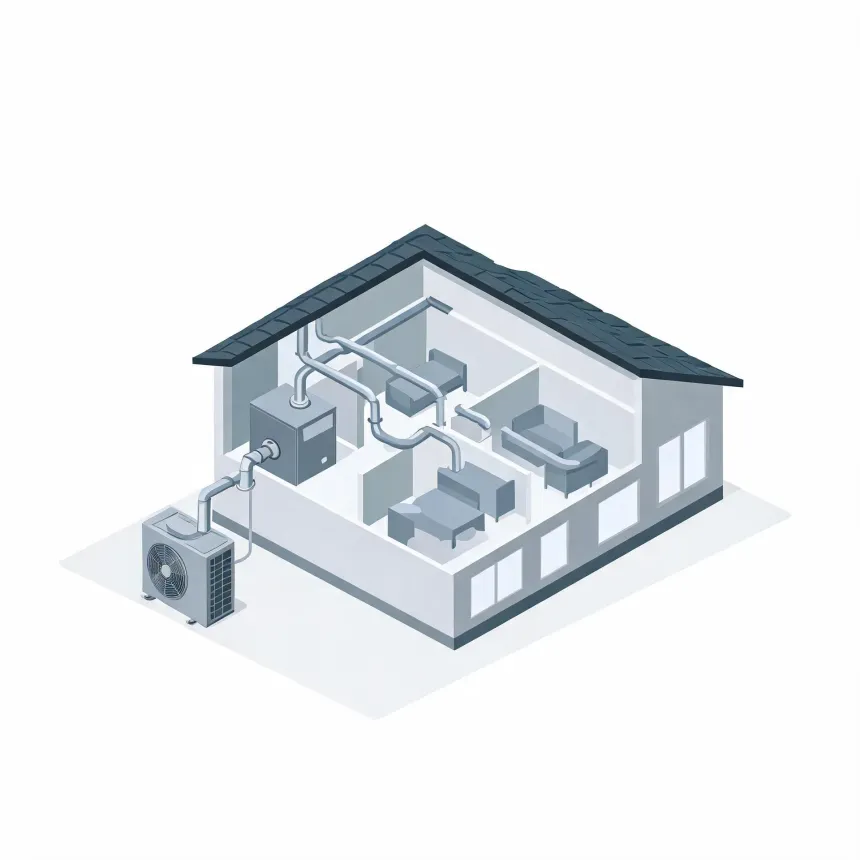
Isometric cutaway illustration of a single-story house showing an indoor air handler, branching ductwork through rooms with furniture, and an outdoor condenser unit connected by a line outside the wall.
Your system heats November through April and cools May through September.

NOAA nClimDiv, 1991–2020 normals

Half the houses in White County were built in 1992 or later.

A heat pump installed with a newer house usually still has years of service in it, which makes repair the right call before replacement.

November's first cold snap finds the part that was already failing

Cooling runs May through September
Heat runs November through April
39 hail events from 2015 to 2024

Hail hit White County 39 times between 2015 and 2024. That sounds like a lot until you spread it across those years. It's not what usually brings a heat pump down. Most repair calls are the ordinary ones. A capacitor that's given out. A contactor stuck or pitted. A refrigerant leak slow enough that nobody noticed until the house stopped holding temperature. If the outdoor unit wasn't visibly hit this year, the problem is probably just a part that wore out on its own schedule, and that's a straightforward fix.

Had storm damage this year? Get the outdoor unit looked at

If your outdoor unit took a hit from hail or wind this year, have it checked even though it's still running. A dent or a bent fin can mean a part wearing down early, and that's easier to catch now than after it fails.

Find a contractor
A man in a dark shirt, tan work pants, boots and a cap walks up porch steps toward a navy front door, carrying a canvas tool bag.
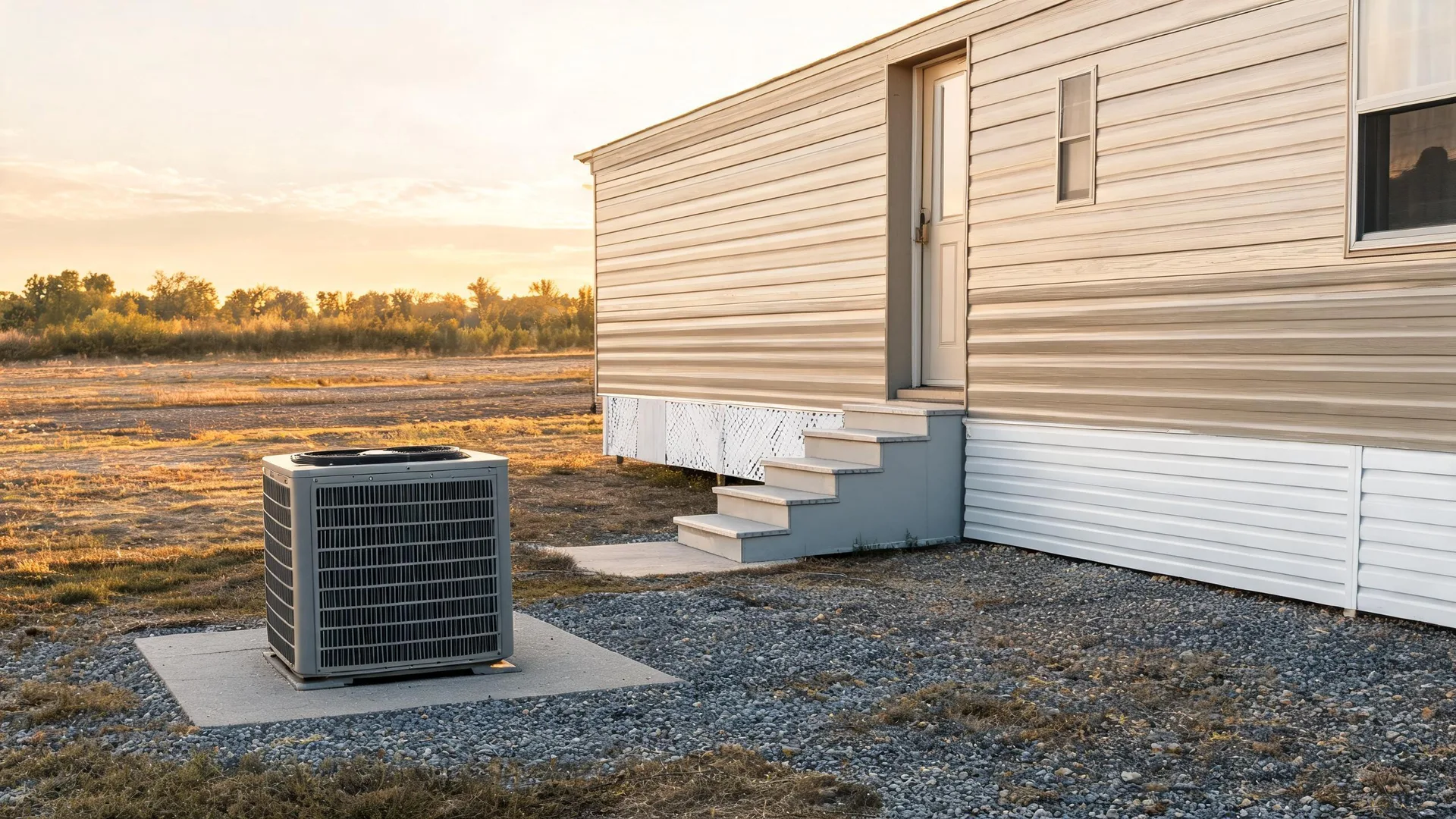
A residential heat pump outdoor unit mounted on a concrete pad next to a house with gray vinyl siding.

A newer system still has years to run on

If your heat pump came with the house and the house is newer, that works in your favor now. A repair is worth paying for when the unit has years left to use it. Get the part fixed and let it keep running.

What you can check from the thermostat and the panel

Check the thermostat is set to heat and the setpoint is actually above room temperature. Look at the breaker panel for the outdoor unit and the air handler and reset any tripped breaker once. If it trips again right away, stop and leave it off until someone looks at it.

What you can check at the unit itself

Walk out to the outdoor unit and clear away leaves, mulch or anything piled against the cabinet so air can move through the coil. Pull the air filter and hold it up to a light. If you can't see light through it, swap it. These take a few minutes and either solve the problem or rule it out before anyone comes out.

A heat pump that's losing a capacitor or leaking refrigerant doesn't fail all at once. It keeps running while the part gets worse. A weak capacitor makes the compressor work harder to start every cycle, and that strain shortens its life. A slow refrigerant leak lets the compressor run low on charge, which runs it hotter than it's built for. A contactor that's pitted keeps arcing a little more each time it closes, until it welds shut or stops closing at all. None of this shows up as the system shutting off. It shows up as the house not quite holding temperature and the unit running longer than it used to, while the original part keeps failing a little more and taking something else down with it. Catching it while it's still just a bad capacitor is a different repair than catching it after it's taken the compressor along.

A diagnostic visit starts outside at the unit itself. A tech will pull the panel off the outdoor cabinet and check the capacitor, the contactor and the wiring before touching anything else, since those fail the most and they're fastest to rule out. Gauges go on next to check refrigerant pressure, because a system that's low is telling you where to keep looking. Indoors, they'll check airflow off the vents and look at the filter and coil, since a heat pump starved for airflow can mimic a refrigerant problem that isn't actually there. They'll also run the system through a cycle, in both heat and defrost, to see whether it reverses the way it should. Most of this gets answered before anyone starts talking about parts.