

Quiet airflow, nothing in its way
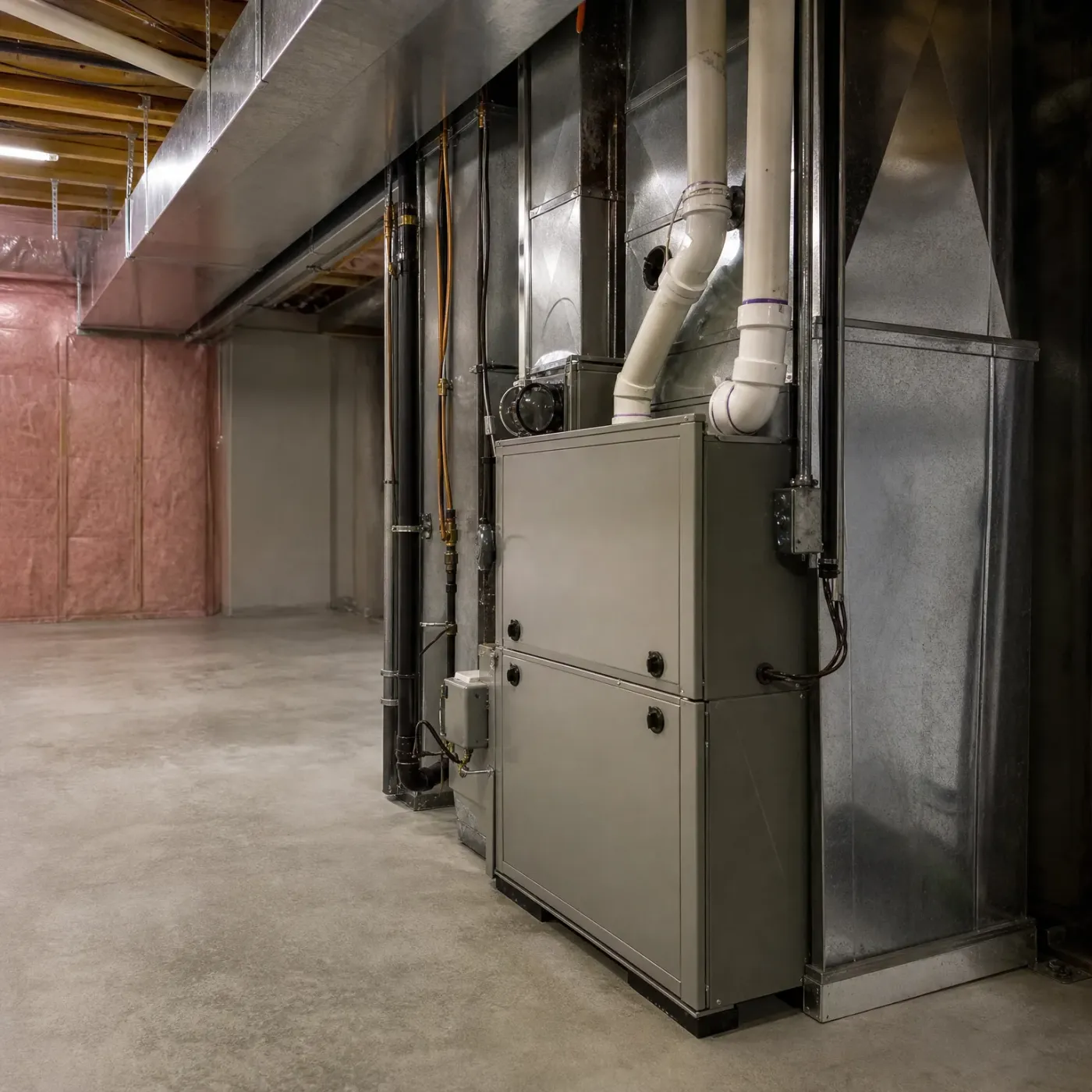
Here the ductwork is clean and sized right, the filter sits open, and air moves through without a fight. A furnace set up like this just runs. No whine from the return, no thin note chasing you through the house.
Send the request today and stop worrying about who to call.
Let a pro reach outA whistling furnace usually means air is being forced through a space too small for it. Most often that's a dirty filter, squeezed down to a crack and turning the return into a narrow slot the air has to push through to get anywhere. It can also be a return vent that's partly closed, furniture or a rug blocking it, or ductwork with a kink or a seam that opened up. The sound is air moving fast under pressure it shouldn't have to work against, and it gets louder as the restriction gets worse. With most homes in Arkansas heating on electric furnaces, that blower keeps running all winter to hold the house at temperature, and whatever is squeezing the airflow stays under strain the whole time. Left alone, it's the blower motor that pays for it, working harder than it was built to. A furnace repair technician can find exactly where the air is getting choked and clear it before the motor takes the damage.

Electric furnaces push the same amount of air whether every room is open or half of them are shut to save on heat. Close too many vents and that air has fewer places to go. It backs up in the ductwork and squeezes out through whatever gap it can find, usually around the blower or a seam in the return, and that's the whistle. Leaving vents open in rooms you're not using still costs less than what a strained blower motor costs to replace.

A whistle that's high and steady usually points to a small, tight gap, air forced through a space like the edge of a filter slot. A lower sound that rises and falls with the blower points somewhere in the ductwork itself, a loose seam or a joint that's come apart. Flex duct run through a crawlspace or attic can also develop a kink over time, and that kink narrows the path the same way a clogged filter does.
You'll hear it most when the furnace kicks on, a thin, steady note coming from a vent or from around the filter door itself. Sometimes it's loud enough to notice from another room. Look at the filter when you hear it. If it's gray and packed solid, that's likely your answer. Check the vents too. A furnace built to move air through every room in the house is working the same as always even if you've shut doors and closed vents to save on heat, and that air still has to go somewhere. Left alone, a furnace straining to push air through too small a space runs longer to heat the same rooms, and the motor pulling against that restriction wears faster than it should.

Here the ductwork is clean and sized right, the filter sits open, and air moves through without a fight. A furnace set up like this just runs. No whine from the return, no thin note chasing you through the house.

This furnace has years on it, and the gas lines and flue show it. A cabinet like this is more likely to have a panel not sitting flush or a seam that's loosened over time, either one enough to make the air whistle getting out.




Your request goes to one pro, not a list of companies.
One request and the search for a pro is handled.
There's no charge for the request.

This is a furnace with nothing choking it. The filter sits clean, the ductwork is sized for the blower, and air moves from the furnace through the trunk line without squeezing past anything. No whistle, no thin note at the return. It just heats the house.

Same furnace, same ductwork, but somewhere between here and the rooms upstairs there's a gap too narrow for the air the blower is pushing. A clogged filter does this. So does a closed vent or a crushed flex line behind one of those access panels. The whistle is that squeeze.


A local contractor who works on electric furnaces all winter takes the call, hears what you describe, and knows what usually causes it before arriving.
The sound stays or climbs as filters load up and vents stay shut. Meanwhile the blower keeps straining against the same squeeze, night after night.


Winter nights in Arkansas average 32°F, so your furnace isn't running flat out against deep cold most of the time. A whistle you hear on an ordinary night like that points to airflow being squeezed somewhere, not the furnace straining to keep up with the weather.
NOAA nClimDiv 1991-2020 county normals weighted by homes
A furnace that whistles is telling you air is being squeezed somewhere it shouldn't be. Most of the time that's a filter clogged down to a crack, or vents closed in rooms nobody's using. Neither one is complicated, and neither one gets better by waiting. The blower keeps pushing the same amount of air whether the path is open or not, so a squeeze that starts small just means the motor works harder against it night after night.
Finding the restriction is the kind of thing someone who works on electric furnaces all winter has usually already seen a dozen times this season. They'll know to check the filter and the vents before anything else, because that's where it usually is, and they'll have a sense of what your ductwork can and can't handle once they're in front of it. That's worth something. A contractor who does this work every day in Arkansas homes isn't guessing at what a whistle means; they're confirming it.
Sending the request connects you with one contractor, not a handful competing for the job. One visit, one person who looks at the filter, the vents, and the return and tells you straight what's causing the noise. No comparing quotes, no explaining the problem five times to five different companies. Once that request is sent, the job of finding someone becomes someone else's to carry, and the whistle stops being something you have to figure out on your own.

Only one pro gets your request, so you hear from one company.