
Heat pump vs furnace in Arkansas County, Arkansas

Get My Quote

Pros who install both

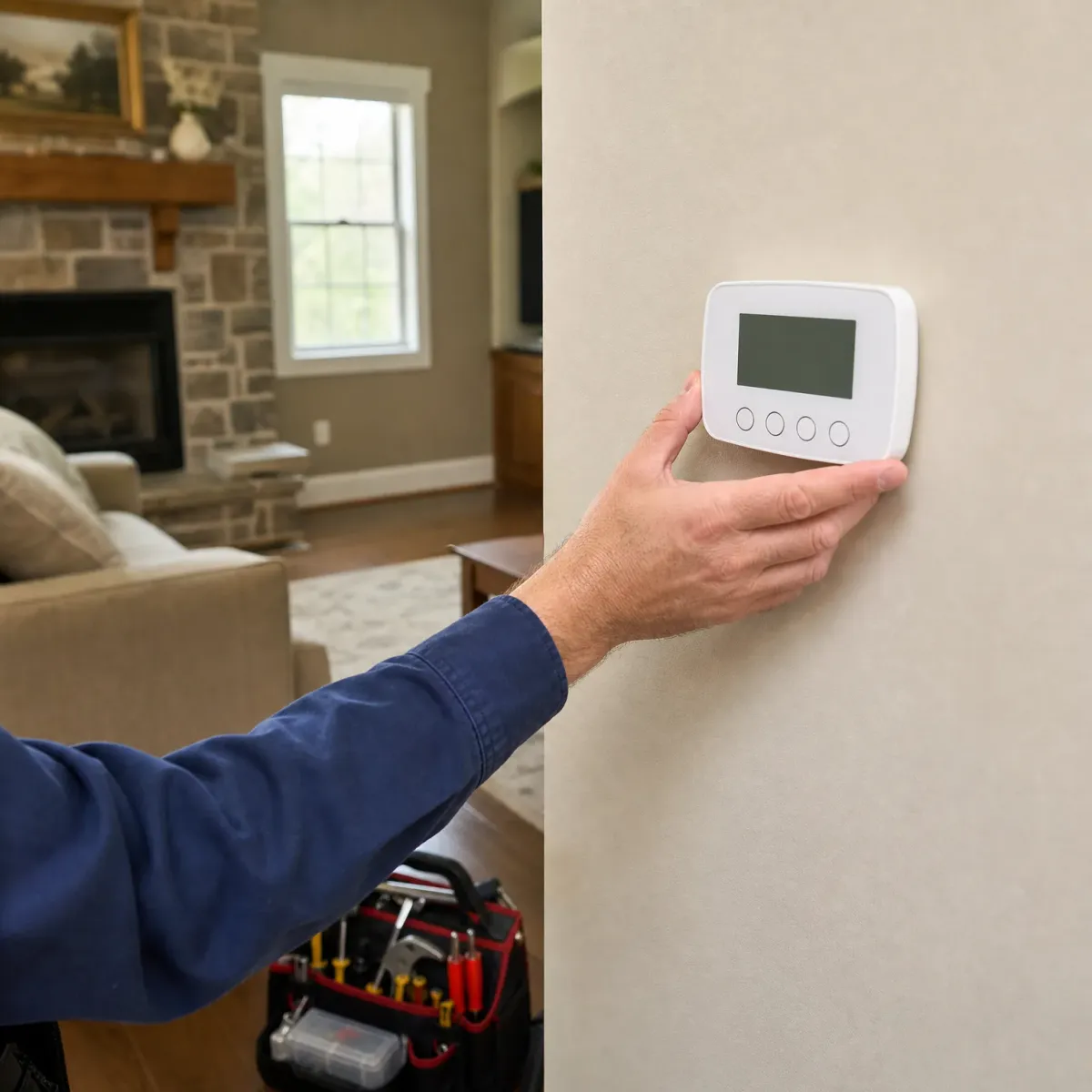
A person's hand in a blue long-sleeved shirt touches a white wall-mounted thermostat with a blank screen and four buttons, with a living room containing a stone fireplace, window, and an open tool bag visible in the background.

Tell us about the job

Takes about a minute. No obligation.

New system or replacementArkansas County, AR
Step 1 of 3

What kind of equipment?

Which costs less to run in Arkansas County?

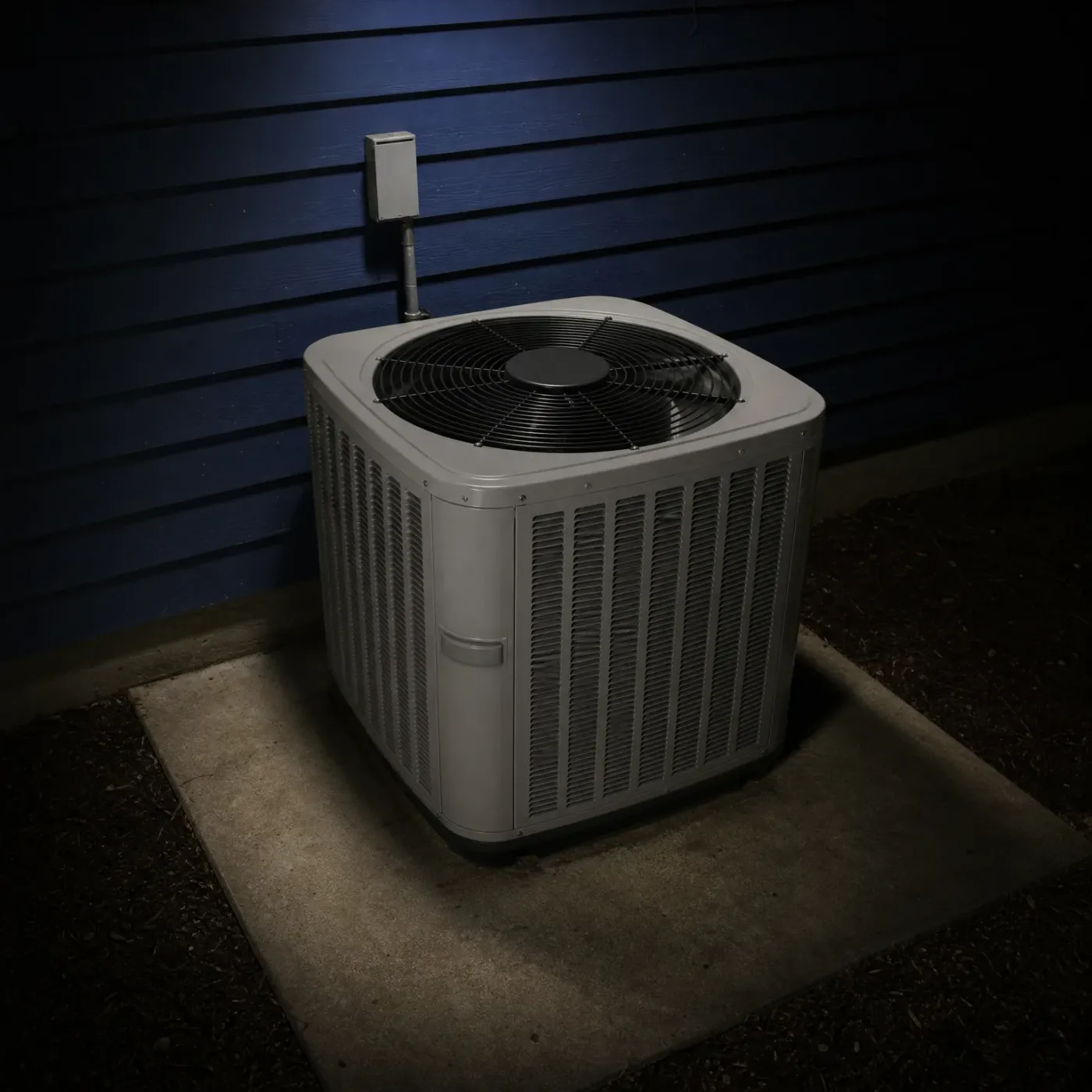
A gray outdoor condenser unit with a top-mounted fan grille sits on a concrete pad beside a dark blue horizontal lap-siding wall at night, with a disconnect box and conduit on the wall above it.

Heat pump

To heat your home here$1.64per 100,000 Btu

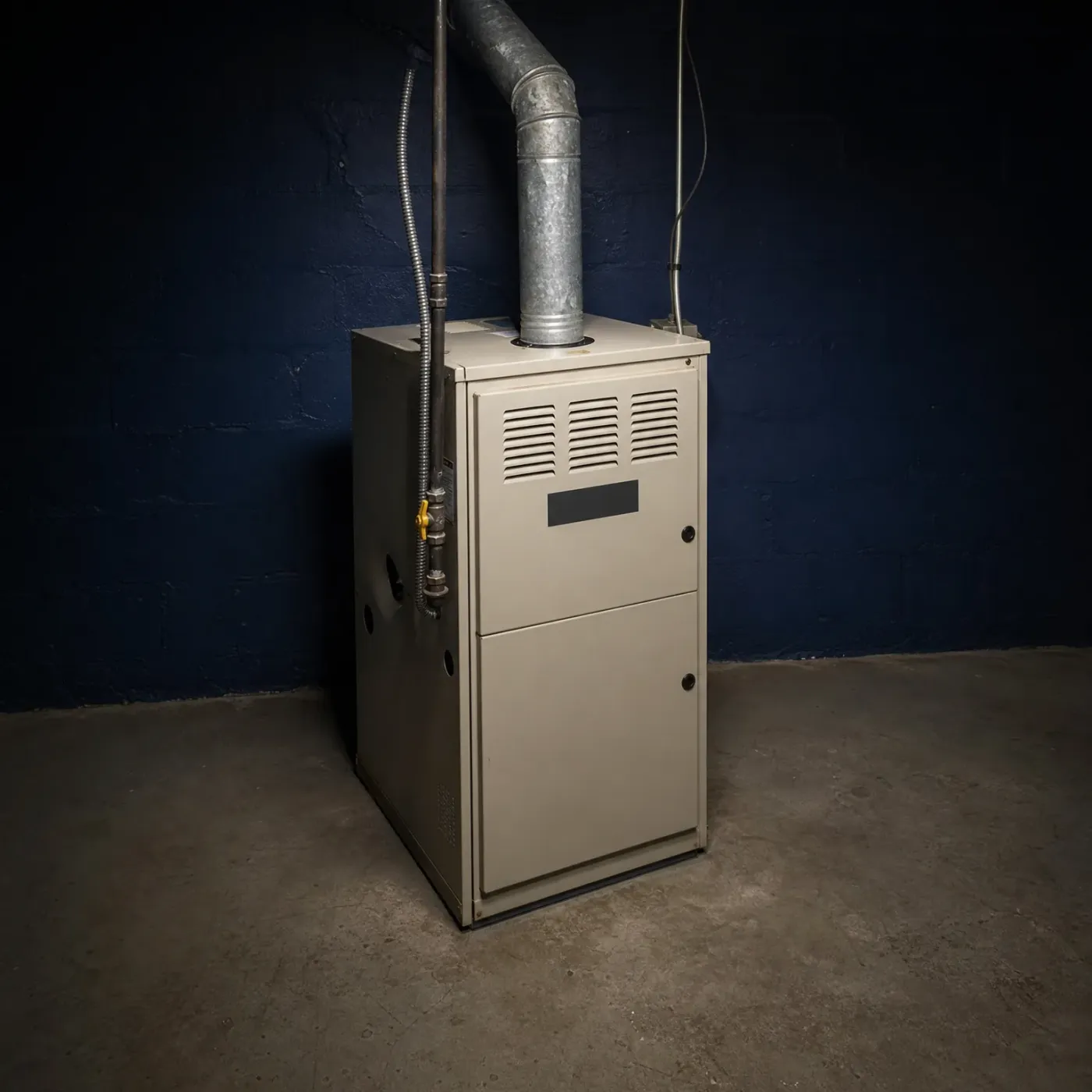
A beige gas furnace cabinet with a louvered upper panel stands on a concrete floor against a dark blue painted block wall, with a galvanized metal flue pipe, flexible conduit, and a gas line running up from it.

Furnace

To heat your home here$1.97per 100,000 Btu

At Arkansas's gas and electricity prices, a heat pump makes the same heat as a gas furnace for about 17% less.

Btu stands for British thermal unit, the standard measure of heat energy.

Where does a heat pump shine?

  • Made for mild winters

    Winter nights in Arkansas average 36°F, which is mild enough that a heat pump can keep pulling heat from the outside air all season without straining. It won't be fighting against deep cold most mornings, just steady, manageable chill.

    A covered front porch with white columns, navy lap siding, and a pale blue glass-paned door, with potted plants, a coir mat, and dark rubber boots, beside a snow-dusted yard with bare trees.
  • Covers a long cooling season

    Cooling runs May through September here, five months of the year. A heat pump is already built to do that job, so you get a system that handles the long cooling stretch and the winter heating too.

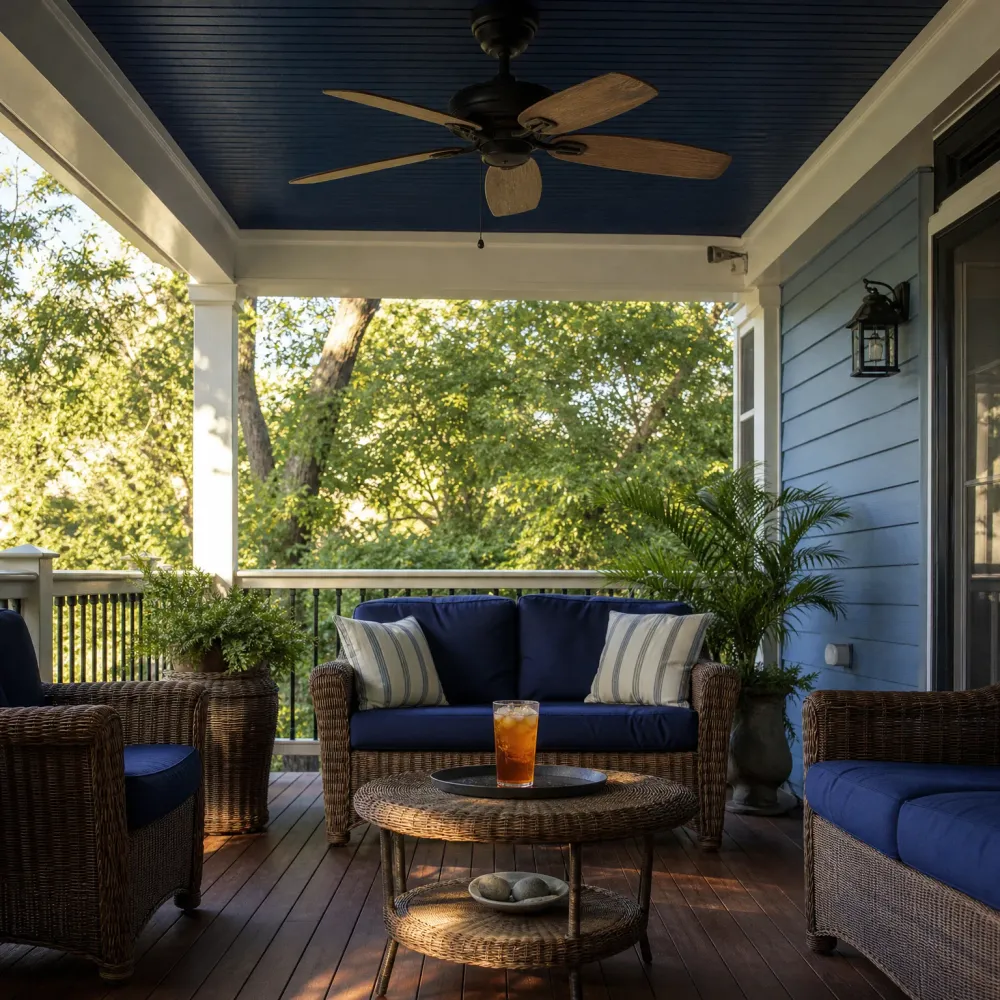
    A covered porch with a navy-painted beadboard ceiling and wood-bladed ceiling fan, furnished with wicker seating with navy cushions, a round wicker coffee table holding a glass of iced tea on a tray, potted ferns and a palm, and green trees beyond the railing.
  • Heats and cools in one system

    Winter and summer are covered by the same outdoor unit. That's one machine to service instead of two.

    A living room with a light blue sofa and navy cushion in front of a large three-pane window overlooking green trees, with a rustic wood coffee table, woven rug, navy cabinetry and bookshelves, a wall lamp, and potted plants.

Where does a furnace shine?

  • Fast, strong heat on demand

    Turn the heat up and the furnace answers right away. There's no long wait for the house to catch up.

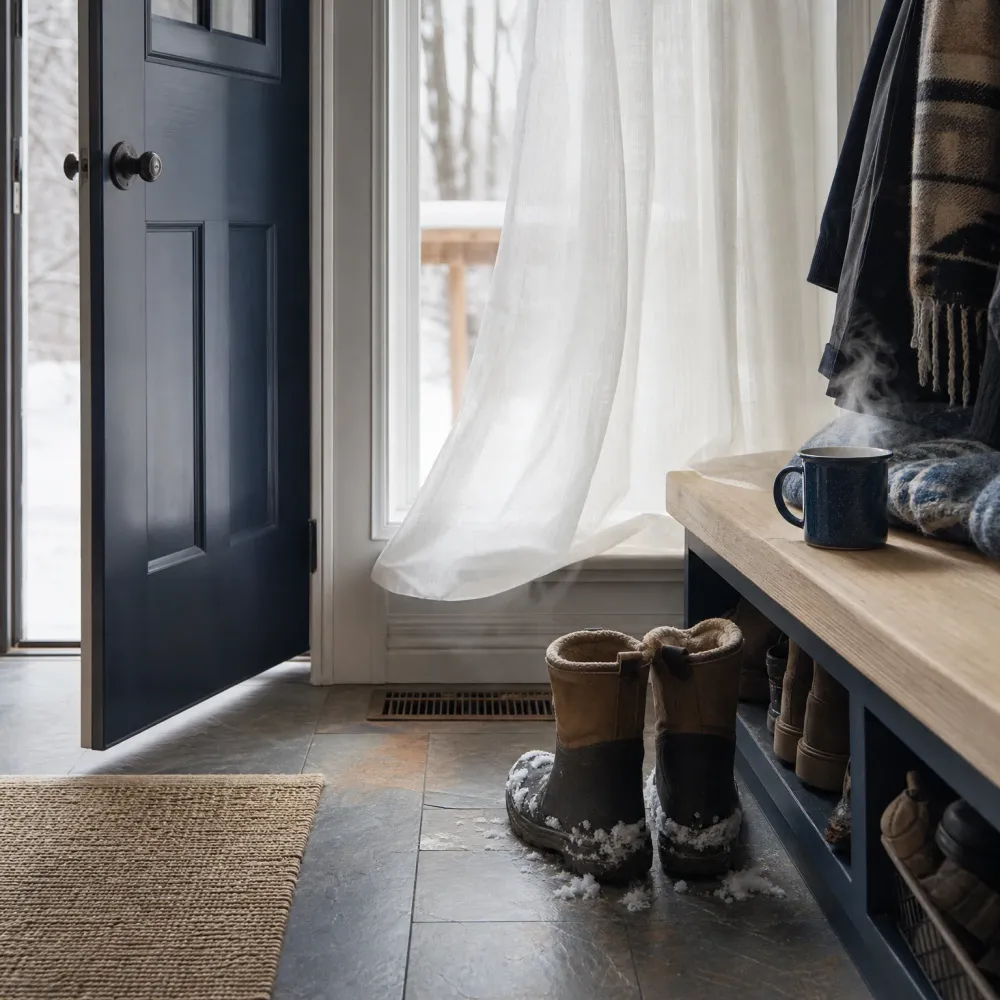
    An entryway with an open dark blue door showing snow outside, snow-covered boots on a slate tile floor, a wooden bench with a steaming enamel mug, hanging coats and a plaid scarf, and a sheer white curtain by a window.
  • Proven, simple, easy to get serviced

    Gas furnaces have heated homes for generations. Almost every HVAC tech knows them inside and out.

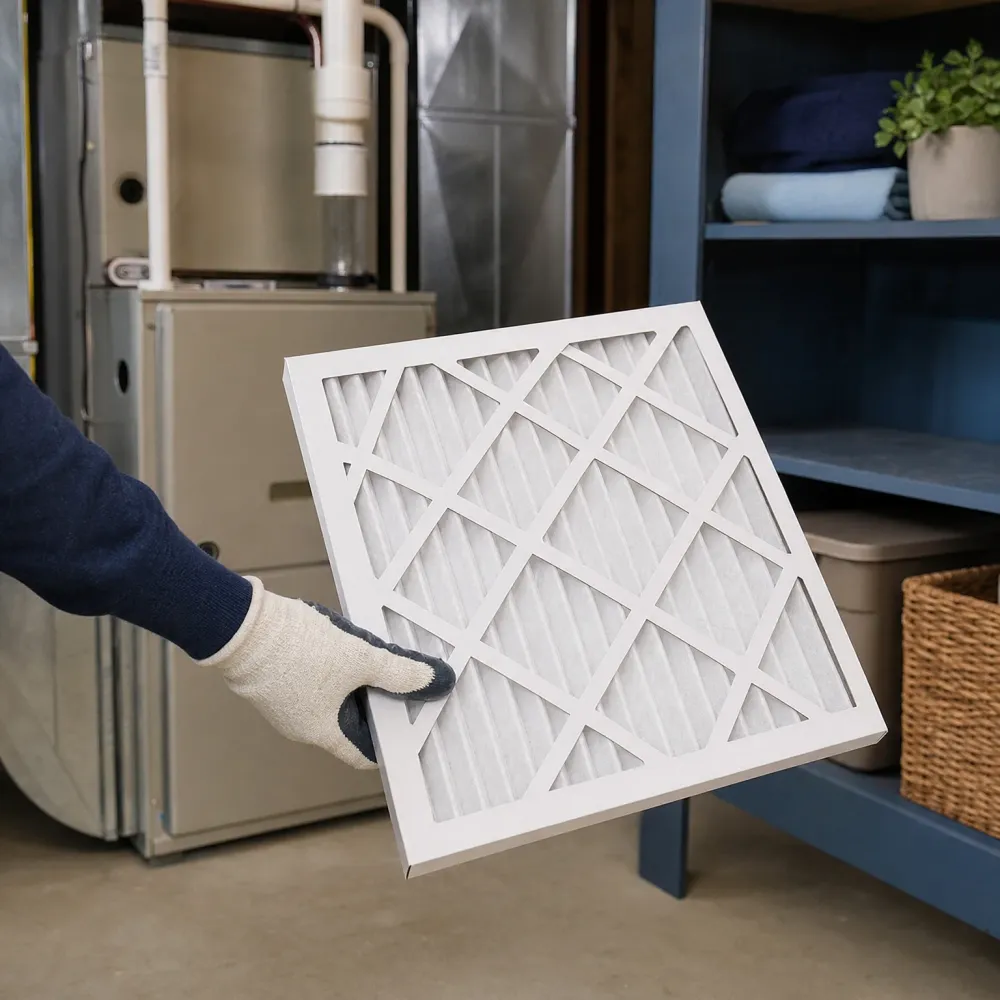
    A gloved hand holds a pleated air filter in front of a furnace and ductwork, with a blue shelving unit holding folded towels, a plant and a wicker basket at right.
  • Pairs with any central AC

    The ductwork that delivers heat in winter delivers cool air in summer once an AC coil is added.

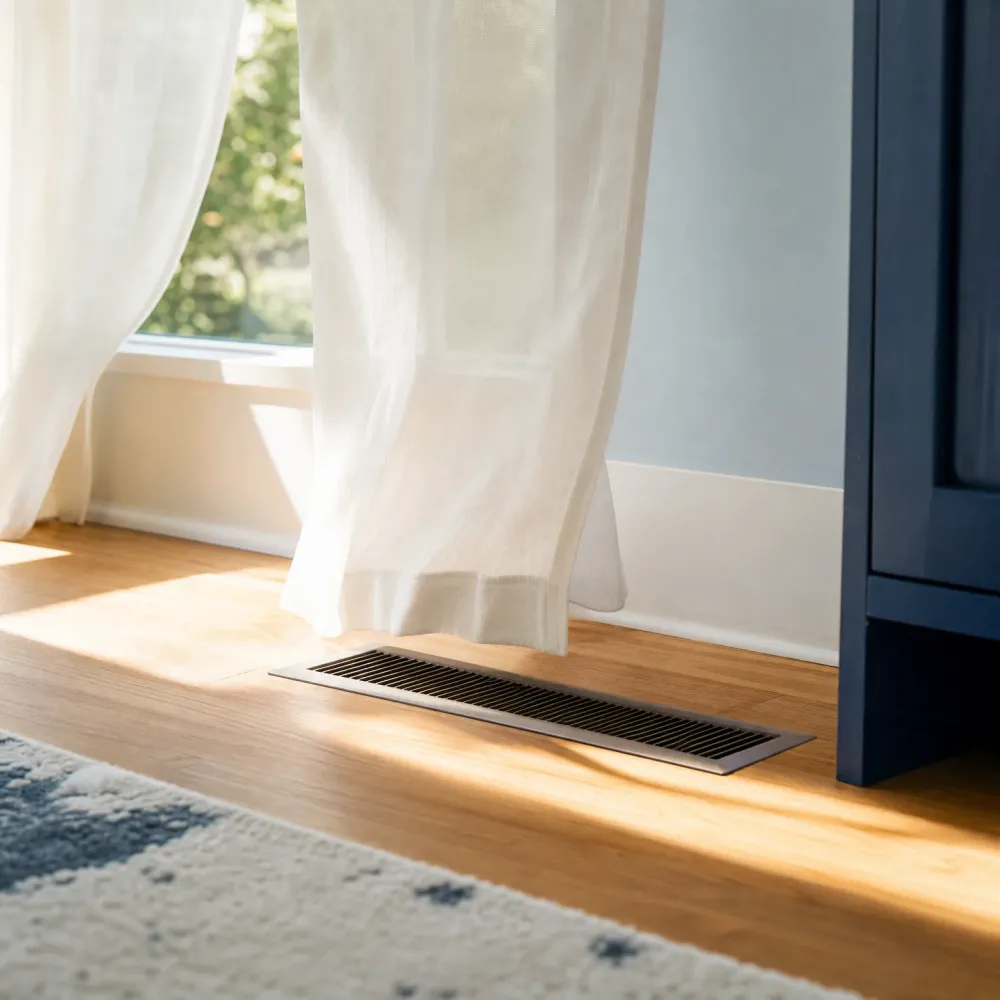
    A metal floor vent set into a wood floor near a window with sheer white curtains, a white baseboard, a dark blue cabinet at right, and a patterned rug in the foreground.

What a heat pump means for your winters here

Winter here is mild more often than not. The overnight low averages 36°F across December, January and February, and it only falls to freezing or below on about 50 of the roughly 150 nights the heat runs. That leaves most of the season above freezing, which is where a heat pump works best. It pulls heat out of the outside air and moves it inside, and the colder that air gets, the harder it has to work.

On those 50 colder nights a heat pump is working harder than it does the rest of the season. That's the real tradeoff here, not whether it can handle an Arkansas County winter, but that a third of the nights ask more of it than the other two thirds.

At Arkansas's prices, the heat pump still comes out cheaper to run. It makes the same heat as a gas furnace for $1.64 against $1.97 per 100,000 Btu, about 17% less. That figure is built on the heat pump's federal minimum rating with nothing added for backup heat, so the coldest nights may close some of that gap. A furnace burns gas at the same rate regardless of how cold it gets outside, so its cost per Btu holds steady all season.
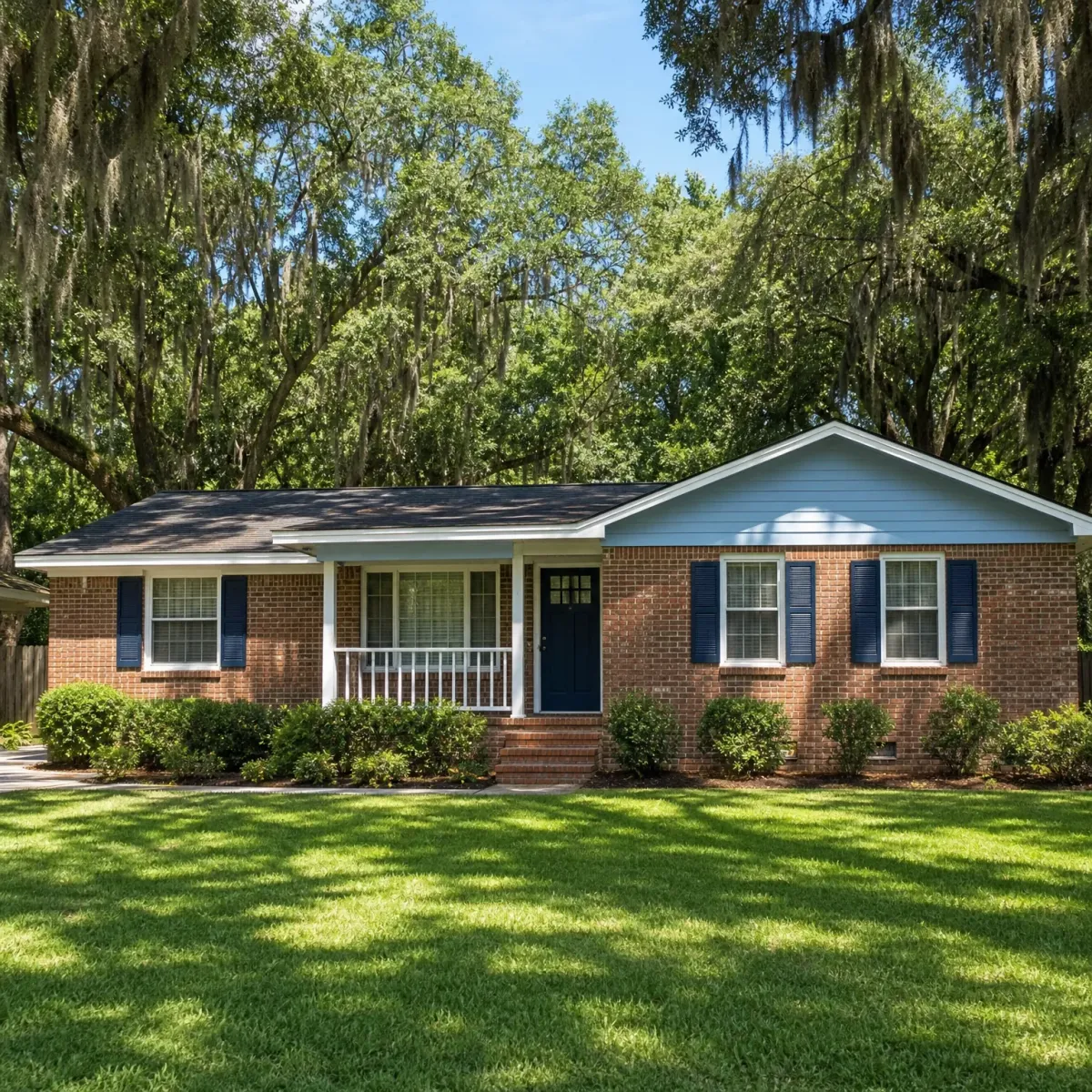
A single-story red brick ranch house with navy blue shutters, a blue front door, a small covered porch with white railings, and a blue-sided gable section, set behind a mowed lawn with large moss-draped trees above.

What the cooling season adds to the choice

Heating and cooling split the year evenly here, five months each. The summer side is not mild: the afternoon high reaches 90°F or above about 70 days a year. A furnace has no part in any of that. It only heats, which means for the other seven months of the year it sits idle while a separate air conditioner does the work.

A heat pump is both machines in one. The same unit that carries the house through the mild winter also runs the cooling season, so one piece of equipment does what would otherwise take two.

More homes here already heat with electricity than with gas, 58.2% against 32.9%, close to three in five against one in three. That doesn't settle the choice for any one house, but it says the wiring for electric heat is already common in this county. If your home came with gas already run to it, a furnace is still the simpler path, and it answers the coldest nights with more heat, faster, than a heat pump built to the minimum. Check which one your house is already set up for before deciding.

Sources: NOAA nClimDiv · NOAA 1991–2020 seasonal normals · Census ACS 2020–2024 · EIA SEDS 2024 · 10 CFR 430.32

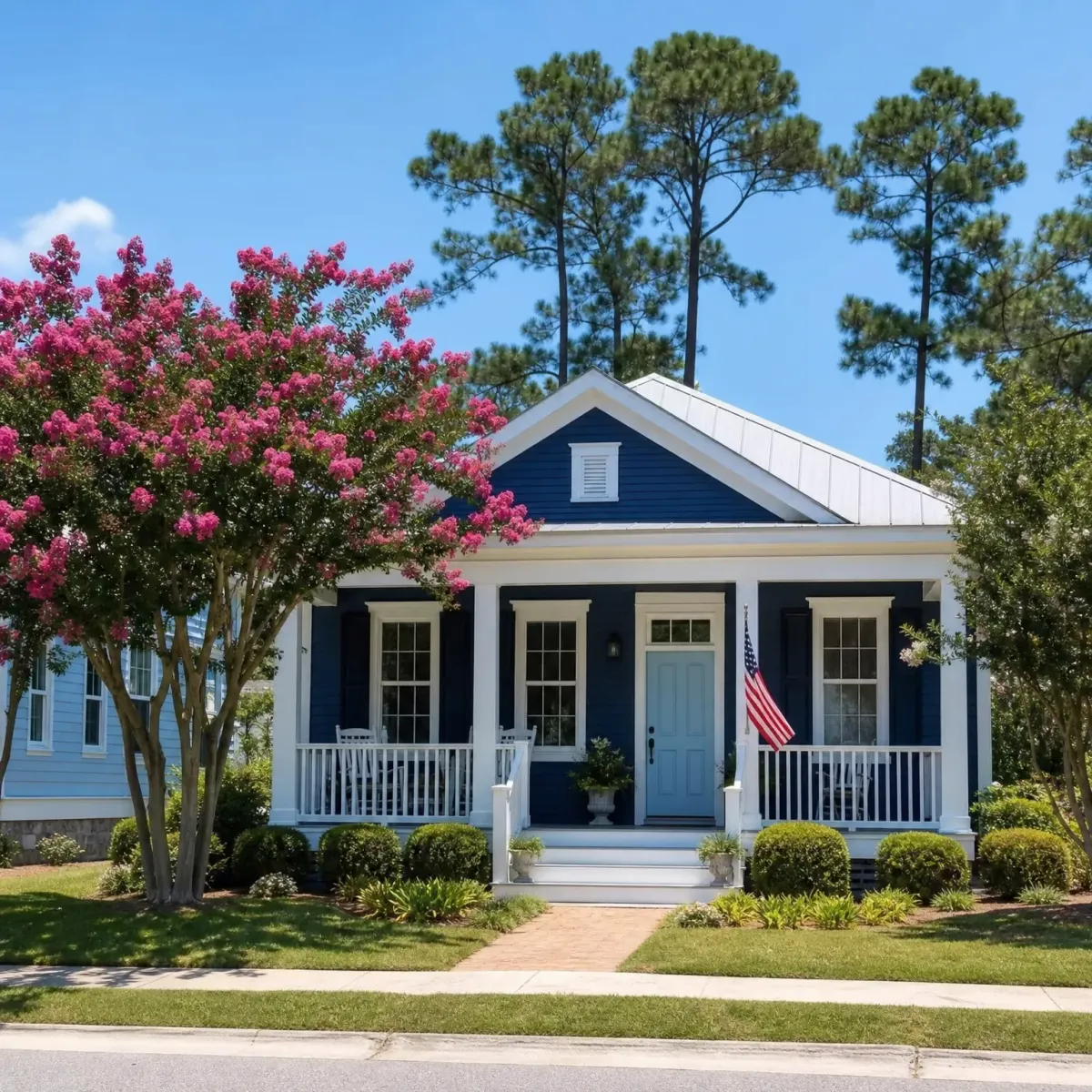
A navy blue single-story house with white trim, a covered front porch with rocking chairs, a light blue front door, an American flag, and a metal roof, beside a pink-flowering crepe myrtle tree with tall pines and clear blue sky behind.

Common questions about heat pumps and furnaces

  • Will a heat pump keep my house cool enough here?

    Yes, a heat pump cools the same way a central air conditioner does, through the same ducts and the same outdoor unit design. Arkansas County sees about 70 days a year at 90°F or hotter, and a heat pump built for this area is sized to handle that stretch like any central AC would.

  • Can I keep my furnace and add a heat pump?

    Yes, and it's a common setup. The heat pump handles most days and the furnace kicks in on the coldest nights, the ones at or below freezing, which happen about 50 times a year here. That split can lower your gas use without asking the furnace to sit unused all winter.

  • What if my house doesn't have a gas line?

    Without a gas line, the furnace option burns propane or oil instead, delivered and stored on site rather than piped in. A heat pump runs on electricity alone, which already reaches the house, and electricity already heats 58.2% of homes in Arkansas County. Propane and oil furnaces still heat fast and strong, but fuel has to be bought and kept stocked rather than metered in.

  • Is a heat pump cheaper to run than a furnace in Arkansas County?

    Yes, at today's prices. Heating with a heat pump runs about $1.64 per 100,000 Btu here against $1.97 for a gas furnace, because electricity and natural gas prices in Arkansas work out that way this year. That gap holds for machines built to the federal minimum; a more efficient unit of either kind changes the math.