





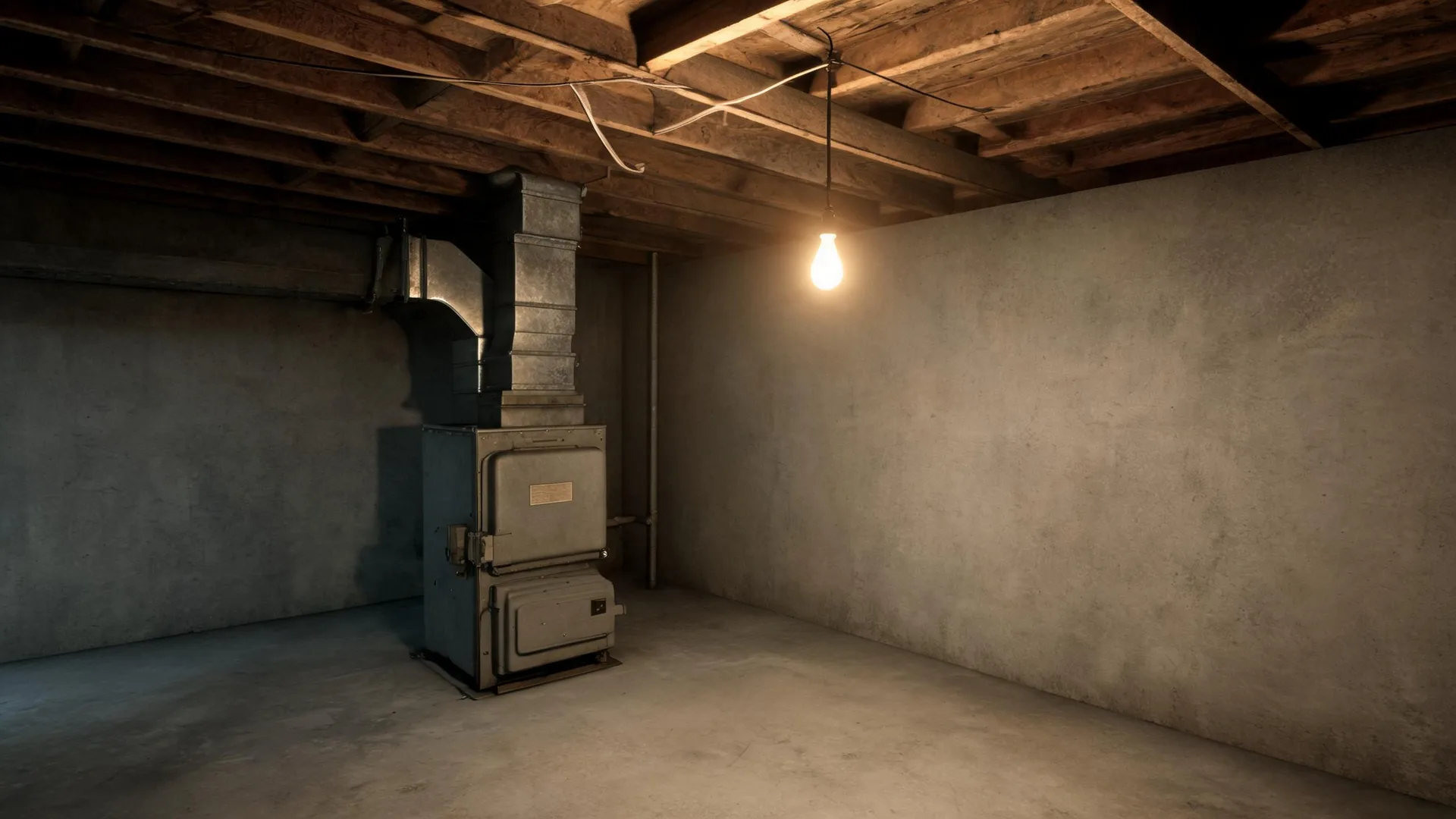
An unfinished basement containing a gas furnace with ductwork in the foreground and miscellaneous stored items along the far concrete wall.

Furnace Installation in Berryville, AR

Tell us about the job

Takes about a minute. No obligation.

New system or replacementFurnace or heatingCarroll County, AR
Step 1 of 2

What ZIP code is the job in?

Just over half the homes in Carroll County heat with electricity, more than any other fuel. Utility gas comes next at 23.2%, with propane close behind at 17.2%. If your house already has gas line run to it, a gas furnace is usually the straightforward swap. If it's electric heat now, an electric furnace or heat pump keeps you from adding gas service you don't have. Either way, matching what the house already runs on is almost always the simpler job than switching fuels.

7 months
October through April, your furnace is on duty
28°F
the average winter night it heats against
80% AFUE
the federal minimum any new unit must meet
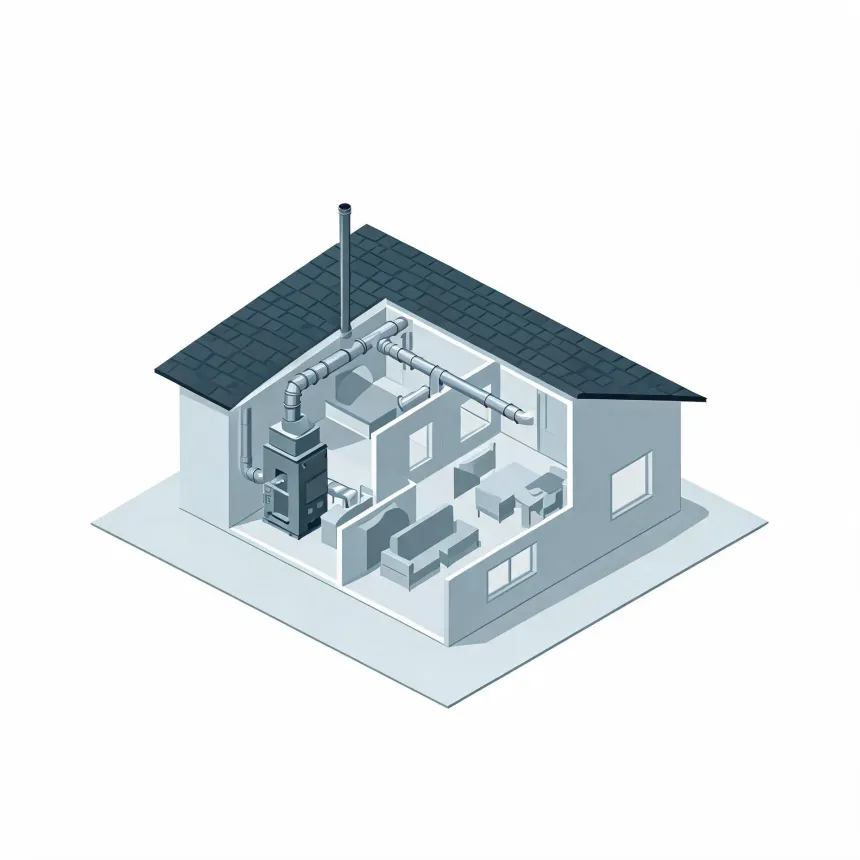
Isometric cutaway illustration of a single-story house with a dark shingled roof, showing a furnace with a flue pipe and branching ductwork running through interior rooms furnished with a sofa, table and chairs.
Your furnace works hardest from November through March.

NOAA nClimDiv, 1991–2020 normals

Electricity ran $36.10 per million Btu in Arkansas homes last year.

A standard-size furnace matched to this house handles that cost fine, with no reason to size up or pay for a higher efficiency tier.

A furnace sized for this house is all this climate asks for

Heat runs October through April
Winter nights average 28°F
Climate zone 4A

Carroll County sees its share of rough weather, 82 severe events over the last ten years, with damaging wind and hail the most common causes. None of that changes what furnace this house needs. A standard unit, sized right for the square footage, handles winter here the same as it would anywhere else in the region. What the weather does affect is the power to run it. A fair share of Arkansas households lost power for a full day or more last year, and a furnace, gas or electric, needs electricity to fire the blower and controls. That's worth planning around with a backup power source, but it has nothing to do with the size of the furnace itself.

Go with the standard fit

A standard size and efficiency fit fine here. There's no local reason to go bigger or pricier.

Find a contractor
A man in a cap, dark jacket and tan work pants carries a canvas tool bag up white porch steps toward a dark blue paneled front door, with a potted shrub beside the entry.
A gray gas furnace with attached ductwork and piping installed in an unfinished concrete basement.

September is the month to get this done

Heat goes on in October here and runs through April, about seven months straight. Once that starts, the furnace runs most days without a break until spring. Getting a new one in during September means the job happens on your timeline, with a crew that has room to do it right, not squeezed in between emergency calls once the cold sets in. Wait too long and you're choosing an installer from whoever's free that week, with the house already cold. September is simply the month before the running starts, and that makes it the one to use.

Sizing comes from a heat loss calculation, not square footage alone

A contractor works out furnace size by figuring how fast the house loses heat, which depends on wall and attic insulation, window count and type, air leakage, and ceiling height, not just floor area. Houses the same size can need different furnaces if one leaks more air or has more glass. That calculation is what tells the installer which size to install, not a rule of thumb.
Too big is its own problem, not a safety margin

An oversized furnace heats the house fast, shuts off, then starts again soon after, instead of running a long steady cycle. That short-cycling wears on the igniter and blower motor faster and leaves rooms farther from the furnace colder than rooms close to it. Bigger isn't a cushion. It's a furnace working against the way the house actually loses heat.

The efficiency rating on a furnace, the AFUE number, tells you how much of the fuel it burns turns into heat in the house versus how much goes out the flue. A furnace rated higher wastes less fuel doing the same job. That's the whole thing. It says nothing about how fast the house heats up or how warm it gets, and it doesn't make the furnace bigger or stronger. Furnaces sized the same for the same house heat it the same way regardless of this rating. The higher one just burns less fuel getting there. Where this matters is how long you plan to own the furnace and heat with gas or propane. A furnace that holds onto that fuel savings over many winters earns back its higher price eventually. One that sits idle most of the year, or gets replaced before its time, may never make up the difference.

The old furnace comes out first. The crew shuts off gas or power, disconnects the ductwork and flue, and hauls it out along with the old venting if that's being replaced too. The new furnace gets set in place after that. Supply and return ducts get connected, gas line or wiring gets run, flue venting gets set, and the thermostat gets wired in. Once it's hooked up, a tech checks gas pressure, airflow across the coil, and temperature rise against what the manufacturer specs for that model. Combustion testing comes last, to confirm the furnace is burning clean and venting properly before the job is called done. A straightforward swap, same fuel type and similar ductwork, moves faster than a job that involves new gas line or duct changes.