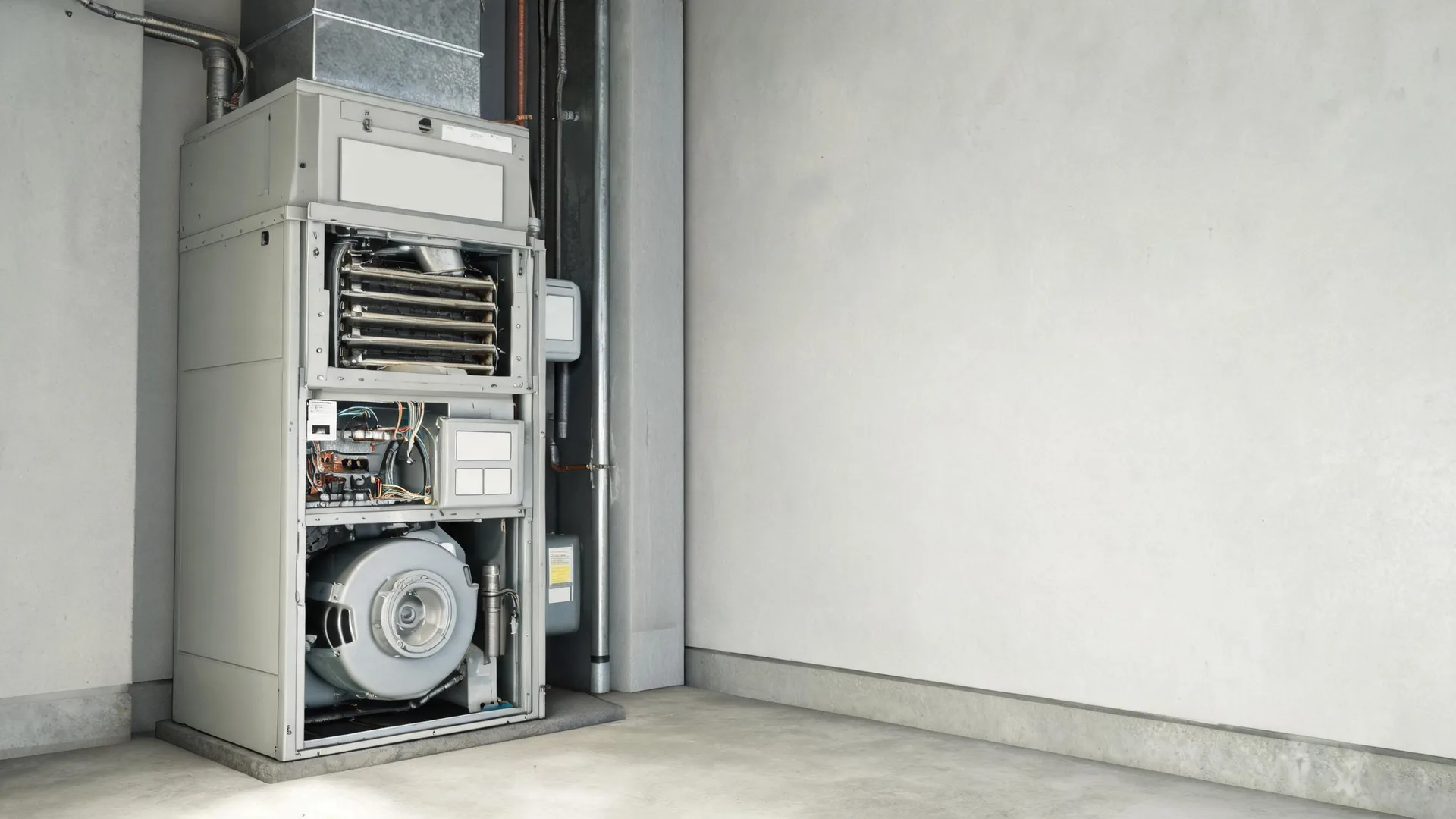
Most homes here run on electric heat
Electricity heats 59.3% of occupied homes in Logan County. Utility gas comes in well behind at 31.1%, and LP gas heats only 3.9%.
Takes about a minute. No obligation.
Electricity heats 59.3% of occupied homes in Logan County. Utility gas comes in well behind at 31.1%, and LP gas heats only 3.9%.
If your current system runs on electricity, replacing it with another electric furnace means no new gas line or LP tank to deal with. Matching what is already there is the straightforward path for most homes in Booneville.
NOAA nClimDiv, 1991–2020 normals
Furnaces in Booneville start running in October.
A September install means the job happens before the first cold morning, not during one.




Logan County falls in zone 3A, and any gas furnace installed here now has to reach at least 80.0 percent AFUE, the minimum for furnaces built since late 2015. That floor rules out the oldest equipment but still leaves room to choose, and a furnace at that minimum heats a short, mild winter like this one without trouble. A higher standard takes effect in a few years, but it applies to the furnace's manufacture date, not to what you need to install today. A federal tax credit is available for qualifying high-efficiency units, worth checking before you settle on one.
Winter lows here average 31°F, not deep cold, and the season only runs October through April. A furnace built to the minimum standard handles that without strain. The money is better spent on a unit that's sized and installed right than on chasing efficiency this climate won't test.
Find a contractorPicking the right size matters more here than chasing a higher rating. An installer who sizes it to the house and gets the ductwork and venting right will get more out of it over the years than a jump in AFUE ever would.
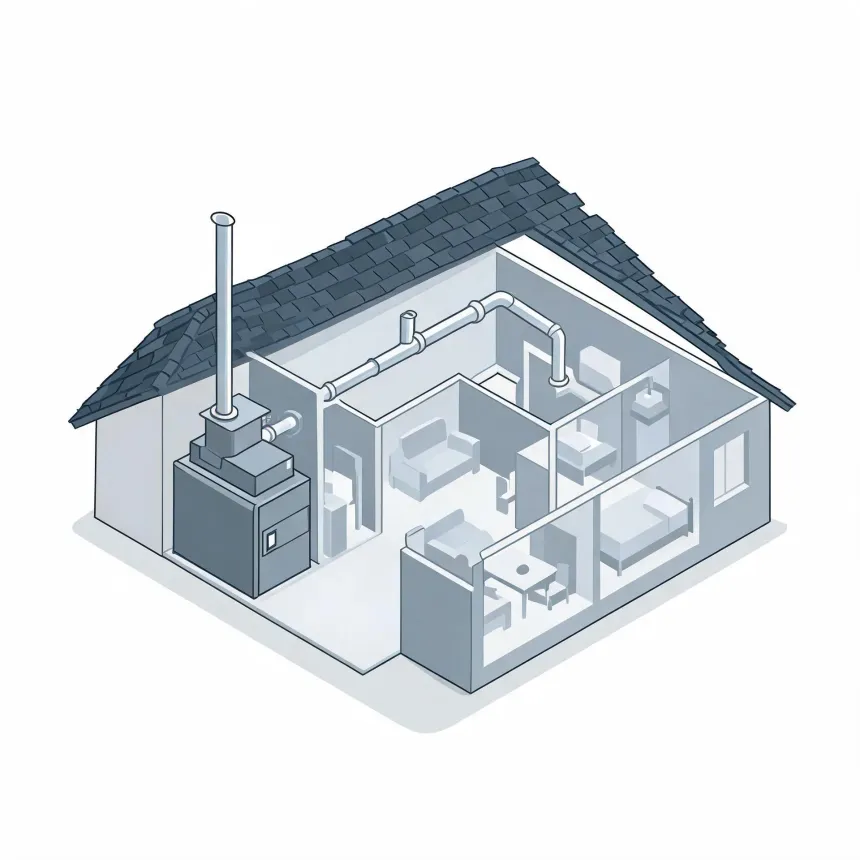
Gas gets shut off at the valve and the line capped. Electrical whips get disconnected at the breaker. If the old unit vents through a flue or chimney, that gets checked too, since a furnace sized differently than the one before it can change what the venting needs.
A furnace is sheet metal, a blower wheel, a heat exchanger, and wiring. None of it gets reused. Most installers haul the old unit away as part of the job, so ask what happens to it before the work starts rather than after.
Furnaces carrying the same AFUE number can still perform differently once installed. Ask whether each bid is based on a load calculation or just matched to the old unit's size. A furnace that's too big for the house cycles on and off fast, which wears out its parts sooner and still leaves some rooms colder than others. Ask what the warranty covers on the heat exchanger versus the rest of the furnace, since those terms often differ. And ask about the ductwork, because a furnace only performs as well as the ducts feeding it, and a new unit on old, leaky ducts won't deliver what the rating promises.
The old furnace comes out first. Gas gets shut off, power disconnected, and the venting disconnected before any tools come out for the new one. Setting the new furnace is the fast part. It gets leveled, connected to the gas line and wiring, and the ducts get sealed back to it. The slower part comes after it's in place. A combustion analyzer checks the flue gases, static pressure gets measured in the ducts, and the system runs through a full cycle before anyone signs off. A furnace that gets fired up and left without those checks isn't finished, even if it's running.