




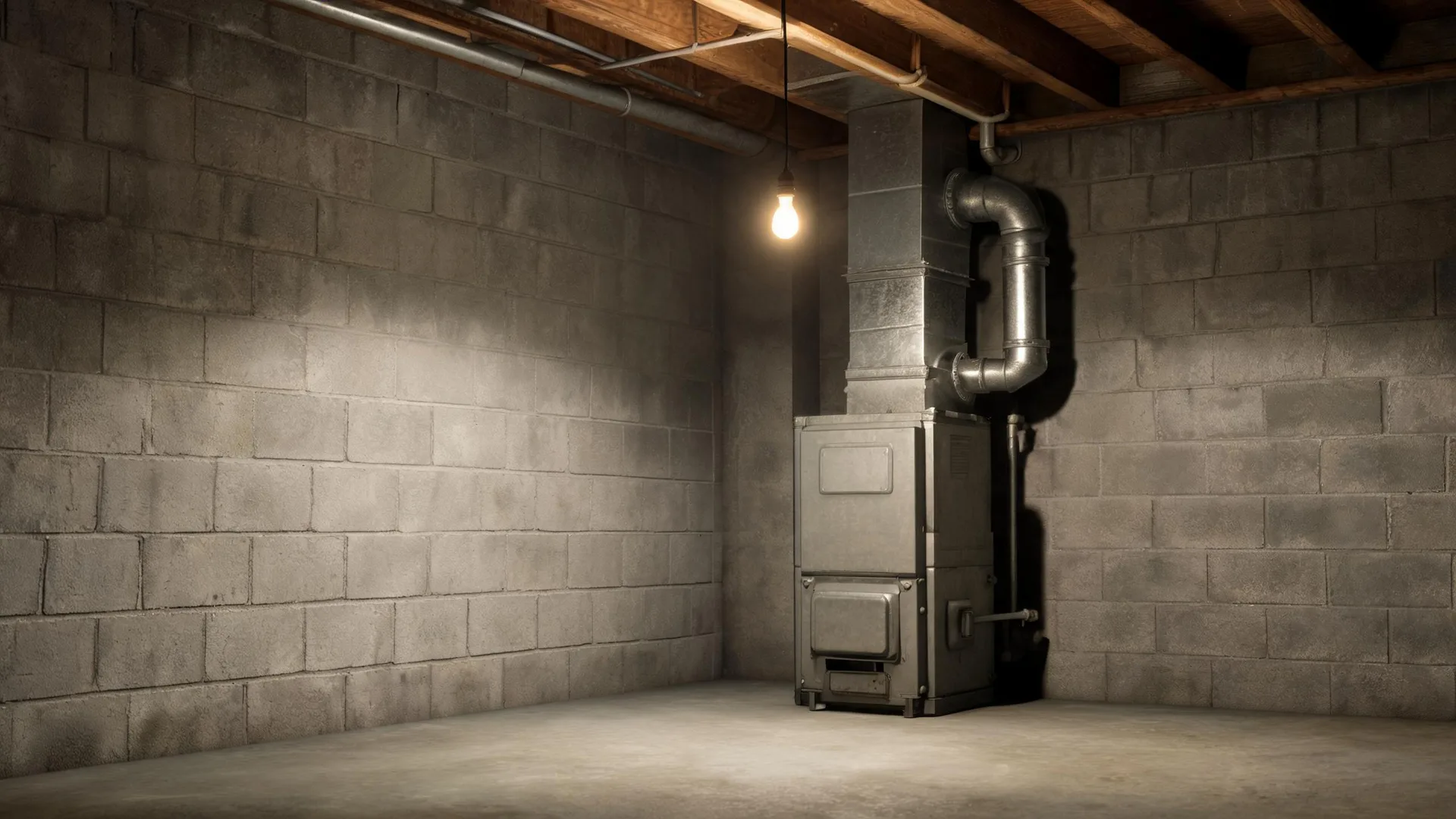
An unfinished basement interior showing a gray furnace unit beneath a bare incandescent bulb, surrounded by exposed joists, concrete walls, cardboard boxes, and utility pipes.

Furnace Installation in Bull Shoals, AR

Tell us about the job

Takes about a minute. No obligation.

New system or replacementFurnace or heatingMarion County, AR
Step 1 of 2

What ZIP code is the job in?

Most homes in Marion County heat with electricity, at 59.1 percent. Bottled or LP gas comes next at 15.6 percent, with utility gas heating just 11.2 percent. If electricity is already set up in your home, an electric furnace is usually the straightforward path for a replacement. A gas furnace is still worth asking about if you're on propane now or have a line run to the house, but it's less common here than the electric option. Whichever fuel your current system uses is a good starting point for what to install next.

7 months
October through April, your furnace is on duty
28°F
the average winter night it heats against
80% AFUE
the federal minimum any new unit must meet
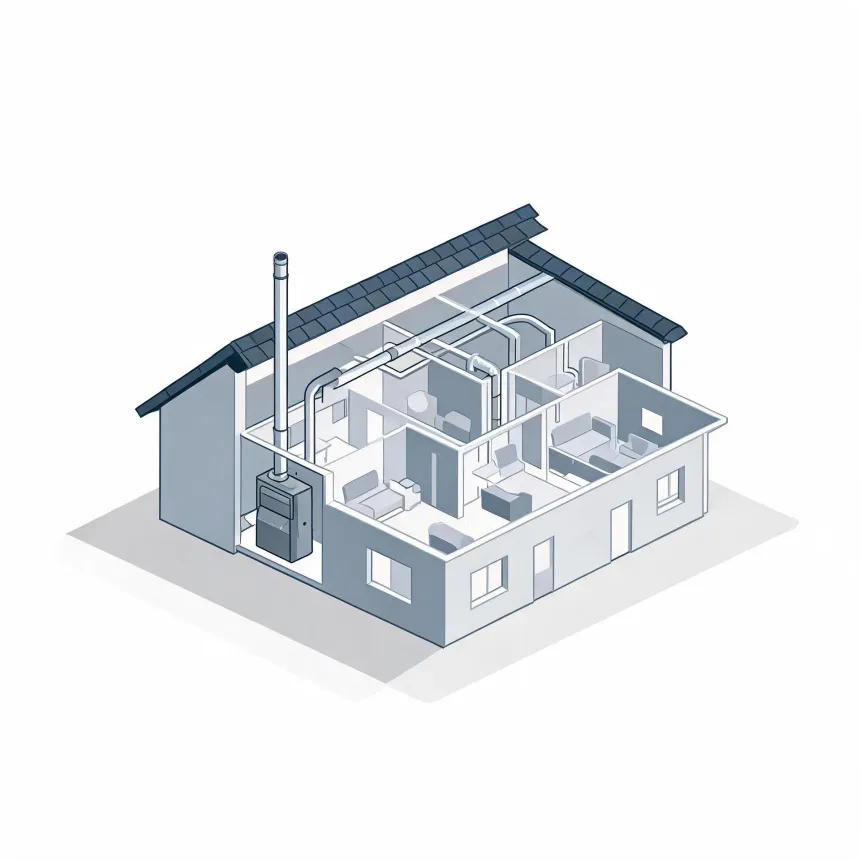
Isometric cutaway illustration of a single-story house in gray tones, showing interior rooms with furniture, ceiling ductwork, and an exterior furnace unit with a tall flue pipe.
Your furnace works hardest from November through March.

NOAA nClimDiv, 1991–2020 normals

A furnace sized off square footage alone often gets picked wrong.

The right size comes from a load calculation that weighs your windows, insulation and layout, not a guess based on floor space.

A furnace built for standard winters, nothing more

Heat runs October through April
Winter nights average 28°F
11 winter storms from 2015 to 2024

The old furnace does not get left in place once the new one is running. Whoever installs the replacement disconnects it from the gas line or electrical circuit, pulls it from the ductwork, and hauls it out as part of the job. If it is a gas furnace, the vent connection to the flue gets sealed or removed too, since that old furnace was holding a spot in a system designed around it. The new furnace will not just drop into the exact same footprint and hookups without a look. Duct connections, the vent, the gas line or wiring all get checked against what the new unit actually needs, which is part of why installation takes more than swapping a box.

Have the new furnace in before October

Heat runs October through April here, about seven months straight. Install it in September and it's tested and ready before the first cold night, instead of getting picked out while the house is already cold.

Find a contractor
A gas furnace with attached ductwork, gas piping, and condensate lines installed in a concrete-block basement.

What you're really paying for

A furnace's price comes down to more than the box itself. Labor accounts for a real share of it, since a correct install means cutting in new ductwork transitions, running new venting or electrical as needed, and testing everything before anyone leaves. The size of the furnace matters too, not because bigger costs more in a straight line, but because a unit that's wrong for the house either gets replaced again sooner or runs in a way that costs more to live with. Efficiency rating plays into it on the gas side, where a furnace built to pull more heat from the same fuel costs more to build and install than one that doesn't. Ductwork condition is often the hidden factor. If the existing ducts can't carry what the new furnace puts out, modifying or replacing sections adds to the job. None of this is padding. It's what separates a furnace that gets dropped in from one that's actually installed.

Ask what the load calculation found

A contractor should walk you through the rooms, windows and insulation that went into sizing the furnace, not just hand you a number. If they skip straight to a quote without mentioning a load calculation, ask where the size came from.
Ask what happens to the ductwork

A new furnace moves a different amount of air than the old one did. Ask whether the existing ducts were checked against what the new unit needs, or whether changes are part of the quote. A furnace that's a good fit still needs ducts that can carry what it puts out.

That efficiency number on the label tells you how much of the fuel it burns actually turns into heat in your house, versus what goes out the flue. A furnace rated higher gets more heat out of the same amount of fuel than one rated lower. It doesn't tell you how warm your house will get or how fast, and it doesn't account for heat lost through the ductwork after the furnace does its job. An electric furnace converts power to heat at close to the same rate no matter the model, so the rating matters most when you're choosing a gas furnace. Going with a higher rating only pays off if the furnace is running enough hours to make the difference worth it, which is part of what a contractor should help you weigh against the upfront cost.

Installation day starts with the old furnace still running, so it gets shut down and disconnected first. From there it's removal, setting the new unit, and connecting it back up, which takes longer than people expect because nothing gets rushed through. The gas line or electrical circuit gets connected and tested before anything else happens. Ductwork gets attached and checked for a solid seal, since a loose connection there wastes the furnace's output no matter how well it's running. If it's a gas furnace, the venting gets connected and checked for a proper draft. Once it's hooked up, the furnace gets fired and run through its paces, checking that it ignites properly, reaches the right temperature rise, and shuts off the way it should before anyone calls it done.