






Two illuminated white Southern-style houses with wraparound porches and staircases, framed by a Spanish moss-draped tree on a quiet street at night.

Furnace Installation in Forrest City, AR

Tell us about the job

Takes about a minute. No obligation.

New system or replacementFurnace or heatingSt. Francis County, AR
Step 1 of 2

What ZIP code is the job in?

Most homes in St. Francis County heat with electricity, at 56.8 percent. Gas furnaces still have a place here too, since utility gas heats another 30.6 percent of homes, with bottled or LP gas covering most of the rest. If your home already runs on electric heat, a heat pump or electric furnace keeps the installation straightforward, since the wiring and setup are already there for it. If gas is piped to your home, replacing a gas furnace with another one is usually the simpler path rather than switching fuels. Either way, matching what your home already uses tends to mean less rework and fewer surprises.

5 months
November through March, your furnace is on duty
34°F
the average winter night it heats against
80% AFUE
the federal minimum any new unit must meet
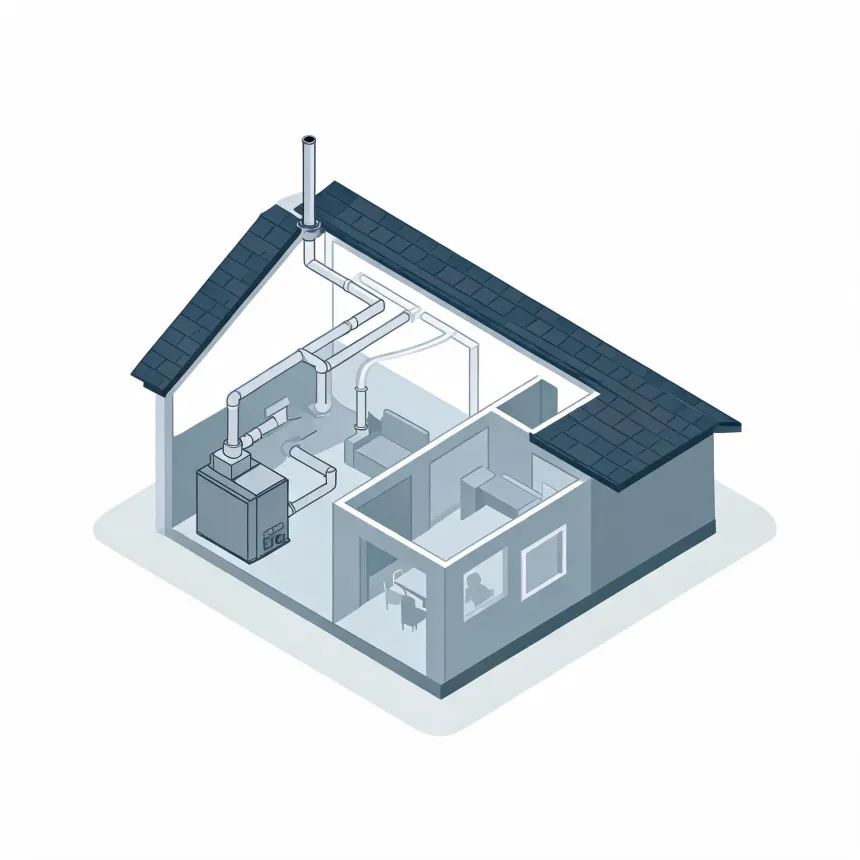
Isometric cutaway illustration of a single-story house showing interior rooms, a furnace unit with connected ductwork, and a flue pipe extending through the dark shingled roof.
Your furnace works hardest from November through March.

NOAA nClimDiv, 1991–2020 normals

Furnace season in Forrest City runs about five months, November through March.

A furnace that fits the job doesn't have to be the top-tier model to last here.

A normal-size furnace handles Forrest City winters fine

Half the homes here were built by 1980
Heat runs November through March
Winter nights average 34°F
Electricity here runs $36.10 per million BtuThat changes the payback math on a high-efficiency furnace, not whether one will work.

October is the month to get this done. Heat usually starts in November here, so a furnace on its last season still has a few weeks of mild weather to get swapped out before it has to work. Wait until the first cold snap and you're choosing a furnace while the house is already cold, picking from whatever the contractor can install fastest rather than what actually fits your home. A furnace that fails in the middle of winter also means space heaters and a cold house while you wait on parts or scheduling. Five months of running, November through March, is enough wear on a system without starting it off as an emergency repair.

What a new furnace here has to meet

Any furnace installed here now has to hit 80.0 percent AFUE at minimum, the standard for St. Francis County's zone 3A. That floor holds until December 2028, when new furnaces have to reach 95.0 percent. There's also a federal tax credit available on qualifying high-efficiency models, which can offset some of the cost if you decide to go above the minimum.

Find a contractor
A man in a cap, gray long-sleeved shirt and brown work pants walks up concrete steps toward a dark blue front door, carrying a worn canvas tool bag beside a potted shrub.
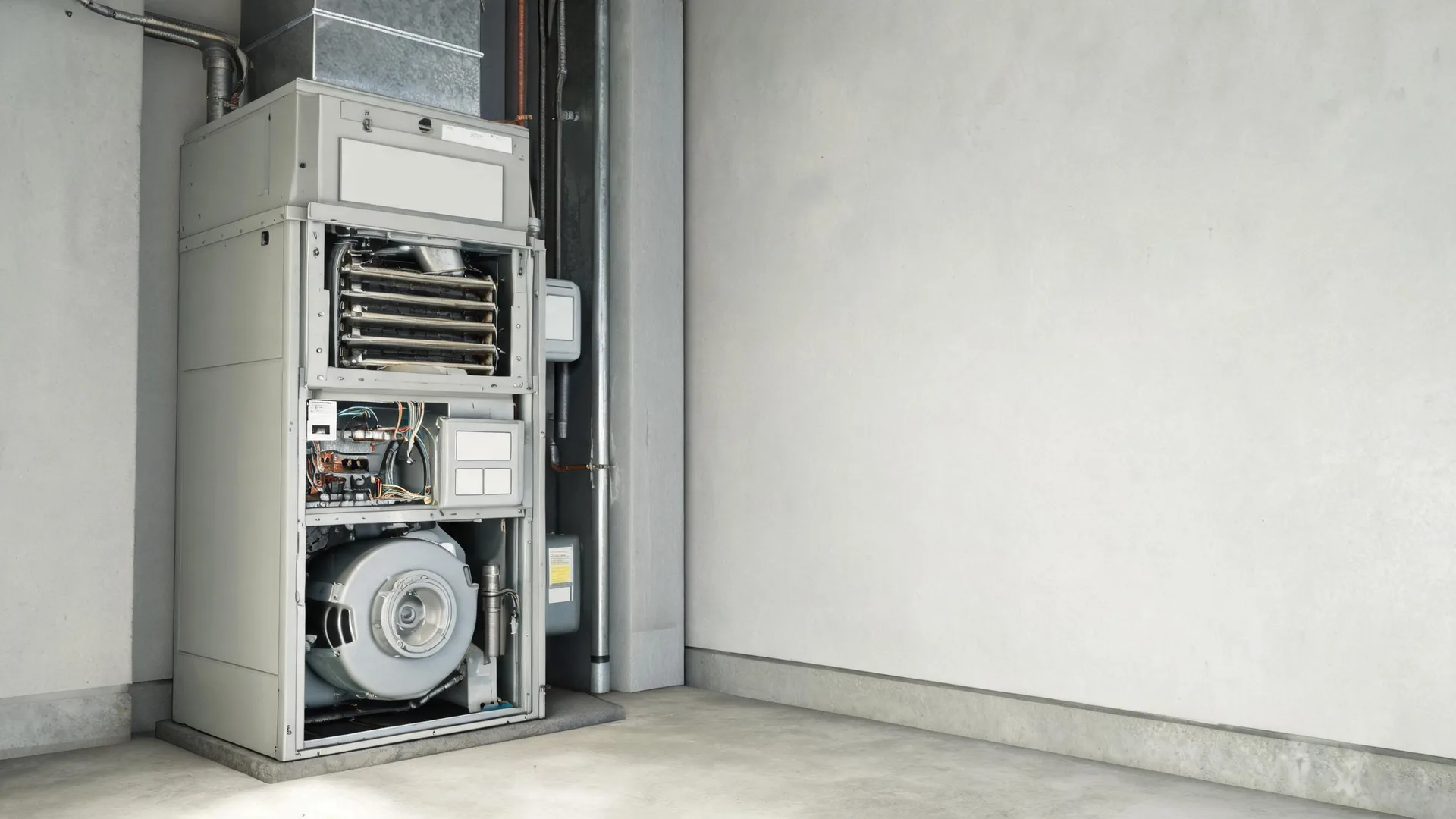
A gray high-efficiency gas furnace installed in an unfinished basement, surrounded by gas lines, a condensate drain, and sheet-metal ductwork.

Five months a year is a normal shift, not a hard one

Five months of running a year, with lows averaging 34°F, is a normal load for a furnace to carry. Pick one sized right for your house and it will handle that without strain. Put the money into correct sizing and a clean installation rather than chasing efficiency past what the house needs.

Size comes from a room by room heat loss calculation

A contractor works out furnace size by measuring the house, not by matching the old unit. Square footage, window area, insulation levels, ceiling height, and how much outside wall each room has all factor into the load. That calculation tells you how much heat the house actually loses on a cold day, and the furnace gets sized to replace that, nothing more.
Oversized runs worse than undersized

A furnace that's too big heats the house fast, shuts off, and starts again a short while later. That short cycling means the heat exchanger never gets up to steady temperature, rooms end up with uneven heat, and the blower kicks on and off instead of running a long, even cycle. An undersized furnace just runs longer. An oversized one wears out its own parts doing it.

Taking out the old furnace is part of the job, not an extra step. The contractor disconnects the gas line and vent, pulls the old unit, and checks the ductwork it leaves behind before setting the new one in its place. If the old furnace vented through a chimney, that connection sometimes needs to change, since a smaller flue made for an old unit doesn't always suit a new high-efficiency model that vents through a sidewall instead. Removal also means a look at the plenum and duct connections, since a new furnace may have a different cabinet size than the one it replaces. None of this adds much time to the install, but it's worth asking your contractor how they handle it so there's no surprise about what the old equipment leaves behind.

Installation day starts with the house, not the box. The contractor confirms the heat loss numbers against the furnace that's about to go in, checks the gas line pressure if it's a gas model, and makes sure the electrical circuit matches what the new unit needs. Setting the furnace in place and connecting gas, vent, and ductwork is usually the fastest part of the day. Venting and startup take longer, especially on a high-efficiency furnace, since the condensate drain and intake and exhaust pipes have to be run and sloped correctly for it to work at all. Once it's connected, the contractor fires it up, checks the temperature rise across the heat exchanger, and confirms the blower speed matches the ductwork before calling the job done. A furnace that's installed right should need nothing from you that day but a walkthrough of the thermostat and the shutoff valve.