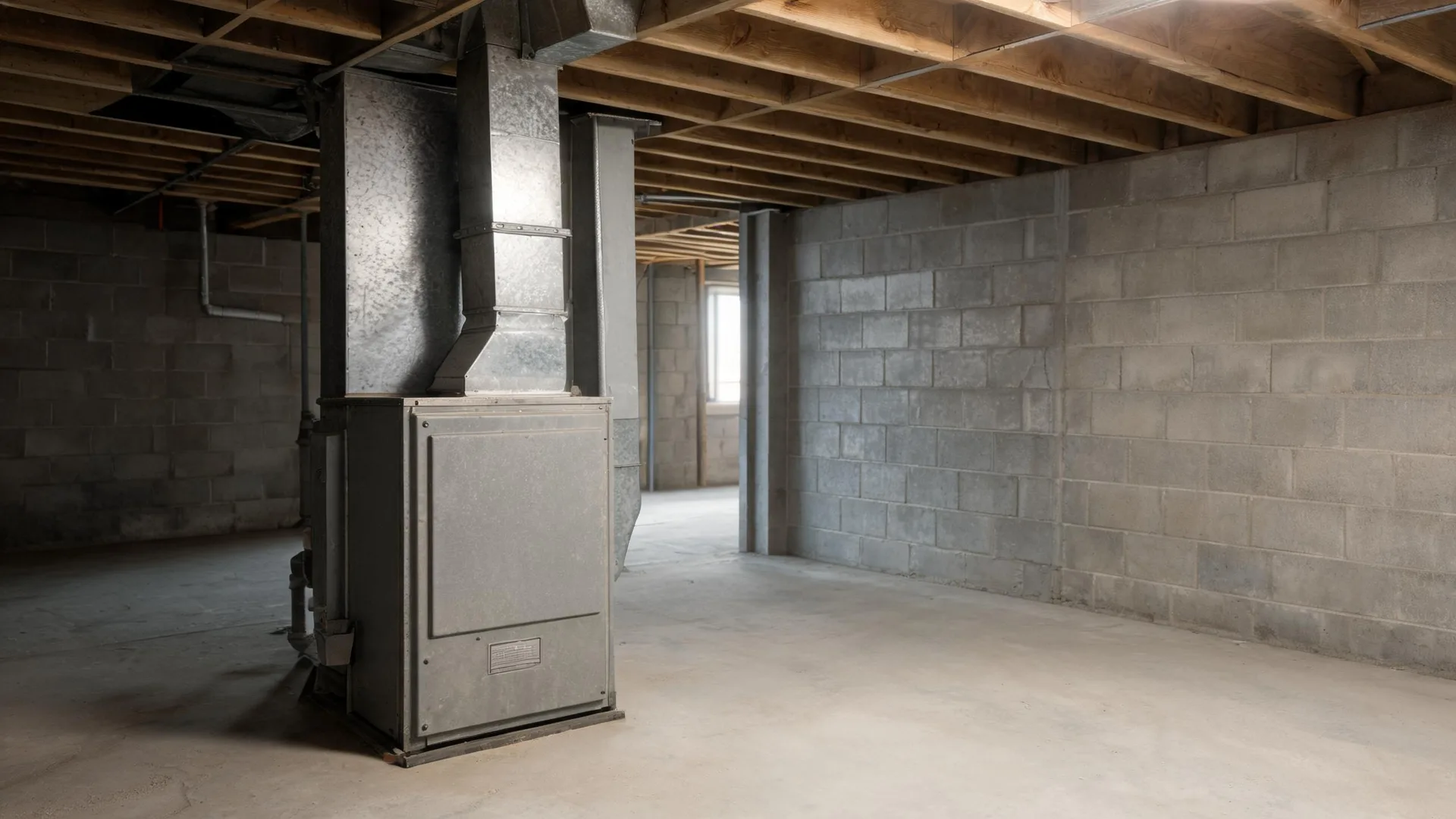
An unfinished concrete basement containing a metal HVAC air handler, exposed wooden ceiling joists with sheet-metal ducts, a hanging bare bulb, copper pipes, and stacked cardboard boxes.

Furnace Installation in Sheridan, AR

Tell us about the job

Takes about a minute. No obligation.

New system or replacementFurnace or heatingGrant County, AR
Step 1 of 2

What ZIP code is the job in?

Most homes here run on electric heat

Electricity heats about half the homes in Grant County, more than any other fuel. Gas comes second at 38.4%, with the rest split off on propane. If your home runs on electric heat now, an electric furnace is the straightforward replacement.

Matching what's already there keeps the job simple

A furnace swap goes fastest when the new unit uses the same fuel as the old one. The electrical circuit or gas line already sized for your current furnace is usually ready for its replacement, which means less rework for the contractor doing the install.

5 months
November through March, your furnace is on duty
34°F
the average winter night it heats against
80% AFUE
the federal minimum any new unit must meet
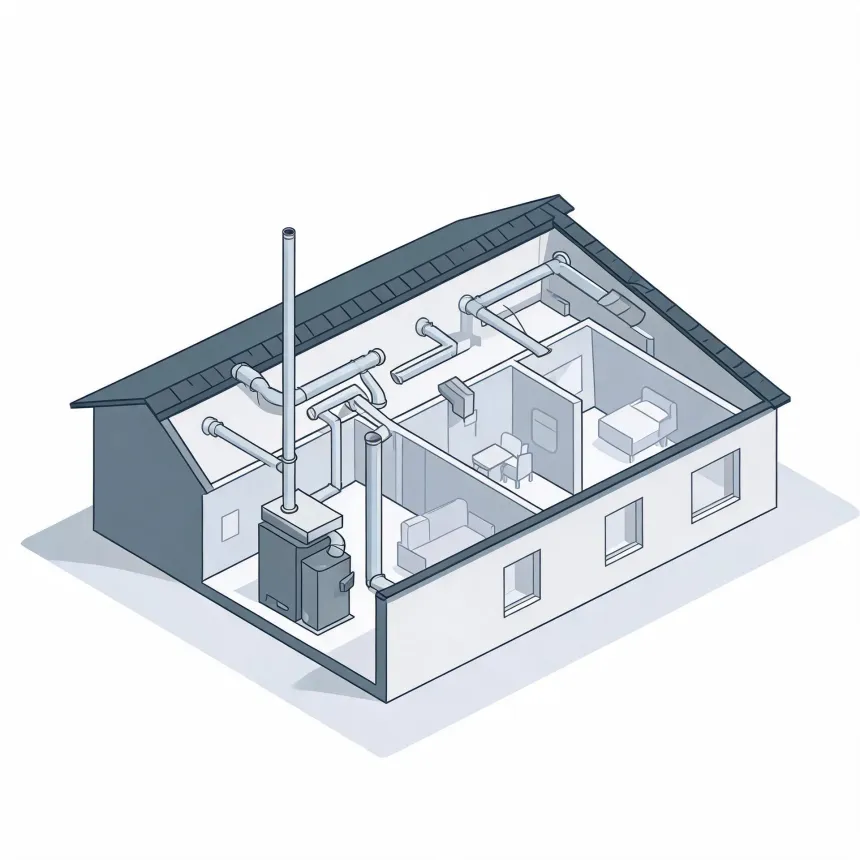
Isometric line illustration of a single-story house cutaway showing interior rooms with furniture, ductwork or piping running along the ceiling, and a boxy furnace unit with a tall vertical flue pipe.
Your furnace works hardest from November through March.

NOAA nClimDiv, 1991–2020 normals

Grant County saw 67 severe weather events between 2015 and 2024, most of them wind and hail.

None of that changes what size or efficiency furnace your home needs. A standard unit sized to your house handles it.

Power is cheap here, so a basic furnace earns its keep as fast as a high-efficiency one

Heat runs November through March
Winter nights average 34°F
12 winter storms from 2015 to 2024

October is the month to get this done in Grant County. Heat comes on in November and runs through March, so a furnace installed in October has had its ignition system, its airflow and its thermostat checked before the first cold night asks anything of it. Wait until November and you're scheduling around whatever day the house gets cold, not the day that works for you. A contractor with room on the calendar can also take the time an install deserves, rather than rushing to get heat back on the same afternoon.

Go with the standard fit

A standard size and efficiency fit fine here. There's no local reason to go bigger or pricier.

Find a contractor
A man seen from behind in a dark shirt and tan pants climbs concrete steps toward a navy blue front door, carrying a canvas tool tote in his right hand, with a large blue planter and shrub to the left.
A gray residential gas furnace installed in an unfinished basement, surrounded by ductwork, a metal flue pipe, and a gas supply line.

Five months of work a year

Furnace here runs about five months, November through March. Overnight lows average 34 degrees across December, January and February, so it's rarely being asked for much. A furnace that only has to take the edge off a mild winter night isn't working hard to do it. That's a short season compared to what cooling systems put in across the rest of the year, and it means less wear building up year after year. When something does go wrong with a furnace here, age or a skipped service visit is the more likely cause than the system being run into the ground.

Ask what size they calculated, not guessed

A contractor should run a load calculation on your house rather than quoting the same size as the furnace coming out. Insulation, windows and ductwork changes since the original install all affect what size you actually need. A furnace sized too large cycles on and off instead of running steady, which wears out its parts faster and leaves rooms uneven.

Ask what happens to the ductwork

The new furnace has to move air through the ducts already in the house. If those ducts are undersized, leaky, or were built for a different output, the new unit won't perform the way its rating promises no matter how good the furnace itself is. Get a straight answer on whether the existing ductwork was inspected, and what it would take to fix it if it wasn't.

The efficiency rating on a furnace's label tells you how much of the fuel it burns turns into heat in your house, and how much goes out the flue. A furnace running higher on that scale pulls more heat out of the same amount of fuel instead of venting it outside. The tradeoff shows up in how the furnace is built. Higher-rated furnaces use a second heat exchanger to catch what a standard furnace lets go, and that means a condensate line to drain the moisture it pulls out of the exhaust. That line has to slope right and stay clear, or the furnace will shut itself down rather than run with nowhere for the water to go. A standard furnace skips all of that, which is less to maintain but less heat squeezed out of every unit of fuel burned.

Install day starts with the old furnace coming out, and that gives a contractor the first real look at what the new one has to work with. Disconnecting the gas line or electrical circuit and pulling the unit exposes the duct connection and the venting behind it. Setting the new furnace is the fast part. Most of the day goes to connecting it properly. Duct joints get sealed, the vent gets pitched to the right slope, the thermostat gets wired, and on a gas furnace the line gets pressure tested before anything is lit. Once it's running, a contractor checks the flame, the temperature rise through the plenum, and the airflow at the registers. A furnace can go in correctly and still run wrong if those aren't brought into range. None of that shows up on the unit's label. It shows up in how the house heats once the crew leaves.