






Two single-story houses, one brick with a covered porch and one with pale siding, seen across a mown lawn and a trimmed hedge, beneath large oak branches draped with Spanish moss.

Furnace Installation in Trumann, AR

Tell us about the job

Takes about a minute. No obligation.

New system or replacementFurnace or heatingPoinsett County, AR
Step 1 of 2

What ZIP code is the job in?

Trumann sits in zone 3A, a warm climate with a short, mild winter. A furnace installed here still has to meet the same federal efficiency floor as anywhere else. Any non-weatherized gas furnace built new has to reach 80 percent AFUE, and that's the baseline a contractor will be working from. That minimum is set to rise to 95 percent AFUE in a few years, so what's available to install now may not be what's available later. Worth asking your contractor which standard the unit you're looking at meets.

6 months
November through April, your furnace is on duty
33°F
the average winter night it heats against
80% AFUE
the federal minimum any new unit must meet
Isometric cutaway illustration of a small house showing a furnace unit connected to ductwork and a vertical flue pipe extending through the dark shingled roof, with sparse furniture in the rooms.
Your furnace works hardest from November through March.

NOAA nClimDiv, 1991–2020 normals

Close to half the homes in Poinsett County heat with electricity, more than any other fuel.

Gas furnace or electric furnace, either one is a normal choice here, so the decision comes down to what's already feeding your house.

Electricity here runs $36.10 per million Btu, cheap enough that the furnace worth having is the one that keeps running

Heat runs November through April
Winter nights average 33°F
13 winter storms from 2015 to 2024
A furnace sized for the house you haveHalf the homes in Poinsett County were built in 1978 or earlier, half in 1978 or later. Standard sizing fits either one.

Heat starts running in November here and stays on through April, six months out of the year. October is the month to get a new furnace in. A contractor can take the time to size the unit right and schedule the work when it suits you, instead of racing a cold snap with whatever's in stock. If the old furnace is already struggling, waiting until the first cold week to call means waiting in line behind everyone else who waited too.

A furnace that holds up through a storm matters more here than one with the highest efficiency rating

Six months of heat a year, with winter nights averaging 33°F, is a moderate load. A furnace here isn't fighting the kind of cold that wears a system down fast. What it does need to handle is the winter storms this county sees, the kind that knock out power and push a system hard when it comes back on. Pick for reliability over top-tier efficiency, and you've got the right furnace for this place.

Find a contractor
A man in a cap, dark jacket and tan pants carries a worn duffel bag as he climbs porch steps toward a dark blue front door beside a potted shrub.
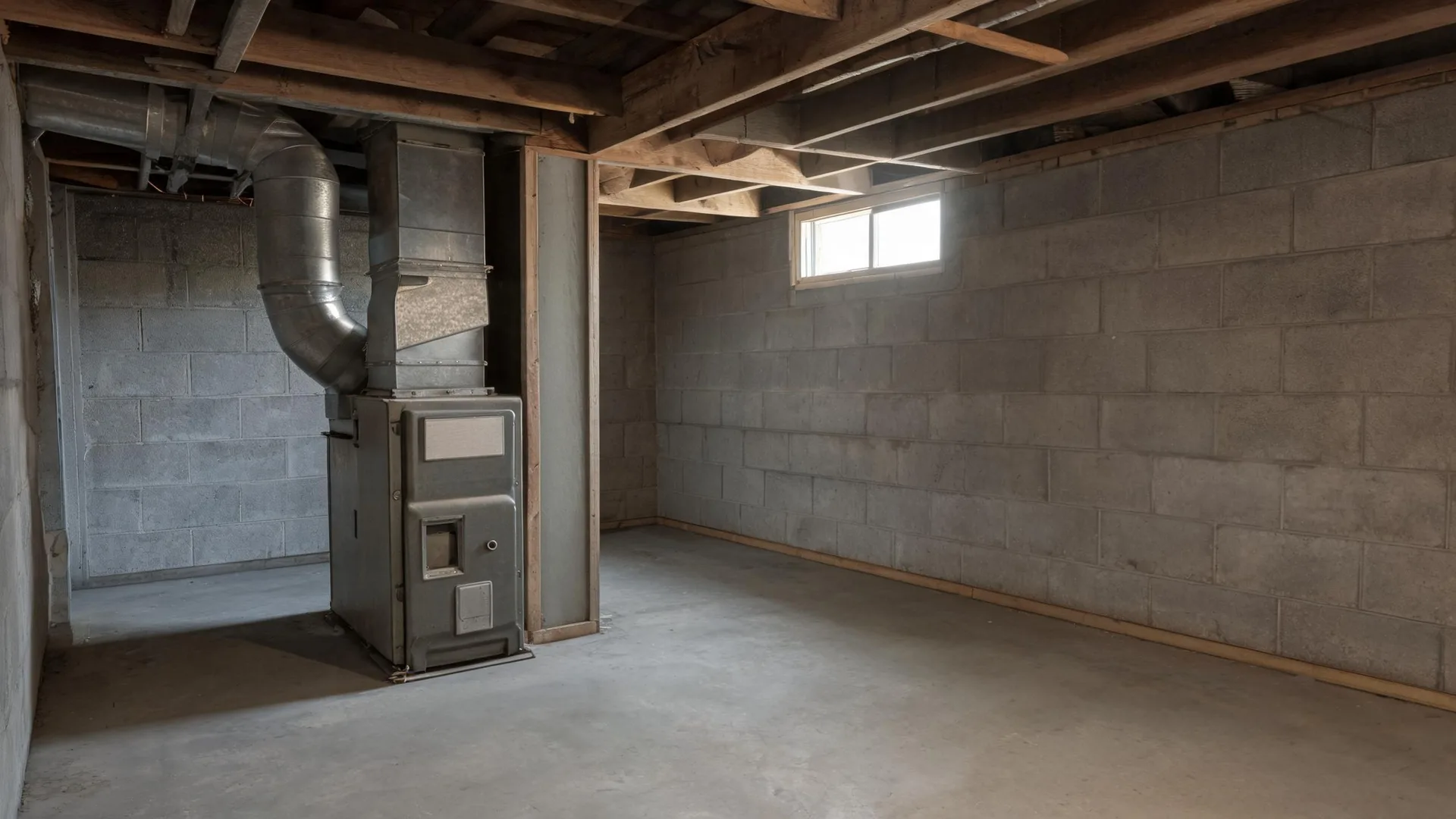
A gray residential gas furnace installed in an unfinished basement, connected to sheet-metal ductwork and PVC pipes.

Built for six months a year, tested by the storms in between

Six months of running time a year is not a lot to ask of a furnace. When you're comparing units, don't pay extra to chase a high AFUE number this system won't need. Put that money toward the kind that starts back up clean after the power's been out, since that's the test it'll actually face here.

Bigger isn't better

An oversized furnace heats the house fast, then shuts off, then kicks on again a few minutes later. That short cycling keeps the heat exchanger from ever reaching a steady temperature, and it's harder on the igniter and blower motor than a normal run would be. A furnace that's too big doesn't run longer, it just runs more often, in short bursts that wear the parts that start it up.
The math behind the unit

Sizing a furnace means working out how fast the house loses heat, not just how big the house is. A contractor measures the square footage, but also checks window area, insulation, ceiling height and how much outside wall the house has. Houses the same size can need different furnaces depending on windows or ceiling height. That calculation is what tells the contractor which unit to install, not a chart based on square footage alone.

AFUE on the label tells you how much of the fuel burning in that furnace turns into heat for the house, and how much goes out the flue. A higher rating means less waste, but it isn't free. Those furnaces use a second heat exchanger to pull more heat out of the exhaust before it vents, and that means more parts that can fail and a condensate line that has to drain somewhere. A standard-efficiency furnace vents through plain metal pipe. A high-efficiency unit vents through PVC and needs a drain, which changes what the installer has to run through the house. Neither one is the wrong choice. It's a question of what the furnace is actually going to be asked to do.

Installation day starts with the old furnace coming out, and that's when a contractor finds out whether the ductwork, the gas line and the vent are staying as they are or need work to match the new unit. Running a new high-efficiency furnace through old plain-metal venting doesn't work, so if the unit calls for PVC venting and a condensate drain, that gets run fresh. The gas line gets checked for the right size and a fresh shutoff valve, the ductwork gets connected and sealed at the plenum, and the electrical gets tied in for power and the thermostat. Once it's all connected, the furnace gets fired up and run through a full cycle, checking the flame, the temperature rise across the heat exchanger and the airflow at the registers. A contractor will test the safety switches too, the ones that shut the furnace down if it overheats or the flue gets blocked. The whole job gets done in a day, start to finish, with the house having heat again by the time the contractor leaves.