






Two illuminated white Southern-style houses with wraparound porches and staircases, framed by a Spanish moss-draped tree on a quiet street at night.

Furnace Installation in Van Buren, AR

Tell us about the job

Takes about a minute. No obligation.

New system or replacementFurnace or heatingCrawford County, AR
Step 1 of 2

What ZIP code is the job in?

The efficiency number on a furnace tells you how much of the gas it burns actually turns into heat in your house, and how much goes straight out the flue. A higher number means less of what you pay for is wasted. The tradeoff shows up in the install itself. The higher-rated furnaces condense the exhaust and need a drain line for the condensate, plus a different kind of venting through the wall or roof. That changes what the installer has to run and where the furnace can go. A lower-rated furnace vents like the old ones always have, simpler to install but it keeps less of the heat it makes. Neither one is the wrong answer. It depends on what's already in the house to connect to, and how long you plan to stay and let the lower bills add up.

7 months
October through April, your furnace is on duty
30°F
the average winter night it heats against
80% AFUE
the federal minimum any new unit must meet
Isometric line illustration of a cutaway house showing interior rooms with furniture and a furnace with ducting and a flue pipe extending through the roof.
Your furnace works hardest from November through March.

NOAA nClimDiv, 1991–2020 normals

More than half the homes in Crawford County heat with electricity, more than gas and propane combined.

An electric furnace is the straightforward swap for a home already wired for one.

A standard furnace, sized normally, is what this climate calls for

Heat runs October through April
Winter nights average 30°F
Climate zone 3A
Get it done before OctoberFurnaces here run October through April, so September is the time to put one in.

Ask what size furnace the contractor is proposing and how they arrived at it. A furnace should be sized by a load calculation that looks at the house itself, not just a swap for whatever is being removed. One that is too big will short cycle, turning on and off more than it should, which wears out parts faster and leaves rooms uneven. One that is too small runs long stretches and still struggles on the coldest days. Ask too how the new unit will connect to the existing ductwork and venting, since not every furnace fits what is already there without changes. And ask what the warranty covers on the furnace itself versus the labor to install it, since a contractor's workmanship warranty is separate from what the manufacturer stands behind.

A reliable furnace is enough for what this climate asks

Seven months of heat a year, October through April, and overnight lows averaging 30 in December, January and February. That's steady work for a furnace, not hard work. It doesn't run against bitter cold for long stretches the way it would further north, so the strain that wears out a system is mostly absent here. A reliable, correctly sized furnace will cover what this climate asks of it.

Find a contractor
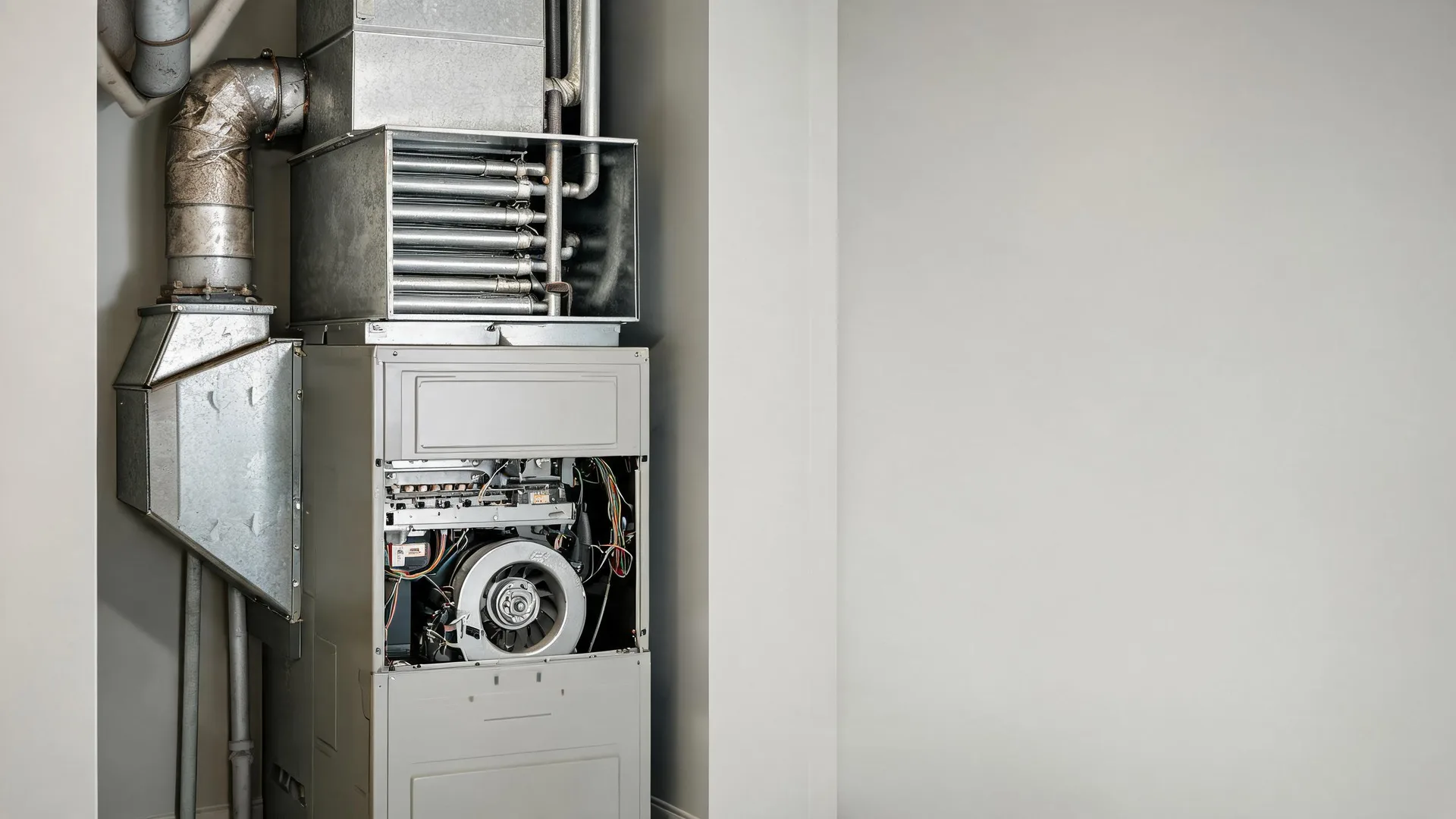
A gas furnace with attached ductwork, gas piping, and condensate lines installed in a concrete-block basement.

The install is more than the box

The size of the furnace matters more to the install than the brand on it. A contractor has to open up the cabinet, connect it to the ductwork already there, run gas and electric to it, and vent it correctly, and every one of those steps takes real labor whether the furnace is basic or top of the line. Venting is where the work can grow. A furnace that condenses its exhaust needs new PVC pipe run to the outside and a place for the condensate to drain, which means cutting a wall or finding a path through the house that the old furnace never needed. Ductwork is the other variable. If the trunk lines and returns are already sized for the kind of furnace going in, the swap is straightforward. If they are not, the installer has to modify them to move the right amount of air, and that work is priced separately from the unit itself. None of this shows up on the sticker for the furnace. It shows up in how much the installer has to touch to get it running safely.

Sizing is a calculation, not a guess

A load calculation looks at the floor area, the windows, the ceiling height, and how the walls and attic are insulated, then works out how much heat the house actually loses on a cold day. That number is what sizes the furnace. Matching the new unit to whatever is being pulled out skips this step, and it carries over any sizing mistake the last installer made.
Oversized is its own problem

A furnace too big for the house heats the air fast, shuts off, and starts again a few minutes later. That cycling never lets the system run long enough to warm the house evenly or move air through the ducts the way it should. The parts that start and stop the burner see more wear from all that cycling than they would running longer, steadier stretches in a correctly sized unit.

The old furnace does not come out until the new one is ready to go in, so there is no stretch with no heat. Disconnecting it means shutting off the gas line, pulling the electrical connection, and separating it from the vent pipe and the ductwork it was tied into. If it is a standard furnace, that venting was likely a simple metal flue. If the old unit was a higher-efficiency model, there may be PVC venting and a condensate line to disconnect as well. Once it is free, hauling it out usually takes more than one set of hands since the cabinet is heavier than it looks, especially with the heat exchanger still inside. A contractor should leave the old gas and electric connections capped safely if they are not reused right away, not left hanging for later. What happens to the unit after that, whether it is scrapped for the metal or disposed of another way, is worth asking about since not every installer handles it the same way.

Once the old furnace is out and the new one is set in place, most of the day goes to connections, not lifting. The gas line gets pressure tested before anything is lit, checking for leaks at every joint the installer made. Electrical goes next, low voltage for the thermostat wiring and a separate line for power to the blower. The vent pipe gets sealed where it meets the furnace, since a loose joint there is a safety problem, not just an efficiency one. Only after all of that is checked does the installer fire it up, watching the flame through a few cycles and checking the temperature rise at the registers before calling it done.