

What winter here actually asks of a heat pump
Your winters here are mild, not cold. The overnight low averages 33°F across December, January and February, and it only drops to 0°F or below on less than one night a year. That matters because the two numbers that worry people about heat pumps, the 40°F mark where output starts falling short of the rating and the 35°F mark where backup heat often kicks in, sit right around your average low. You are living at the edge of that range most winter nights, not well below it.
Out of the roughly 180 nights that your heat runs, about 65 dip to freezing or below. That is under half of them. And of those 65 nights, essentially none reach 0°F. So the nights where a standard heat pump struggles most are rare here, and the nights where it runs comfortably on its own are the majority.
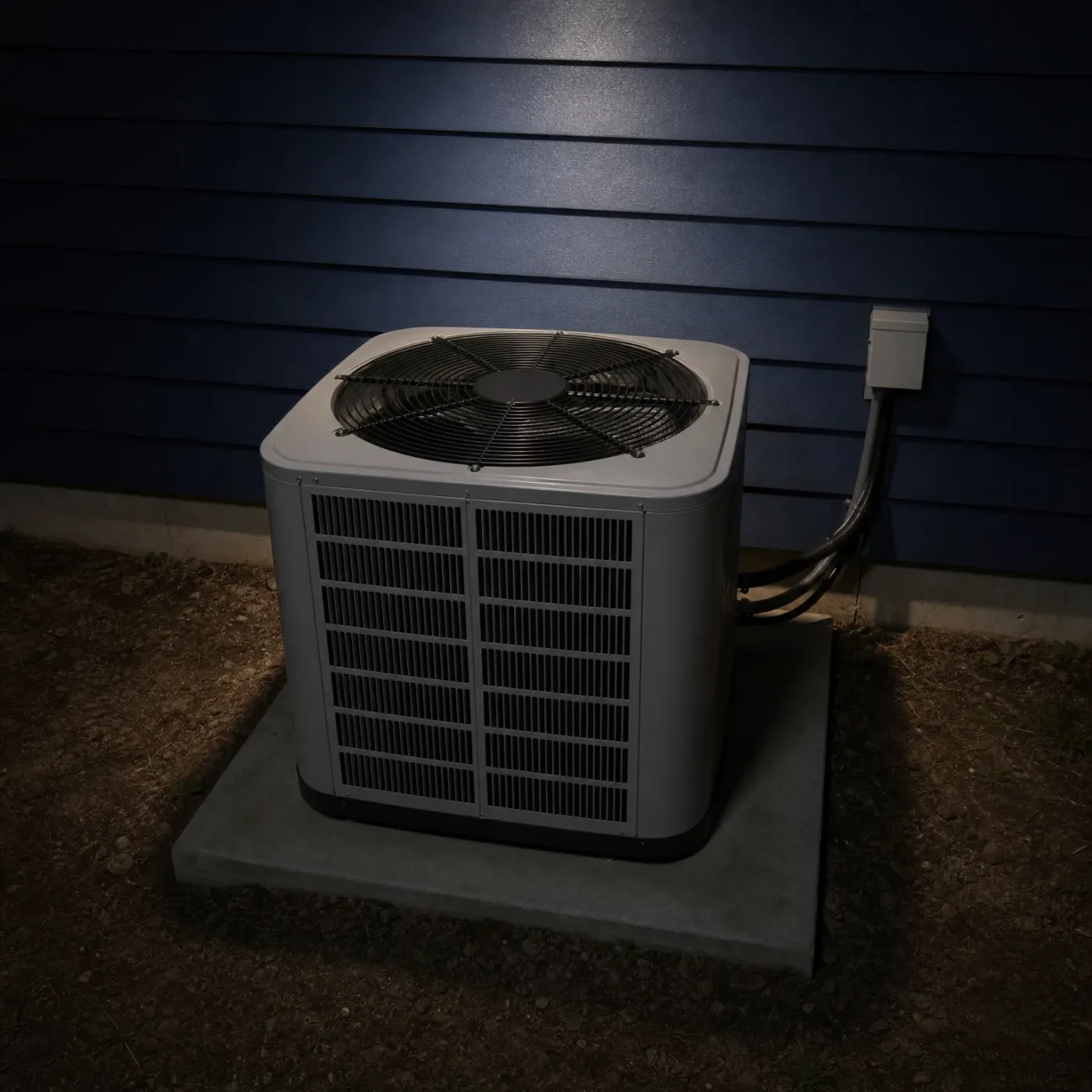
A cold-climate heat pump is built for exactly this edge. To earn that label it has to deliver at least 1.75 units of heat per unit of electricity at 5°F, a temperature colder than almost anything Garland County sees, and hold onto most of its capacity at that point. A two-winter field test of these units in occupied homes found backup heat covered only a small share of the output between 0°F and 35°F, and the units rarely ran on backup alone even at 0°F. In a county where 0°F does not happen most years, that is heat a standard heat pump can mostly deliver on its own.