A white Southern-style house with a wraparound porch photographed at night, surrounded by Spanish moss-draped oak trees lit by landscape lights.

Furnace Installation in Hot Springs, AR

Tell us about the job

Takes about a minute. No obligation.

New system or replacementFurnace or heatingGarland County, AR
Step 1 of 2

What ZIP code is the job in?

Bigger isn't better

A furnace that's too large for the house heats the air fast, hits the thermostat setting, and shuts off before it finishes a full cycle. That short cycling wears the ignition system and the blower motor sooner, and it leaves rooms far from the thermostat colder than the rest of the house. The right size runs longer, steadier cycles and heats the house evenly.

The math behind the recommendation

A contractor sizes a furnace with a load calculation, not a guess based on the old unit or square footage alone. That calculation looks at the walls, the windows, the insulation, the ceiling height, and how the house is laid out, then works out how much heat it actually loses on a cold day. A house that holds heat well can need a smaller furnace than one the same size that doesn't.

6 months
November through April, your furnace is on duty
33°F
the average winter night it heats against
80% AFUE
the federal minimum any new unit must meet
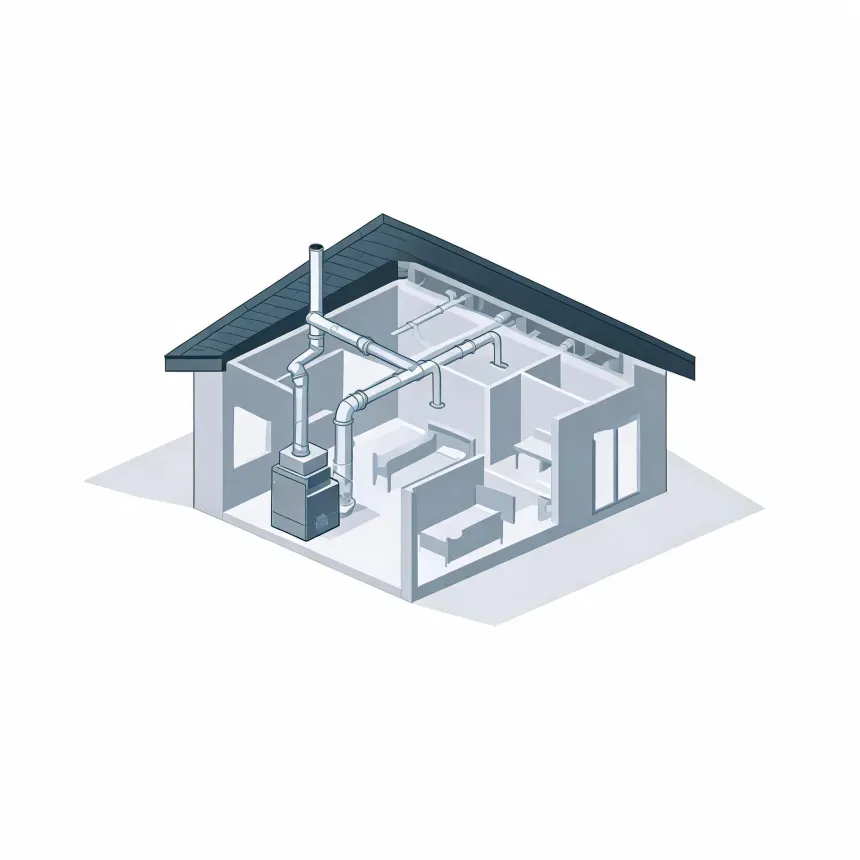
Isometric cutaway illustration of a small single-story house showing interior rooms, a furnace unit with a flue, and connected ductwork running below the dark gabled roof.
Your furnace works hardest from November through March.

NOAA nClimDiv, 1991–2020 normals

November starts six straight months of heat in Garland County.

Put a furnace in during October and it's already proven before the first cold night asks anything of it.

Electricity runs $36.10 per million Btu here, so a reliable furnace matters more than a marginally higher efficiency rating

Heat runs November through April
Winter nights average 33°F
Climate zone 3A
What most Hot Springs homes heat withElectricity heats 65.8% of homes in Garland County, against 29.4% on gas

Six months of heat a year, November through April, is a moderate load. Overnight lows average 33°F through December, January and February, cold enough to keep a furnace running steadily but well short of what systems face farther north. This isn't a furnace fighting single-digit nights for weeks on end. That matters when you're comparing models. You don't need the highest efficiency furnace on the lot to get good value here. A well-built mid-efficiency unit, sized right for the house, holds up fine under this kind of use. Put the money where it counts more for this area, which the next section gets into.

Replace it before the season

Replace it before the season starts, so it happens on your schedule, not in a hurry.

Find a contractor
A man in a cap, dark shirt and tan work pants walks up stone steps toward a dark blue front door, carrying a canvas tool bag, with a potted shrub beside the entry.
A gray high-efficiency gas furnace installed in an unfinished basement, surrounded by gas lines, a condensate drain, and sheet-metal ductwork.

Six months a year, nothing extreme

Six months of work a year, and nothing near the coldest nights other parts of the country deal with. That's not heavy use. When you're picking a furnace, let that settle the choice between models instead of chasing the highest efficiency number on the sticker. Spend on correct sizing and a solid install. That's what determines how this furnace runs, far more than a rating it'll rarely be pushed hard enough to show.

The venting changes the job

A mid-efficiency furnace vents through a metal flue, the way the old one likely did. A high-efficiency furnace vents through PVC pipe run to an exterior wall, with a condensate line to drain the moisture it produces. If you're switching efficiency tiers, that's new pipe, a new termination point, and sometimes a condensate pump added to the job.

The ductwork gets judged too

A load calculation sizes the furnace, but the existing ducts have to move the air it produces. Ducts that are undersized or leaking at the joints will choke a new furnace no matter how well it's chosen. A contractor worth hiring checks the duct run before quoting the install, not after it's in and the airflow comes up short.

That efficiency rating, the AFUE number, tells you what share of the fuel burned turns into heat in the house versus what goes out the flue. The higher the number, the less fuel gets wasted. That's the whole claim it makes. It says nothing about how long the furnace lasts, how evenly it heats the rooms, or how well it was installed. A high-efficiency furnace installed with a duct system that can't move the air it produces will run worse than a mid-efficiency furnace installed right. The rating isn't a flat promise either. A furnace hits that number under test conditions, and short cycling from poor sizing or a dirty filter pulls real-world performance below it. Read it as one input, not the whole decision.

The old furnace comes out first, along with the old vent pipe if it isn't being reused. The new unit gets set in place, and the ductwork, gas line, and vent all connect to it. The gas line gets checked for leaks before anything is fired up. The vent gets sealed at every joint, since a leak there puts exhaust where it doesn't belong. Once it's wired to the thermostat, the contractor runs it through a full cycle, checking the flame, the temperature rise, and the gas pressure while it's working. Airflow at the vents gets checked too, because a furnace wired and vented correctly can still heat poorly if the ducts don't move enough air. A good install ends with the contractor explaining what the furnace needs going forward, not just leaving it running.