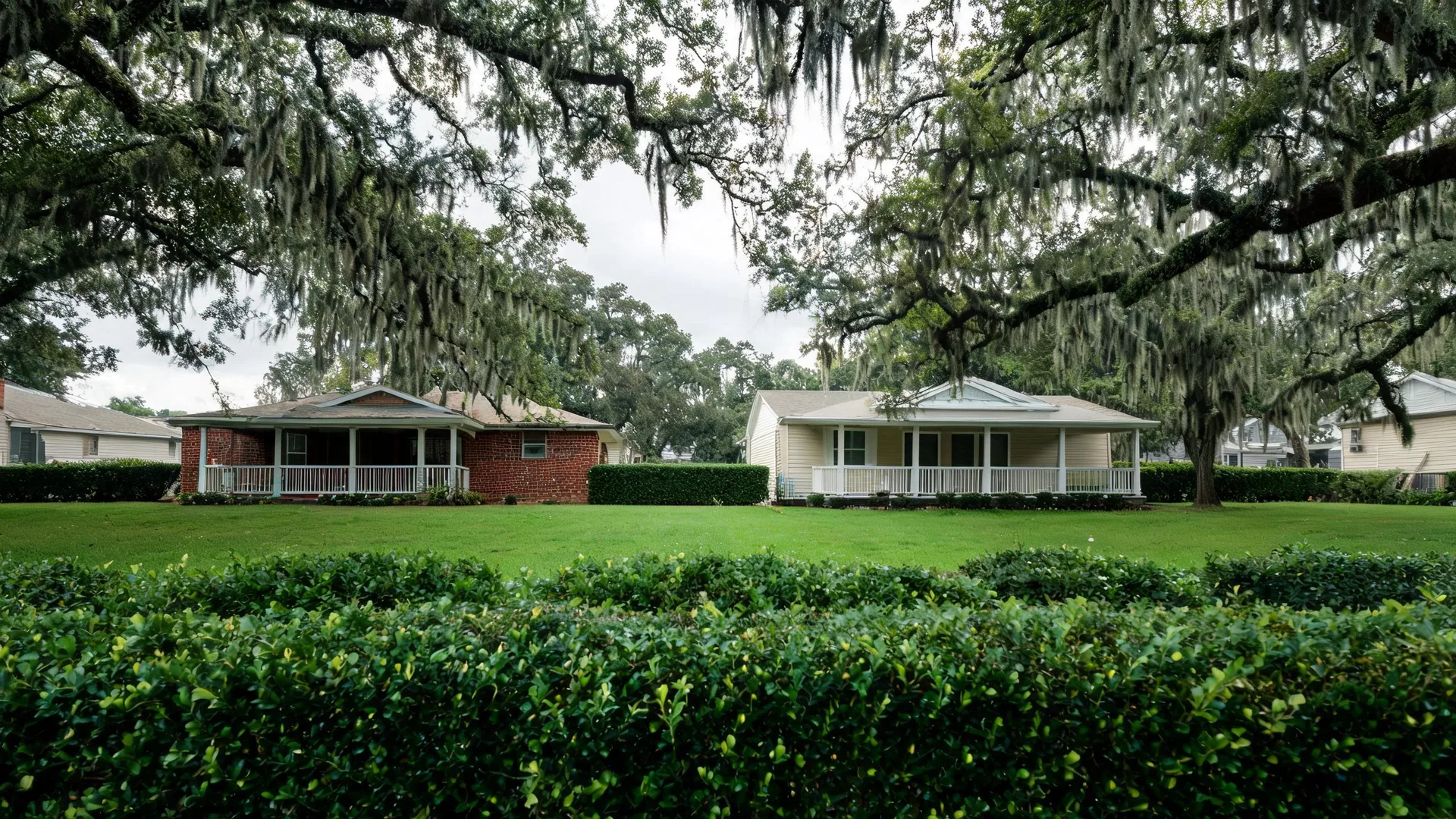





Two single-story houses, one brick and one with pale siding, both with covered porches, sit behind a mowed lawn and a trimmed hedge, framed by large oak branches draped with Spanish moss under an overcast sky.

Furnace Repair in Hot Springs, AR

Tell us about the job

Takes about a minute. No obligation.

RepairFurnace or heatingGarland County, AR
Step 1 of 2

What ZIP code is the job in?

A furnace that's starting to fail usually tells you before it quits outright. Listen for a bang when it kicks on, that's gas building up before the igniter catches, and it points to a dirty burner or a weak igniter. Short cycling, where it fires up and shuts off before the room ever warms, often means a clogged filter or a sensor shutting the system down early to protect itself. If the air coming out feels lukewarm instead of hot, the burners may not be firing right or the heat exchanger could be cracked. A burner flame that burns yellow instead of blue is worth calling about right away, since that points to incomplete combustion. None of these get better by waiting.

6 months
November through April, your furnace is on duty
33°F
the average winter night it heats against
7 winter storms
in ten years, the nights a failure hurts most
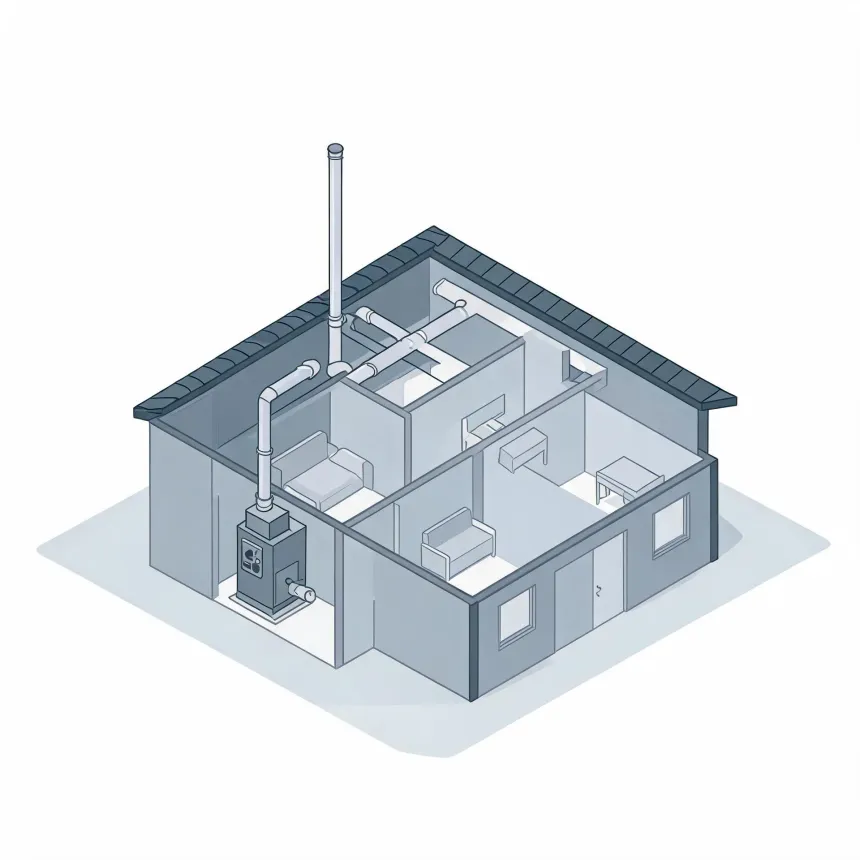
Isometric grayscale illustration of a cutaway single-story house showing interior rooms with furniture, a furnace unit connected to ductwork and a tall vertical flue pipe extending above the roof.
Your furnace works hardest from November through March.

NOAA nClimDiv, 1991–2020 normals

Furnaces in Garland County only run about six months a year, November through April.

Six months of work a year means most furnace problems here come from age or neglect, not from being worked too hard, and that's usually worth fixing.

November is when a furnace that sat idle since April finds out what still works

Heat runs November through April
Winter nights average 33°F
Climate zone 3A
Built recently, built to lastHalf the homes in Garland County were built in 1984 or later

A diagnostic visit starts before the panel comes off. The tech asks what you noticed, when it started, whether it's constant or comes and goes, because that narrows things down fast. Then the cover comes off and they watch the furnace run through a full cycle, start to finish, rather than guessing from a single symptom. They'll check the flame, check for a spark or glow from the igniter, and pull the filter to see if airflow is the real problem hiding behind something else. A multimeter gets used on the control board and the safety switches to see which ones are actually doing their job. If the furnace trips a limit switch or won't stay lit, that gets traced back to its cause instead of just reset and sent on its way. By the end you should know exactly what's failing and why, not just that something is.

Six months a year of work means this is usually worth fixing

A furnace that's only had six winters' worth of work behind it is usually a furnace worth repairing. If yours is acting up now, the cause is more likely a worn part than a machine that's given out. Get it looked at before that overnight cold snap finds the problem for you.

Find a contractor
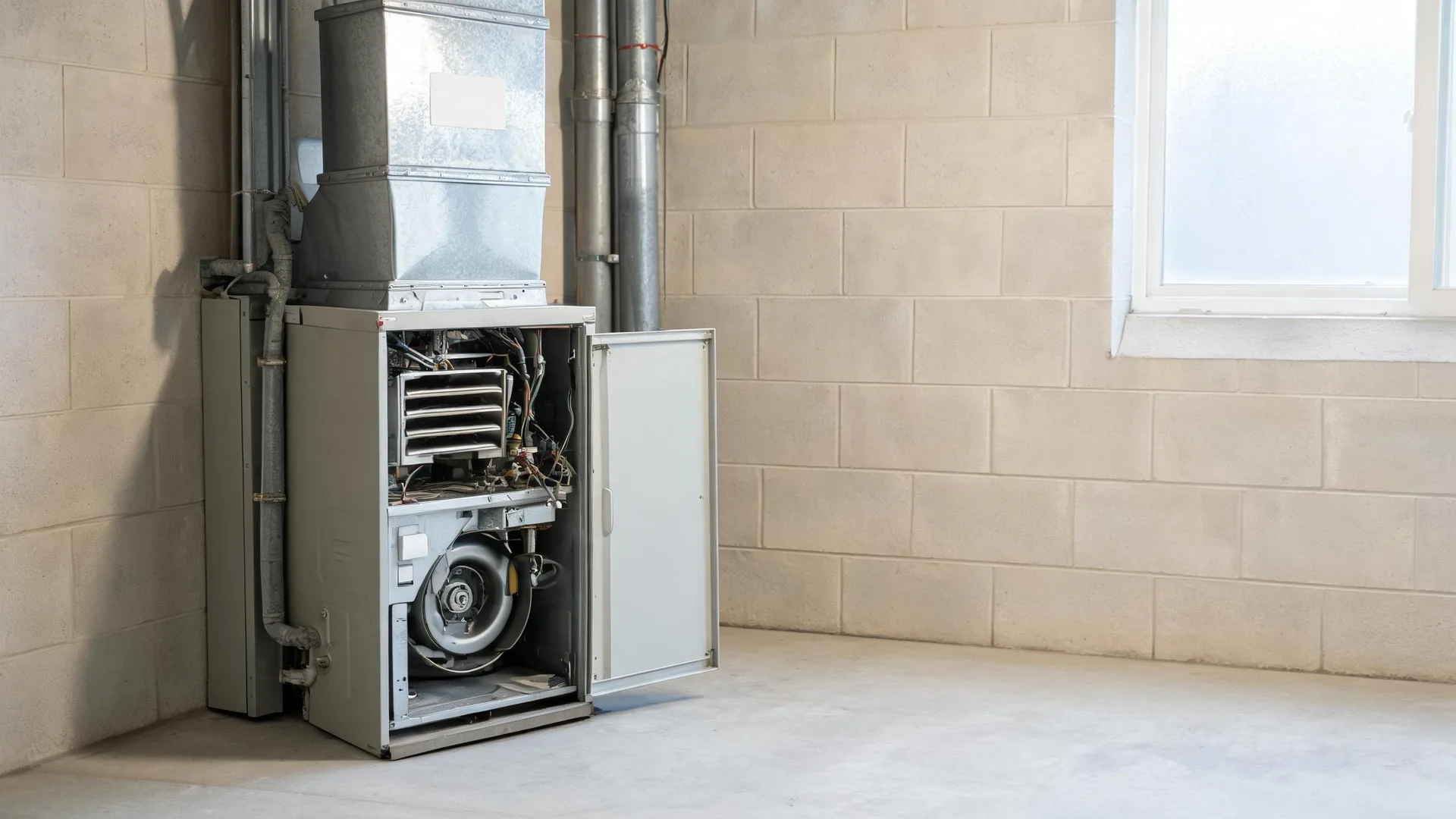
A gray residential gas furnace installed in an unfinished basement, connected to sheet-metal ductwork and PVC pipes.

Check how old the house makes it

If your furnace came with the house, check how old that makes it before you guess. Half the homes in Garland County went up in 1984 or later, so there's a real chance yours is one of them. A furnace that young hasn't logged many winters yet, and a gas valve or blower motor with that little work behind it is usually still good. Worth checking the install date on the unit, or asking whoever you bought the house from, before you write it off as old.

What you can check yourself

Shut the furnace off, pull the filter, and hold it up to a light. If light barely gets through, that alone could be the whole problem. Look at the thermostat next, make sure it's set to heat and the setting is actually above room temperature, and check the batteries if it uses them. Then go to the breaker panel and make sure the furnace's breaker hasn't tripped, and check that the switch that looks like a light switch near the furnace itself (it's the power shutoff) is flipped on. People bump that one more than they'd think.
What to leave alone

Don't pull the burner cover off or go near the gas valve. If you smell gas, don't flip any switches or check anything at all, get out and call the gas company from outside. Same goes for a flame that looks yellow instead of blue, that's not a filter problem and poking at it yourself won't tell you anything useful. A tech needs to see the flame while the furnace is running to know what's actually wrong.

Most furnace failures come down to a handful of parts wearing out, not some catastrophic breakdown. The igniter is usually first. It glows or sparks thousands of times over its life, and eventually it just doesn't make enough heat to light the gas reliably. A flame sensor gets a thin coat of oxidation over time and stops telling the control board the flame is lit, so the board shuts the gas off a few seconds in, even though the furnace is working fine otherwise. Blower motors wear out too, usually the bearings, and you'll hear it before it quits, a grinding or squealing sound when it spins up. A clogged filter doesn't break anything by itself, but it starves the system of airflow, and that makes the heat exchanger run hotter than it should, which shortens its life. Capacitors and control boards fail less often, but when they do, the furnace usually won't start at all rather than running poorly.

Repair makes sense as long as the parts that are failing are the parts a tech can actually get to and replace, the igniter, the flame sensor, the blower motor, the control board. All of those sit in reach, none of them are tied to the rest of the house, and swapping one out doesn't put the next one at risk. The one part that changes the math is the heat exchanger. It's buried in the middle of the furnace, it's not a simple swap, and a crack in it isn't a wear item like the others, it's a sign the whole unit has been running hotter than it should for a while. If a tech tells you the igniter or the sensor is the problem, that's a repair and a reasonable one. If the word heat exchanger comes up, that's the conversation where replacing the furnace gets put on the table instead.