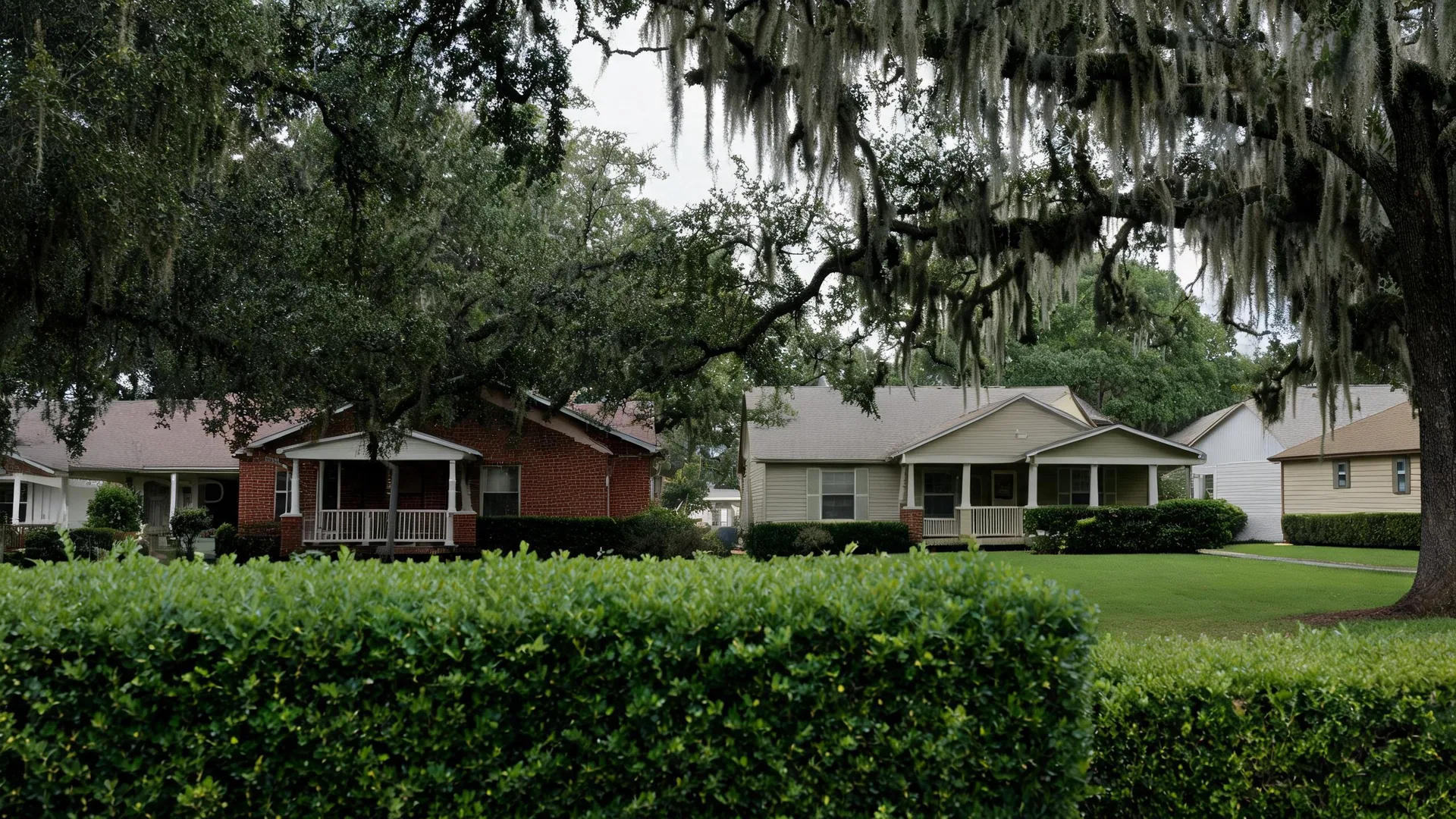
Single-story houses with covered porches, one brick and one light-colored siding, behind a trimmed hedge and lawn, beneath large oak trees draped with Spanish moss.

Furnace Installation in Cherokee Village, AR

Tell us about the job

Takes about a minute. No obligation.

New system or replacementFurnace or heatingSharp County, AR
Step 1 of 2

What ZIP code is the job in?

Electric heat is the norm here

More than half of homes in Sharp County heat with electricity, and another third run on bottled or LP gas. Utility gas reaches very few homes. If your house already has a furnace, it's most likely electric or propane, not natural gas.

Match what your house already has

A straight swap means the contractor is working with wiring or gas lines already sized for that system. Switching fuel types for a furnace installation means new venting, new gas or electrical supply, and more to plan around.

7 months
October through April, your furnace is on duty
29°F
the average winter night it heats against
80% AFUE
the federal minimum any new unit must meet
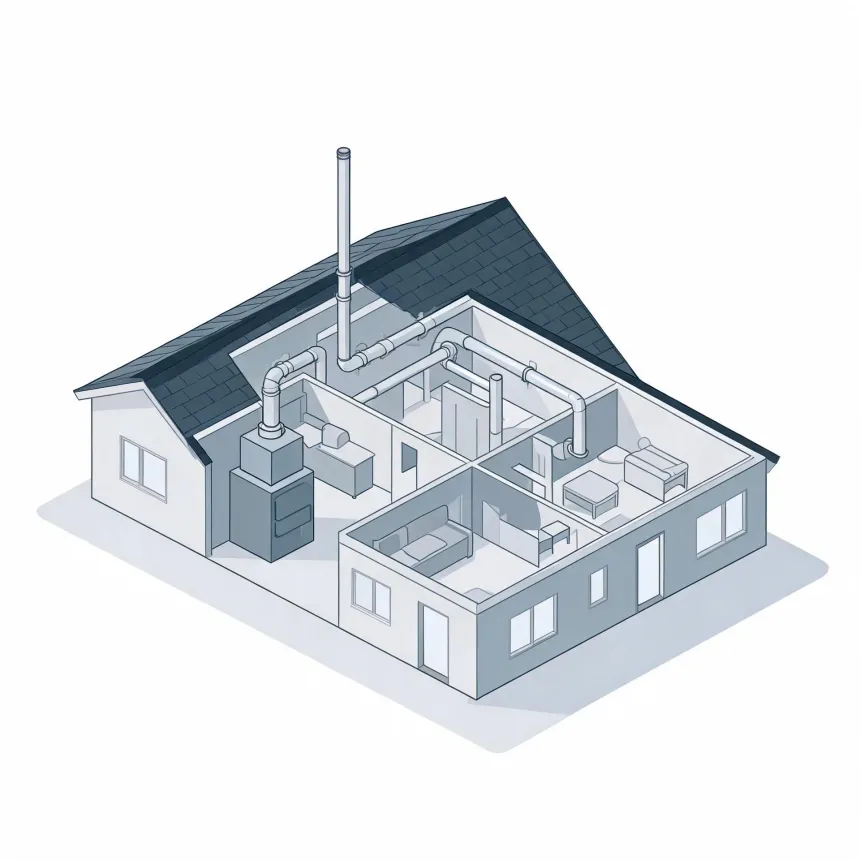
Isometric cutaway illustration of a single-story house showing interior rooms with furniture, a furnace unit connected to ductwork and a tall flue pipe extending through the roof.
Your furnace works hardest from November through March.

NOAA nClimDiv, 1991–2020 normals

Sharp County sees weather that knocks out power, not weather that demands special equipment from a furnace.

A standard furnace sized to your house, installed correctly, is what holds up here.

A 29°F night is a normal night here, nothing a standard furnace can't hold

Heat runs October through April
Winter nights average 29°F
Climate zone 3A

Winter here is long enough that a furnace earns its keep. Seven months of heating a year, October through April, means the system runs on most days you'd think to check it. That's a reason to get the size right, not a reason to size up. A furnace matched to your house will cycle on and off the way it's supposed to, holding the place steady through a 29°F night without strain. Going bigger doesn't buy you anything here. It just cycles more and wears out the same.

Install before October, not after the first cold night

September is the last month before heat season starts in Sharp County. Get a furnace installed before October and it's running on your schedule, not during the first cold night of the year.

Find a contractor
A man seen from behind in a dark shirt and tan pants climbs concrete steps toward a navy blue front door, carrying a canvas tool tote in his right hand, with a large blue planter and shrub to the left.
A gas furnace with attached ductwork, gas piping, and condensate lines installed in a concrete-block basement.

Sized for the house, not the habit of going bigger

Sizing a furnace comes down to a heat loss calculation, not the size of the one you're replacing and not a rule of thumb based on square footage alone. A contractor works out how fast the house loses heat through its walls, windows, and roof, then picks a furnace that can replace that heat at the coldest point without running flat out. Too small and it can't keep up on the coldest nights. Too big and it short cycles, meaning it blasts the house up to temperature fast and shuts off before it's run long enough to warm things evenly or wear in the way it should. That shortens the life of the heat exchanger and leaves rooms uneven, hot near the vents and cold in the corners. A correctly sized furnace runs in longer, steadier stretches, which is easier on the igniter and blower motor both. Bigger was never the safe choice. Right was always the goal.

The old furnace has to come out first

A furnace is tied into the gas or electric supply, the duct trunk, and the flue or vent pipe. Disconnecting it, capping or re-rigging the venting, and clearing the space takes real time before a new unit can even be set in place. It's part of the job, not a separate one.

Removal is usually included, not extra

Most contractors haul away the old furnace as part of the install rather than leaving it for the homeowner to deal with. Worth confirming before the job starts, since it changes what's left for you to handle once the new system is running.

The efficiency rating on a furnace tells you how much of the fuel it burns turns into heat in the house versus what goes out the flue. A furnace with a higher rating pulls more heat out of the same flame before letting the exhaust go. That difference shows up on the gas bill every month the furnace runs, not just on the coldest days. Higher-rated furnaces also condense the exhaust, which means they need a drain for the condensate and usually vent through PVC pipe instead of metal flue. That changes what the installer has to run to the outside wall. A lower-rated furnace vents differently and skips the condensate drain, which is simpler but burns more fuel to do the same job. Neither rating changes how big the furnace needs to be. Sizing still comes from the heat loss calculation, not the label.

Install day starts with shutting off the gas or power to the old furnace. If it's been running, it needs time to cool before anyone disconnects it. From there the old unit gets cut loose from the ductwork, the gas line or electrical whip, and the flue or vent pipe, then carried out. What's left behind is a trunk opening, a gas stub or electrical box, and a vent that all need to line up with whatever the new furnace requires. Setting the new furnace in place is usually the fast part. Most of the day goes to connecting it correctly. The duct transitions get sealed, new venting goes in if the rating calls for it, the thermostat and control board get wired, and the gas pressure or electrical draw gets checked against what the furnace is rated for. Before anyone leaves, it gets fired up and run through a full cycle. Airflow gets checked at the vents, and the flue or vent pipe gets checked for a proper draft so the exhaust is actually leaving the house.