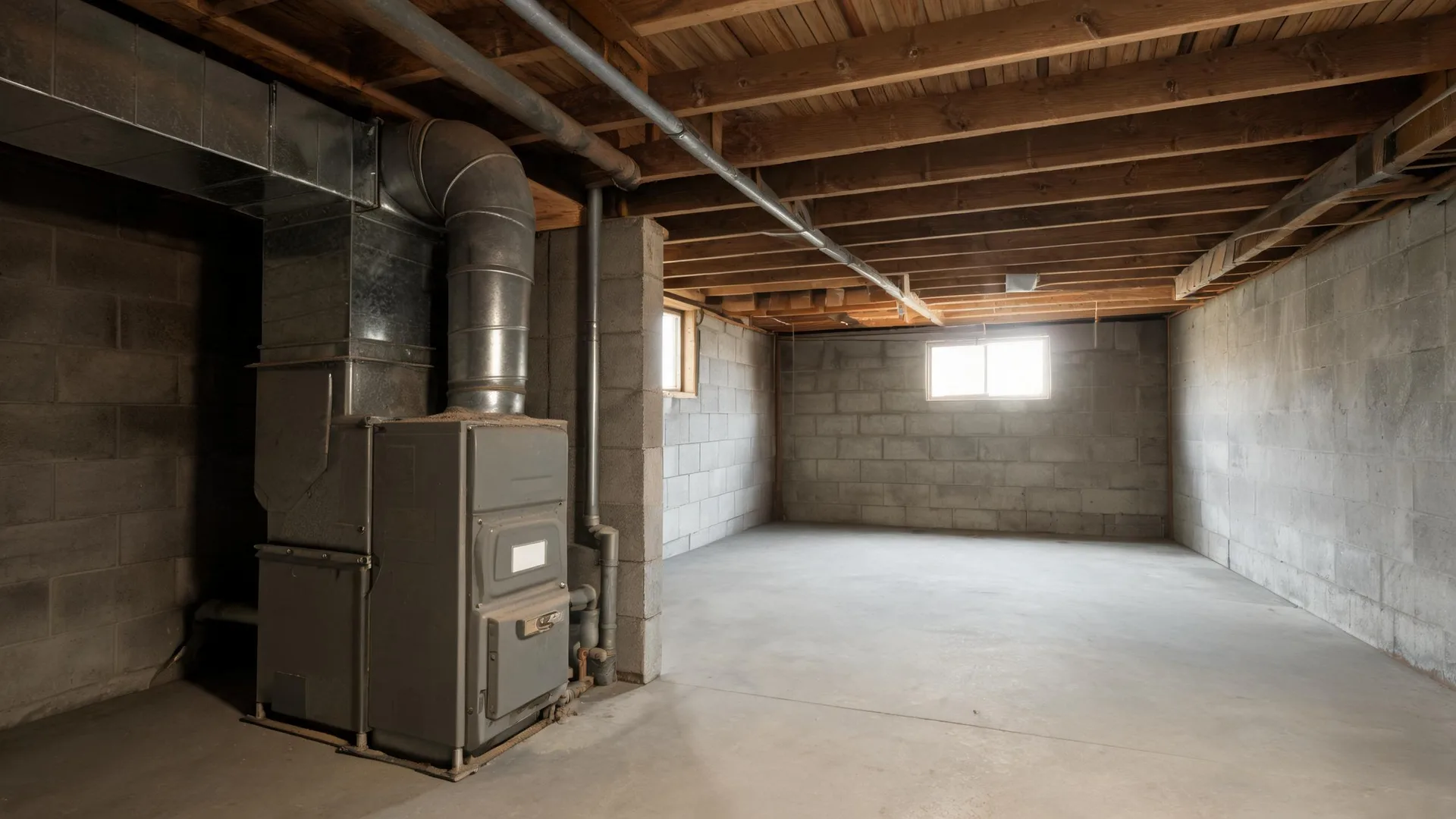
An unfinished basement featuring exposed ceiling joists, a metal HVAC unit with round ductwork, a hanging light bulb, and scattered boxes and debris along the left wall.

Furnace Installation in Conway, AR

Tell us about the job

Takes about a minute. No obligation.

New system or replacementFurnace or heatingFaulkner County, AR
Step 1 of 2

What ZIP code is the job in?

The ductwork decides a lot

A furnace has to push air through the ducts already running through the house. If they're undersized, leaky, or routed in a way that starves certain rooms, the installer has to address that before the new furnace can heat evenly. A furnace that's sized right on paper can still underperform if the duct system working against it isn't fixed first.


Bigger isn't the goal, correct is

An oversized furnace short cycles, turning on and off too often, which wears out parts faster and leaves rooms feeling uneven anyway. An undersized one runs constantly and still can't keep up on the coldest days. Getting the size right means a load calculation on the house, not just swapping in whatever matches the old unit.

6 months
November through April, your furnace is on duty
32°F
the average winter night it heats against
80% AFUE
the federal minimum any new unit must meet
Isometric cutaway illustration of a single-story house showing interior rooms with furniture, a furnace unit with connected ductwork and a tall vertical flue pipe extending above the dark shingled roof.
Your furnace works hardest from November through March.

NOAA nClimDiv, 1991–2020 normals

Furnaces here start running in November.

Install it in October and it's broken in on your terms, not during the first cold snap.

Six months of work a year, not a system built to be a hero

Heat runs November through April
Winter nights average 32°F
13 winter storms from 2015 to 2024
Built for what it costs to runElectricity in Arkansas runs $36.10 per million Btu, cheaper than most of the country.

Most houses in Faulkner County heat with electricity, 65.8% of them. Gas is well behind at 29.7%, and propane barely registers at 2.4%. If your home already has a furnace, there's a good chance it runs on electricity rather than gas, and that matters when it's time to replace it. Swapping in the same fuel type keeps the job simpler. There's no new gas line to run and no venting to rework. If your house is one of the fewer that heat with gas, the installer still needs to check that the existing line and vent can serve the new unit, not just assume they will.

Replace it before the season

Replace it before the season starts, so it happens on your schedule, not in a hurry.

Find a contractor
A man in a cap, dark shirt and tan work pants carries a worn canvas tool bag up porch steps toward a dark blue front door, with a potted shrub beside the entry.
A gray high-efficiency gas furnace installed in an unfinished basement, surrounded by gas lines, a condensate drain, and sheet-metal ductwork.

The label tells you about the furnace, not the house

The efficiency rating on a furnace tells you how much of the fuel it burns turns into heat in the house, and how much goes out the flue. A higher rating means less waste. It doesn't tell you how long the furnace runs or how hard it works to keep the house warm. That comes down to the ductwork, how tight the house is, and how cold it gets outside. A furnace with a high rating can still run constantly if it's fighting leaky ducts or pushing air through a system that starves certain rooms. The rating is tested under set conditions in a lab. What you get in the house depends on everything the air has to move through before it reaches a room.

Someone has to disconnect it first

The old furnace doesn't just get unplugged. Gas gets shut off and the line capped. Electrical connections get disconnected at the breaker. If it's a gas unit, the flue or vent pipe comes apart too, since the new furnace may vent differently than the old one did. None of this is optional work tacked onto the install. It has to happen before the new unit goes in.

Where it ends up after that

A furnace is mostly metal, and scrap haulers take it for that reason. The cabinet, the heat exchanger, the blower motor all get recycled rather than landfilled whole. Some parts, like the old thermostat or certain control boards, may have to be handled separately depending on what they contain. Either way, hauling it off is part of the job, not something left for the homeowner to figure out after the installer leaves.

Furnaces carrying the same efficiency rating can still be different machines once they're running. Ask whether the blower motor is single speed or variable speed. A variable speed motor ramps up and down instead of switching between full blast and off, which keeps the house more even and runs quieter. Ask about the heat exchanger, since that's the part that determines how long the unit lasts before it's the reason for the next replacement. Ask what the warranty actually covers, parts versus labor, and whether it depends on registering the unit or keeping up with maintenance. A lower price up front on a stripped down unit isn't a deal if it means a noisier house or a shorter life out of the equipment.

Install day is less about the furnace itself and more about everything that connects to it. The installer runs the connections to match the new unit to the ducts already in place, the gas line or electrical circuit, and the vent. Each one gets tested before the job is called done. Gas lines get checked for leaks. Electrical connections get checked under load, not just looked at. The vent pipe gets tested for draft, since a furnace that can't vent properly will shut itself off rather than run unsafely. Once it's running, airflow gets checked at the registers, and the thermostat gets checked to make sure it's actually talking to the new unit and not just the wiring left over from the old one.