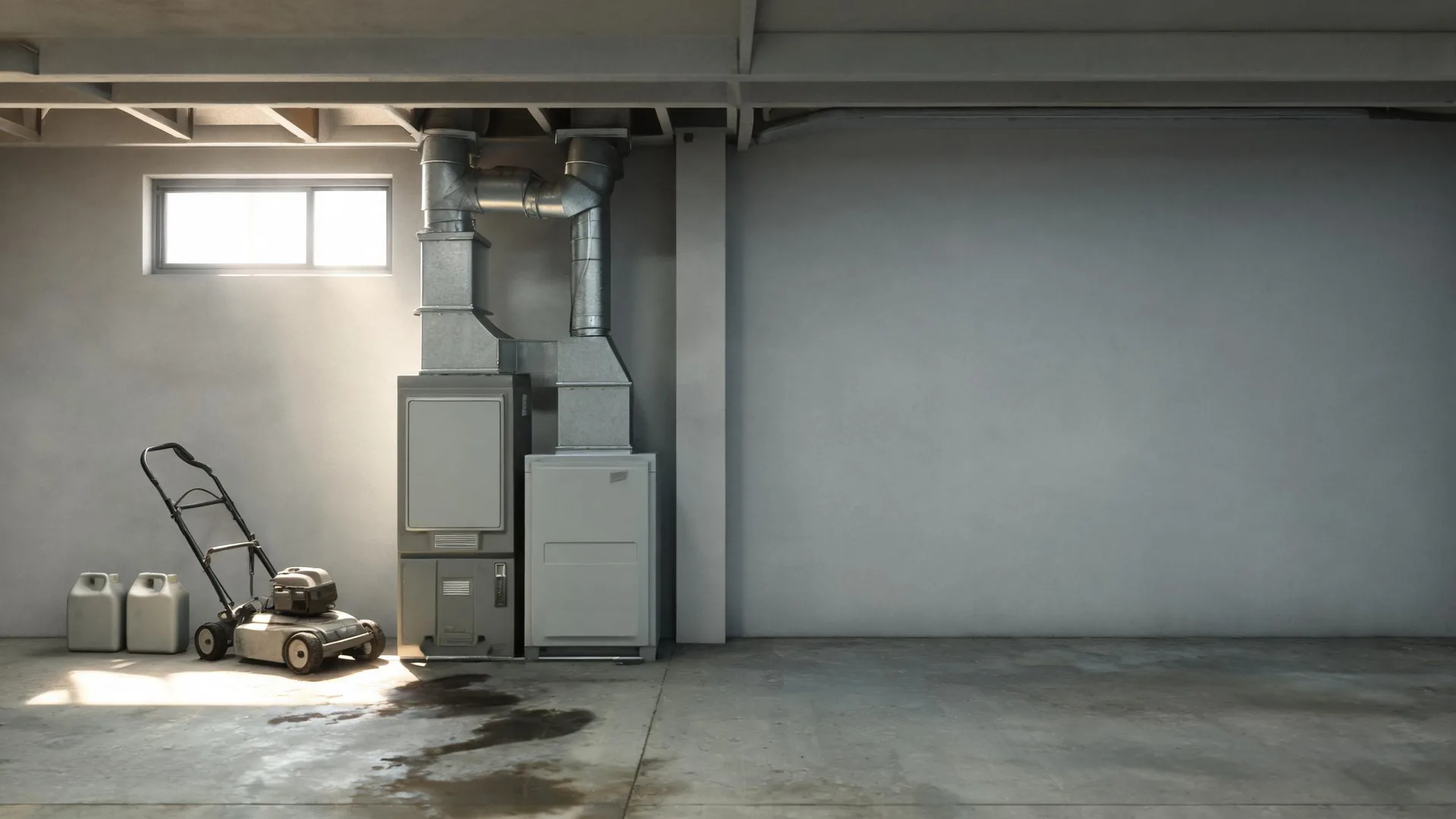
Five months of work a year
Furnaces in Clark County only run November through March. That's a short season compared to a lot of the country, and it means less wear on the heat exchanger and blower over the years.
Takes about a minute. No obligation.
Furnaces in Clark County only run November through March. That's a short season compared to a lot of the country, and it means less wear on the heat exchanger and blower over the years.
Since the furnace isn't run ragged here, a problem is more likely a bad part than a system worn out from overuse. That makes repair the right call more often than replacement.
NOAA nClimDiv, 1991–2020 normals
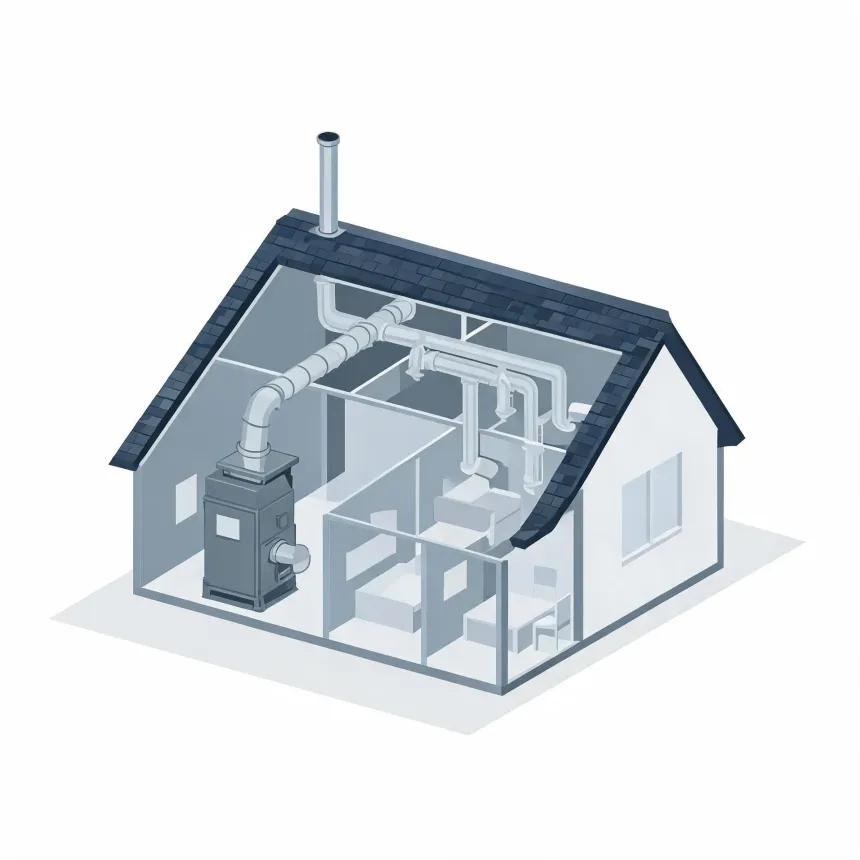
Half the homes in Clark County were built in 1985 or later.
A furnace that came with a newer house still has years of work left in it.




If a repair tech finds the problem and quotes a fix, that's usually the end of it. A furnace that came with a house built in 1985 or later hasn't had to work through decades of winters yet, and most of its parts are rated to last well past where it is now. A cracked heat exchanger is the one thing worth asking about directly, since that's the failure that actually ends a furnace's life rather than just interrupting it. Outside of that, a bad igniter, a failed flame sensor or a stuck blower motor are parts, not verdicts.
A furnace with five months of work a year and a houseful of parts rated to last doesn't need much reason to fix instead of replace. Get a tech out, find out what's wrong, and let that decide it.
Find a contractorA furnace that's struggling doesn't fail cleanly. It fails louder. A cracked heat exchanger gets worse every cycle it runs, since the metal keeps flexing around the crack each time it heats and cools. A flame sensor coated in residue reads weaker with every ignition until the furnace stops trying altogether. Even a dirty filter makes the blower work harder than it should, and that strain lands on the motor. None of these get better by waiting. The furnace doesn't rest and heal between cycles, it just runs the same fault again the next time it kicks on.
A furnace that won't light is usually down to one part. The igniter can crack or weaken until it won't glow hot enough. The flame sensor can get a coat of residue until it can't tell the control board a flame is there, and the furnace shuts itself down rather than run without proof it's burning clean. Both are routine swaps, not signs of anything bigger.
A clogged filter doesn't just make a furnace work harder. It can starve the burner of air, cause the heat exchanger to overheat, or trip a limit switch that shuts the whole system down to protect itself. What looks like a dead furnace is sometimes just restricted airflow, and it's worth ruling out before anything gets replaced.
Most homeowners notice a furnace problem before they can name it. The air coming out feels cooler than it used to, or the house takes longer to warm up than it did last winter. Short cycling is another one. The furnace fires up, runs for a bit, and shuts off before the house warms at all. Sometimes it shows up as noise instead. A bang when it ignites, a rattle from the blower, a clicking that keeps going after the burner should have lit. A smell when it first kicks on is also worth paying attention to, especially anything like burning dust that doesn't fade after a few minutes. Any of these is reason enough to have it looked at, not just the ones that leave the house cold.
A tech weighing repair against replacement is really asking one question. Is the thing that broke the furnace itself, or just a part of it. Most of what fails is a part. An igniter, a flame sensor, a blower motor, a control board. Any of those can be swapped without touching the rest of the furnace. Once it's done, the furnace runs like a furnace that age should run. The one failure that changes the question is a cracked heat exchanger, because that's the furnace itself giving out, not a part feeding it. Everything else is a repair with an end point. A heat exchanger is a different conversation.