





White two-story houses with wraparound porches and Spanish moss-draped oak trees photographed along a residential street at night.

Furnace Repair in Berryville, AR

Tell us about the job

Takes about a minute. No obligation.

RepairFurnace or heatingCarroll County, AR
Step 1 of 2

What ZIP code is the job in?

Furnaces around Berryville run about seven months a year, October through April. Overnight lows average 28°F in December and January, so a furnace that quits is a real problem, not just an annoyance. Still, nothing about the winters here is unusual for this equipment. It's the normal workload, and the parts that fail tend to fail for the same reasons they would anywhere else. A furnace that short cycles, blows cold air, or won't fire at all is usually a bad igniter, a dirty flame sensor, a clogged filter, or a thermostat wiring problem. Finding which one it is gets it fixed right the first time.

7 months
October through April, your furnace is on duty
28°F
the average winter night it heats against
10 winter storms
in ten years, the nights a failure hurts most
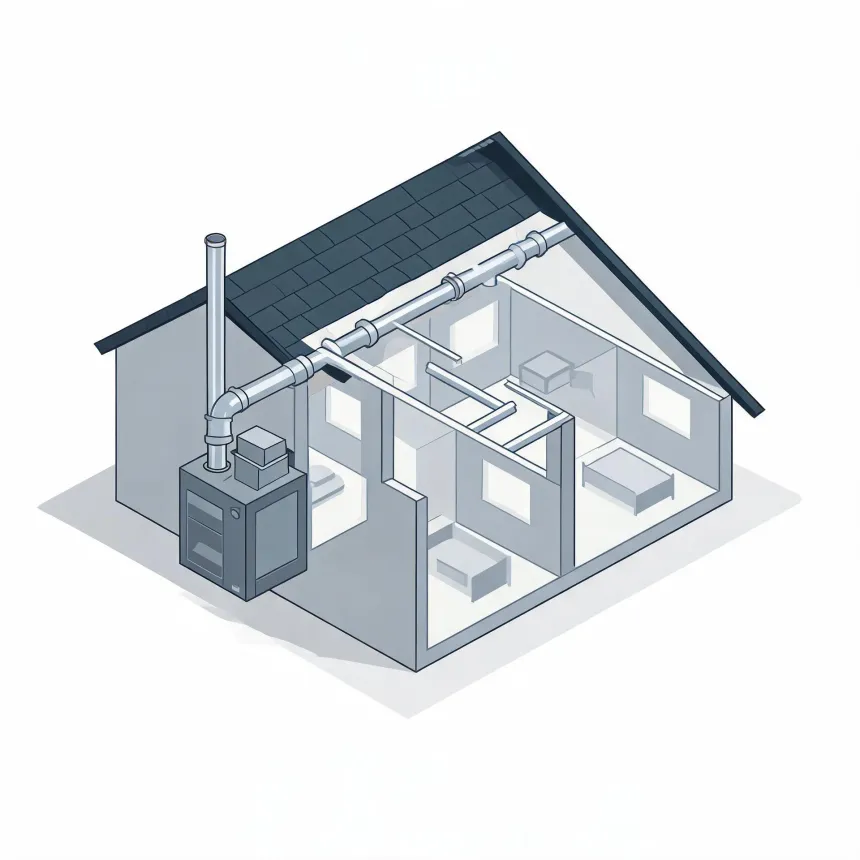
Isometric cutaway illustration of a small house showing interior rooms, ductwork running through the attic, and a furnace unit with a vertical flue pipe on the exterior wall.
Your furnace works hardest from November through March.

NOAA nClimDiv, 1991–2020 normals

Furnaces around Berryville sit idle all summer, then get asked to run every night starting in October.

The first cold stretch of the season is when a weak igniter or a bad flame sensor finally gives out.

A normal Arkansas winter, nothing extra for a furnace to fight

Heat runs October through April
Winter nights average 28°F
Climate zone 4A
Carroll County homes skew newerHalf the homes in the county were built in 1989 or later.

Carroll County gets its share of rough weather, 82 severe weather events over the last ten years, most of it wind and hail rather than winter storms. Only 10 of those were ice or heavy snow. That matters for a furnace because the equipment inside your house doesn't know or care what's happening outside. Wind and hail can take out a power line, and when the power drops, the furnace stops with it, not because anything inside it broke. Most furnaces come back on by themselves once power is restored. If yours doesn't, the problem was likely there before the outage, sitting in the igniter or the flame sensor, waiting for the next cold night to show itself.

A newer furnace is usually worth fixing, not replacing

If your furnace came with a newer build, repair is the better bet before replacement. A bad igniter or flame sensor gets swapped out in one visit, and the rest of the system keeps going.

Find a contractor
A man in a cap, dark shirt and tan work pants carries a worn canvas tool bag up porch steps toward a dark blue front door, with a potted shrub beside the entry.
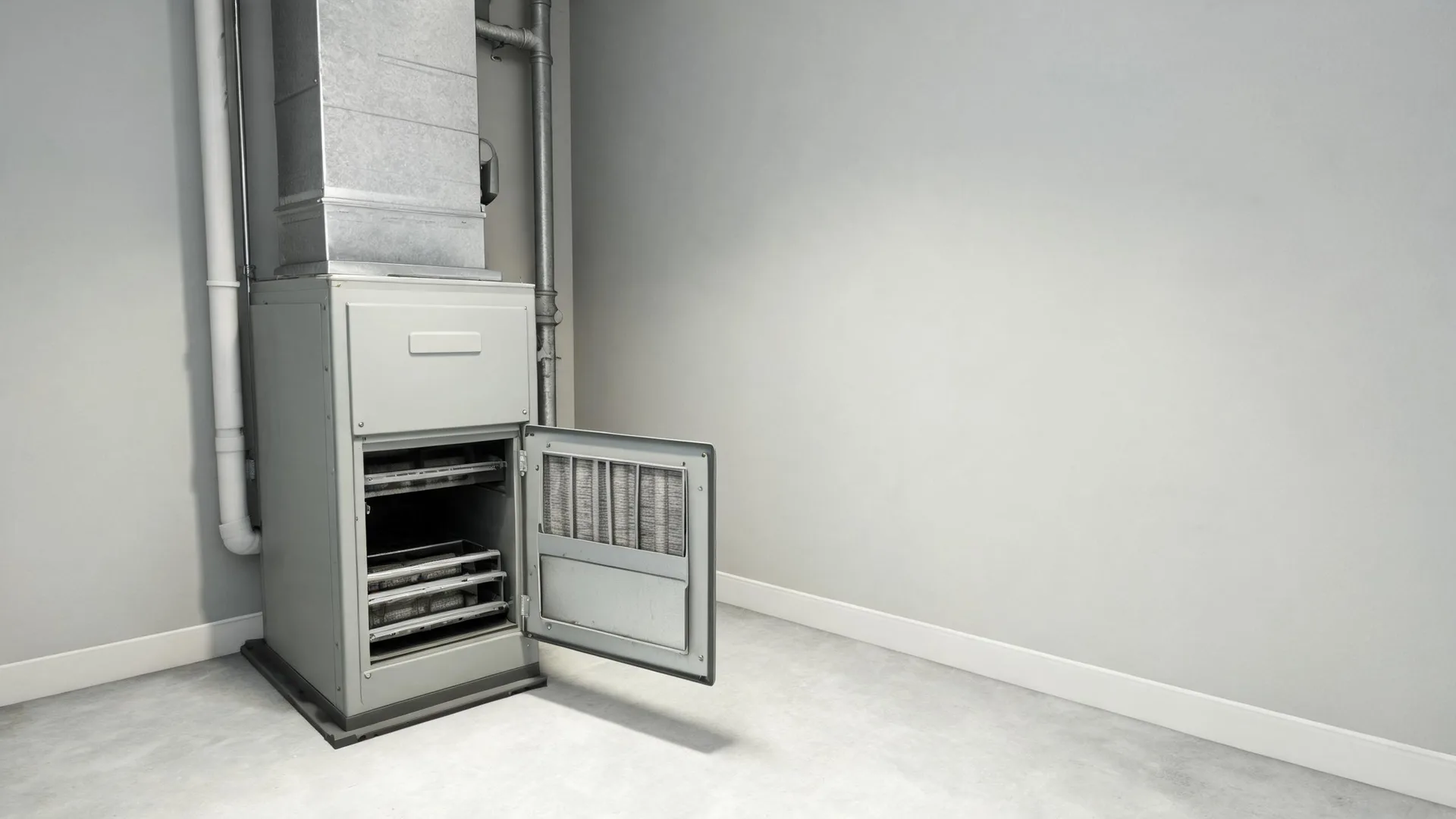
A gray high-efficiency gas furnace installed in an unfinished basement, surrounded by gas lines, a condensate drain, and sheet-metal ductwork.

The parts that fail are the ones working hardest, not the ones oldest

A furnace doesn't wear out evenly. It sits idle most of the year, then gets asked to fire every night for months straight, and the parts that take that start-stop cycling the hardest are the ones that go first. The igniter heats up and cools down every cycle, and that repeated stress is what ends its life, not old age sitting on a shelf. The flame sensor coats over with a thin film from normal combustion, and once it can't sense the flame, the furnace shuts itself down as a safety measure. A filter loaded with dust pulls airflow down until the system overheats and trips its limit switch. None of this is bad luck. It's the ordinary toll of a machine that runs hard for part of the year and sits the rest.

What you'll notice first

A furnace in trouble shows itself in how it runs, not just whether it runs. It might click and try to light without catching. It might blow air that never warms up. It might fire, shut off, then start right back up on its own, over and over, so the house never quite gets comfortable. Each of these is the furnace telling you something specific is wrong, not just acting its age.
What it means for getting it fixed

The symptom points at the part, which is why a specific description helps more than a general one. Won't fire at all leans toward the igniter. Fires then shuts off leans toward the flame sensor. Runs but blows cool air can mean a filter choking off airflow. Telling a tech exactly what the furnace is doing, and when it does it, gets the right part checked first instead of guessing through all of them.

Before calling anyone, check the filter. Pull it out and hold it up to a light. If you can't see light through it, it's choking off airflow and that alone can make a furnace blow cool air or shut off early. Next, look at the thermostat. Make sure it's set to heat, not just on, and that the temperature you want is actually above room temperature. Check the breaker and any switch that looks like a light switch near the furnace itself, sometimes it gets bumped off. If the furnace has a standing pilot, see if it's lit. None of this is guesswork, it just rules out the simple things before you pay someone to find them for you.

A tech starts by asking what the furnace is doing and when, then goes to watch it do that. They'll pull the panel and check for a flame, steady and blue, not yellow or flickering, since the color says something about combustion itself. They'll test the igniter for resistance, since a cracked one still glows but can't hold up under power. The flame sensor gets pulled and looked at, and often cleaned on the spot, because a coated sensor is the single most common reason a furnace fires and then quits. They'll check for the right gas pressure and confirm the inducer motor is pulling exhaust the way it should before anything gets lit again. The filter and airflow get checked too, since a furnace starved for air will trip its limit switch no matter how good the burner looks. By the time they're done, they're not guessing which part failed. They've watched it fail.