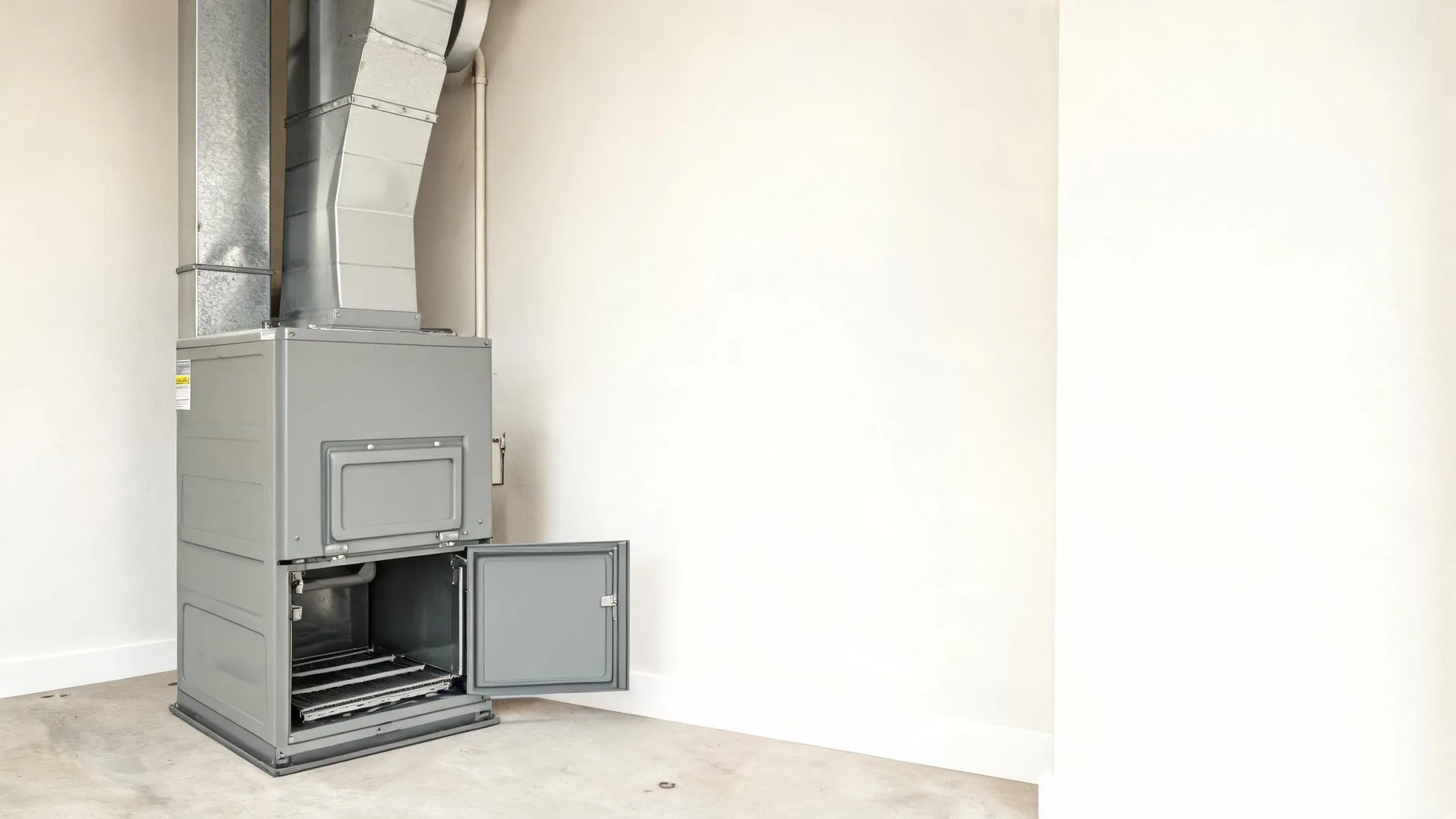
Storms here are frequent
Mississippi County saw 126 severe weather events between 2015 and 2024, with damaging wind the most common. An outdoor furnace vent or intake can take hits over that many storms even if the furnace still fires up fine.
Takes about a minute. No obligation.
Mississippi County saw 126 severe weather events between 2015 and 2024, with damaging wind the most common. An outdoor furnace vent or intake can take hits over that many storms even if the furnace still fires up fine.
Almost a quarter of Arkansas households went at least 24 hours without power in 2024. A gas furnace still needs electricity to run its blower and controls, so an outage can leave a home without heat the same as it would without AC.
NOAA nClimDiv, 1991–2020 normals
A furnace that short cycles is wearing out its own ignition system faster than normal.
Call before it strands you without heat instead of after.




Half the homes in Mississippi County were built in 1977 or earlier, and half in 1977 or later. That split doesn't point to one kind of furnace problem over another. An older house might still have its original ductwork, or a furnace that's already been swapped out. A newer one isn't automatically trouble free either. What calls for a repair visit here is the same as anywhere. A furnace that won't light, cycles too fast, or blows cold air before it warms up needs a look. The age of the house won't tell a contractor which one it is. Checking the igniter, the flame sensor, or the blower motor will.
Problems tend to show up in the first weeks of the season, when the load hits a part that was already weak.
Find a contractorA furnace that is struggling does not fix itself by staying on. A cracked heat exchanger gets worse under repeated heat cycles. A failing igniter has to work harder each time it tries to light, and eventually it quits for good instead of just being slow. A blower motor running on worn bearings keeps grinding away at itself with every hour it spins. Short cycling shows this clearest. The furnace shuts off before it should. It kicks back on to make up for it. That extra wear lands on the ignition system and the control board, the same parts that were already struggling. None of this gets better with time. It ends with no heat at all, usually on the night it is needed most.
Look at the thermostat first. Make sure it's set to heat and the set point is actually above room temperature. Check the breaker box for a tripped switch, since the furnace control board and blower both run on household power. If you have a standing pilot, see if it's lit. If it's gone out, the pilot light assembly usually has relighting instructions printed right on it. Last, check the air filter. A filter packed with dust can choke airflow badly enough that the furnace shuts itself down as a safety measure.
Don't pull the furnace cover off to look at the burners or the heat exchanger. Gas connections and the flame sensor aren't something to test on your own, and a cracked heat exchanger can leak combustion gas into the air the blower is pushing through the house. If the furnace is tripping its breaker repeatedly, or you smell gas, that's not a troubleshooting step, that's a reason to shut it off and get a contractor out.
Estimates for a typical Mississippi County home, compared with an older unit built to the previous federal minimum, from EIA household energy data, Arkansas fuel prices and NOAA climate normals. Your home will differ.
Repair makes sense when one part has failed and the heat exchanger is sound.
Replacement makes sense when the heat exchanger is cracked or the furnace keeps needing parts.
A repair is worth making when the problem is a single part doing a job it was built to do. An igniter, a flame sensor, a blower motor, a control board. Swap the failed part and the rest of the furnace, the heat exchanger, the cabinet, the ductwork, goes on working the way it has been. Replacement starts looking better when the heat exchanger itself is cracked, because that's the core of the furnace and not something a contractor patches around. It's also worth asking how often this furnace has needed a repair visit. One part failing is just that part failing. The same furnace landing back on the schedule season after season is telling you something different, that it's wearing out one component at a time rather than suffering one bad break. A contractor who's inside the cabinet looking at the actual part can tell you which kind of problem is in front of you.