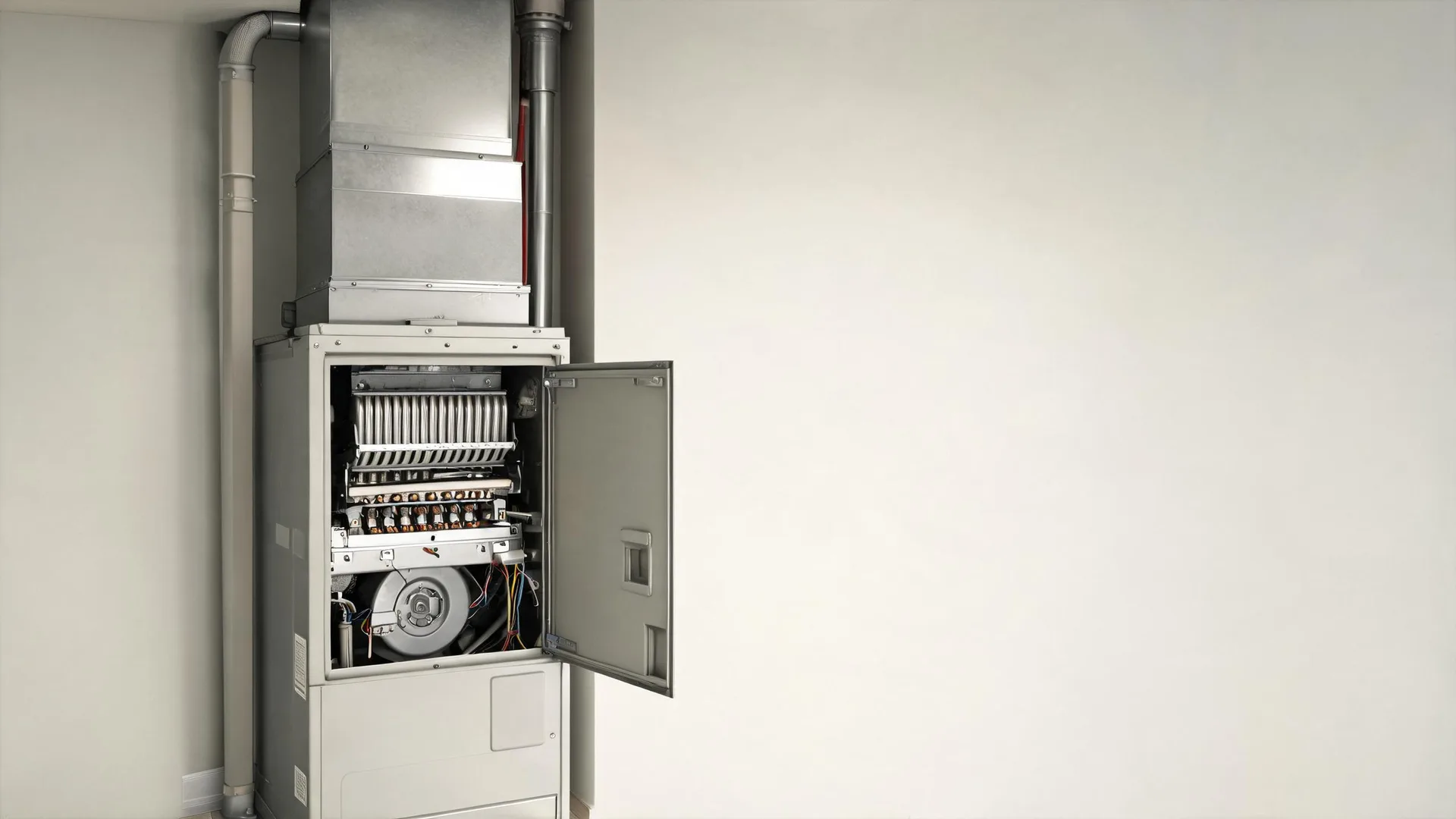
An unfinished concrete basement containing a gas furnace with sheet-metal ductwork, utility shelving, and exposed overhead joists.

Furnace Repair in Booneville, AR

Tell us about the job

Takes about a minute. No obligation.

RepairFurnace or heatingLogan County, AR
Step 1 of 2

What ZIP code is the job in?

Check the thermostat and the switch first

Make sure the thermostat is set to heat and the temperature is set above room temperature. Then find the furnace's power switch, it looks like a regular light switch near the unit, and make sure nobody bumped it off. Check the breaker too. Ruling out these simple causes tells a tech more about what's actually wrong before they even walk in.

Don't chase the gas valve or the flame yourself

If you smell gas, leave the house and call the gas company, not a repair line. Short of that, leave the burner assembly and the gas valve alone. A furnace that won't light, trips out after a few minutes, or blows cold air needs a tech who can test the igniter, the flame sensor and the pressure switch with the right meter. Guessing at those parts can leave the unit unsafe to run.

7 months
October through April, your furnace is on duty
31°F
the average winter night it heats against
3 winter storms
in ten years, the nights a failure hurts most
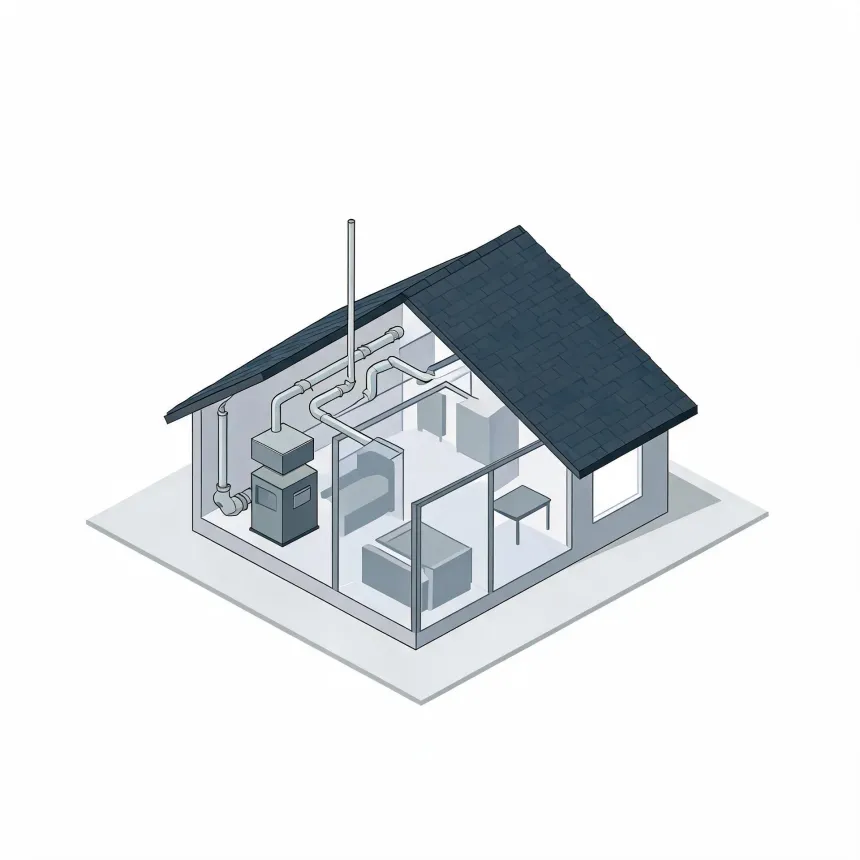
Isometric cutaway illustration of a small house with a dark shingled roof, showing an interior furnace unit, ductwork, and a flue pipe extending through the roof.
Your furnace works hardest from November through March.

NOAA nClimDiv, 1991–2020 normals

A Booneville furnace runs about seven months a year, October through April.

A furnace that rests most of the year usually has less wear behind it, so a repair is often worth making.

Logan County weather doesn't put extra wear on a furnace

94 severe weather events from 2015 to 2024
24% of homes statewide lost power a day or more in 2024
55 damaging wind events from 2015 to 2024

September is worth a look before the furnace sits idle no longer. Switch it over to heat and let it run a full cycle while the weather's still mild enough that a problem won't leave you cold. Most calls come in those first weeks of October, when the furnace finally has to work and something that was already failing gives out. A weak igniter or a flame sensor coated with residue can sit fine all summer and quit the moment the burners are asked to run for real. Catching it in September means a tech is fixing a known problem, not one that's left you without heat on a cold night.

A furnace with this little wear is worth repairing

Overnight lows average 31°F in December and January, nothing extreme, and the furnace only runs seven months out of the year. That's not a hard life for a machine. If yours is acting up, age or a neglected part is the more likely cause than strain, and that's usually a fixable problem, not a reason to replace it.

Find a contractor
A gas furnace with attached ductwork, gas piping, and condensate lines installed in a concrete-block basement.

A newer home usually means a furnace with life left in it

Half the homes in Logan County were built in 1979 or later. If yours is one of them, the furnace inside it hasn't had to fight the house itself to keep you warm. Newer construction holds heat better, which means less strain on the unit year after year. A furnace running inside a newer home is more likely to still be within its working life, which is one more reason a repair makes more sense than a replacement.

A small flame problem can crack a heat exchanger

If the burners are getting too much or too little gas, the flame can lick in the wrong place instead of burning even. Run that long enough and it can crack the heat exchanger behind it. Depending on where the crack is, the furnace may not be safe to run at all.

A failing igniter or sensor takes the blower motor down with it

When the igniter is weak or the flame sensor is coated with residue, the furnace can lock out after a few minutes instead of lighting clean. Each failed attempt still pulls the blower motor and draft inducer into a start cycle that never finishes. Parts built to run steady wear out faster starting and quitting than they would running straight through.

Most furnace failures trace back to one of a few parts, not a worn-out machine. The igniter is usually first, it cycles on and off every single heat call, and that wear catches up to it eventually. A flame sensor doesn't wear out so much as get dirty, a film builds up on the rod and it stops reading the flame even though the burners are lit fine. The pressure switch fails when the draft inducer weakens or the vent gets partly blocked, and it does its job right by refusing to let the furnace light. Blower motor bearings and capacitors are the other common one, and that failure tends to show up as noise before it shows up as no heat at all. None of these mean the furnace is on its way out. They're the parts built to wear first, so the rest of the unit doesn't have to.

A tech weighing repair against replacement isn't just looking at what broke. They're looking at what else is still good. A cracked heat exchanger ends the conversation, that's a safety issue and it means a new furnace. But an igniter, a sensor, a pressure switch or a blower motor are parts built to be replaced on their own, without touching anything else in the cabinet. Swapping one of them doesn't shorten the life of the rest of the unit. The cabinet, the heat exchanger and the gas valve are the parts that are expensive to replace and hard to justify fixing around if they're the ones failing. If the problem traces back to one of the smaller parts instead, repair is doing exactly what it's supposed to do.