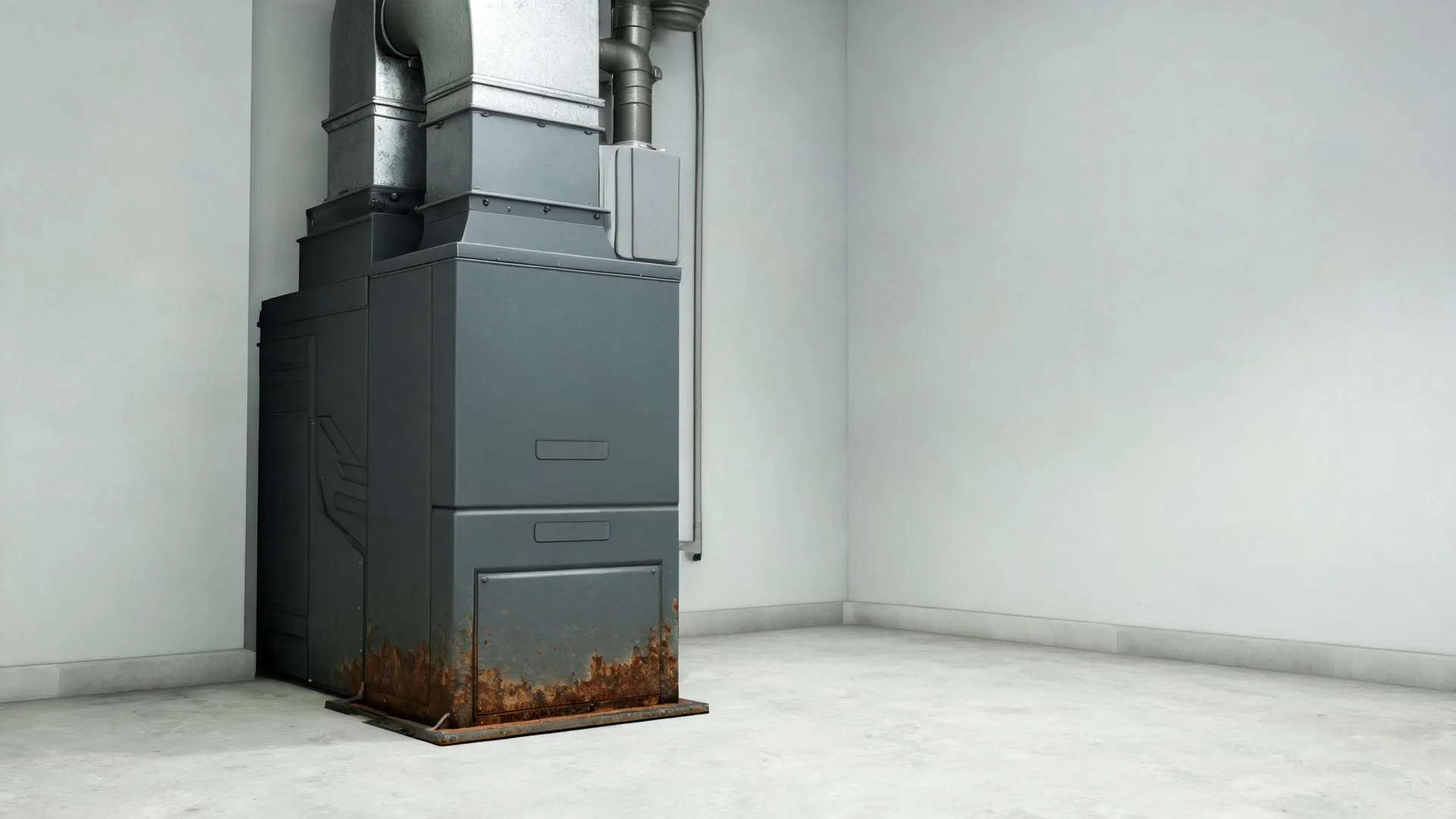
A gas furnace with sheet-metal ductwork and PVC pipes installed in an unfinished basement.

Furnace Repair in Bull Shoals, AR

Tell us about the job

Takes about a minute. No obligation.

RepairFurnace or heatingMarion County, AR
Step 1 of 2

What ZIP code is the job in?

A normal winter for a furnace

Furnaces in Bull Shoals run from October through April. Overnight lows average 28°F in December, January and February. That is ordinary work for a furnace. The cold does not wear it out faster, and most breakdowns trace back to a part failing on schedule rather than the weather outside.

What that means for a repair call

A furnace that stops or struggles usually has a common cause. A worn igniter, a dirty flame sensor, a clogged filter restricting airflow. A tech who checks these first usually finds the answer fast. Most of these repairs are straightforward once the real cause is found.

7 months
October through April, your furnace is on duty
28°F
the average winter night it heats against
11 winter storms
in ten years, the nights a failure hurts most
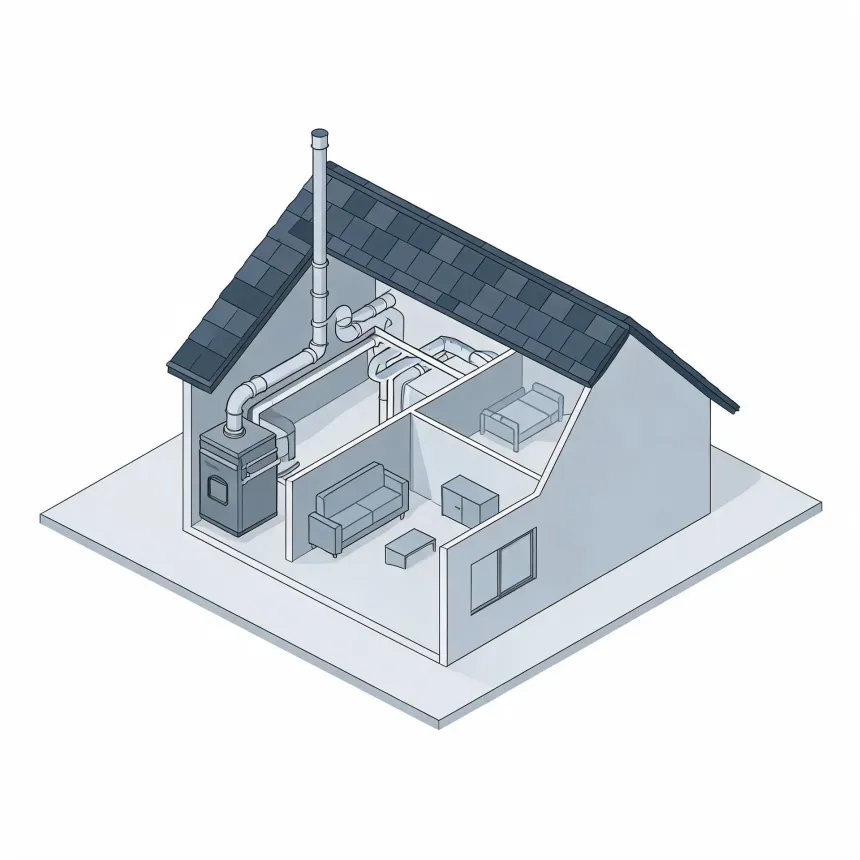
Isometric cutaway illustration of a small gabled house showing a furnace with flue pipe and ductwork connecting to interior rooms containing a sofa, bed, and cabinets.
Your furnace works hardest from November through March.

NOAA nClimDiv, 1991–2020 normals

Furnaces in Bull Shoals start up in October.

A part that was already weak often fails in that first cold snap, so a September check catches it before heat is on the line.

Marion County saw 67 severe weather events between 2015 and 2024, mostly wind and hail. None of that is why a furnace quits. Wind can knock the power out, and a furnace with no power is just a furnace with no power. It starts right back up once the lights do. What actually ends a winter early for a furnace is almost always smaller than that, a part worn down from running, not a storm outside. If you've been wondering whether this area is just harder on equipment, it isn't.

The usual problem has a straightforward fix

A furnace acting up in Bull Shoals almost always comes down to a part, not the weather. Electricity runs $36.10 per million Btu in Arkansas, and a furnace working harder than it should because of a clogged filter or a straining blower adds up on that bill while the real problem sits unfixed. Get the cause found now and the fix is usually simple.

Find a contractor
A gray residential gas furnace installed in an unfinished basement, surrounded by ductwork, a metal flue pipe, and a gas supply line.

A newer house usually means a furnace with life left

Half the homes in Marion County were built in 1986 or later. If that's your house, the furnace inside it has likely had less wear than the years on the house might suggest, especially if it's been replaced even once since. A furnace that's otherwise sound and just acting up is almost always worth fixing rather than replacing.

Most failures start with ignition

A furnace that won't light usually comes down to the igniter or the flame sensor. The igniter weakens with age and eventually cracks or stops glowing hot enough to light the gas. The flame sensor coats with a thin layer of residue over time and stops recognizing the flame is there, so the control board shuts the gas valve as a safety measure. Both are wear parts. Neither failing means anything else is wrong with the furnace.

A clogged filter causes the rest

A clogged filter forces the blower motor to pull harder to move the same amount of air, and the motor runs hotter because of it. Restricted airflow can also let the heat exchanger run hotter than it should, which trips a limit switch and shuts the burner off mid-cycle. A lot of problems that look unrelated, like short cycling or weak heat at the vents, trace back to one dirty filter.

Before calling anyone, look at the filter. Pull it out and hold it up to a light. If you can't see light through it, it's choking the blower, and swapping it might be all the furnace needed. Check the thermostat batteries if it uses them, and make sure it's set to heat and not just fan. Go to the furnace itself and see if there's a light on the control board blinking in a pattern, most boards flash a code that points to what tripped it. Make sure the switch on the furnace or the one near the basement stairs, the one that looks like a light switch, hasn't been bumped off. If the furnace has a standing pilot, check whether it's still lit. None of this is dangerous or technical. It just rules out the simple stuff before you pay someone to find it.

Most of the time the question isn't really repair versus replacement, it's whether the furnace has one bad part or several. A single failed component on an otherwise sound unit is almost always worth fixing. Age alone doesn't retire a furnace. What does is a heat exchanger that's cracked, since that's not a part that gets swapped on its own, or a string of separate failures showing up close together, which usually means the whole system is wearing out at once rather than one piece quitting early. A tech can tell you which situation you're in by looking at what's actually failed and what shape the rest of the unit is in, not by how many years it's been running.