





A gray forced-air furnace with ductwork stands in an unfinished concrete basement surrounded by storage items and clutter.

Furnace Repair in Clarksville, AR

Tell us about the job

Takes about a minute. No obligation.

RepairFurnace or heatingJohnson County, AR
Step 1 of 2

What ZIP code is the job in?

Half the houses in Johnson County were built in 1986 or later, which puts a lot of furnaces well within reach of a repair instead of a replacement. A furnace that age usually just needs a part. An igniter, a flame sensor, a blower motor, something that fails on its own and gets swapped out. That's different from a furnace running past where parts are even made for it. If your furnace came with the house, check the age against that before you assume the worst.

7 months
October through April, your furnace is on duty
30°F
the average winter night it heats against
2 winter storms
in ten years, the nights a failure hurts most
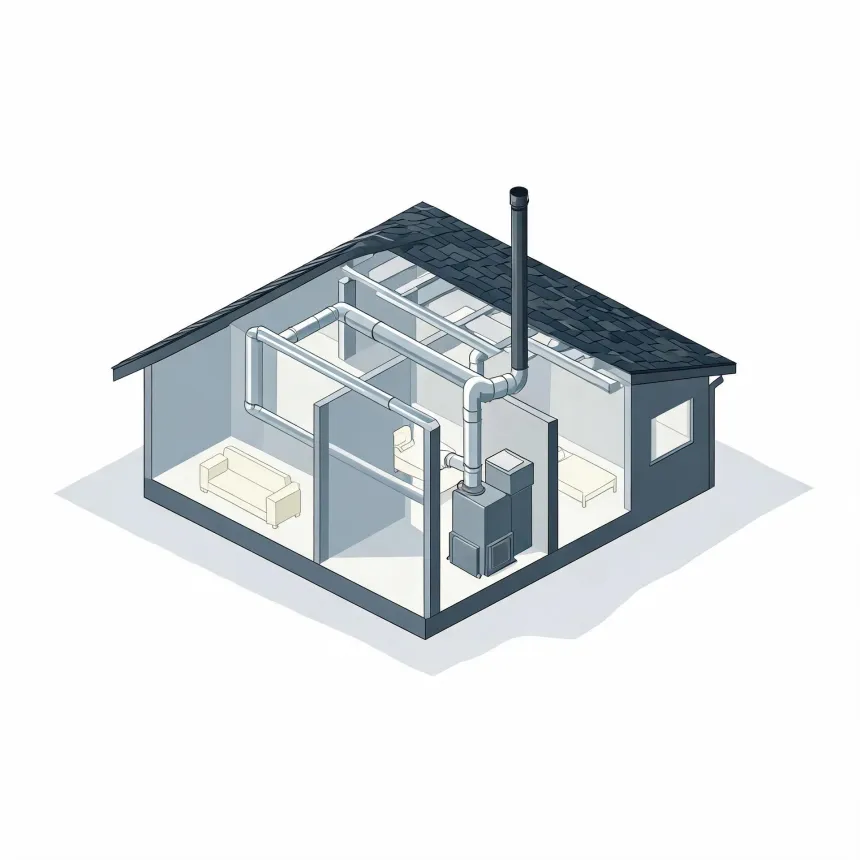
Isometric cutaway illustration of a small single-story house showing a furnace with a flue pipe through the roof and ducting running to rooms containing a sofa, chair and bed.
Your furnace works hardest from November through March.

NOAA nClimDiv, 1991–2020 normals

Most furnace failures come down to one worn part, not the whole system.

Find that part and the furnace is a repair, not a replacement.

Clarksville doesn't push a furnace any harder than it should have to work

Heat runs October through April
Winter nights average 30°F
Climate zone 3A

Johnson County sees its share of wind and the occasional hailstorm, but nothing here is hard on a furnace specifically. A furnace sits inside the house, away from wind and hail, doing the same job it would do anywhere. The 63 damaging wind events and 14 hail events are outdoor weather, not furnace weather. The thing worth knowing about is the power. About a quarter of Arkansas households lost power for a full day or more in 2024, and a furnace with electric ignition won't fire without it, pilot light or not. That's a reason to ask what happens to your system when the power drops, not a reason to expect more wear on the parts inside it.

It's usually worth repairing

It has an easier job here than in most places, so your furnace is often in decent shape. Repair is usually worth it.

Find a contractor
A man in a cap, long-sleeve shirt and work pants climbs porch steps toward a dark blue front door, carrying a worn canvas tool bag, with a small potted evergreen beside the entry.
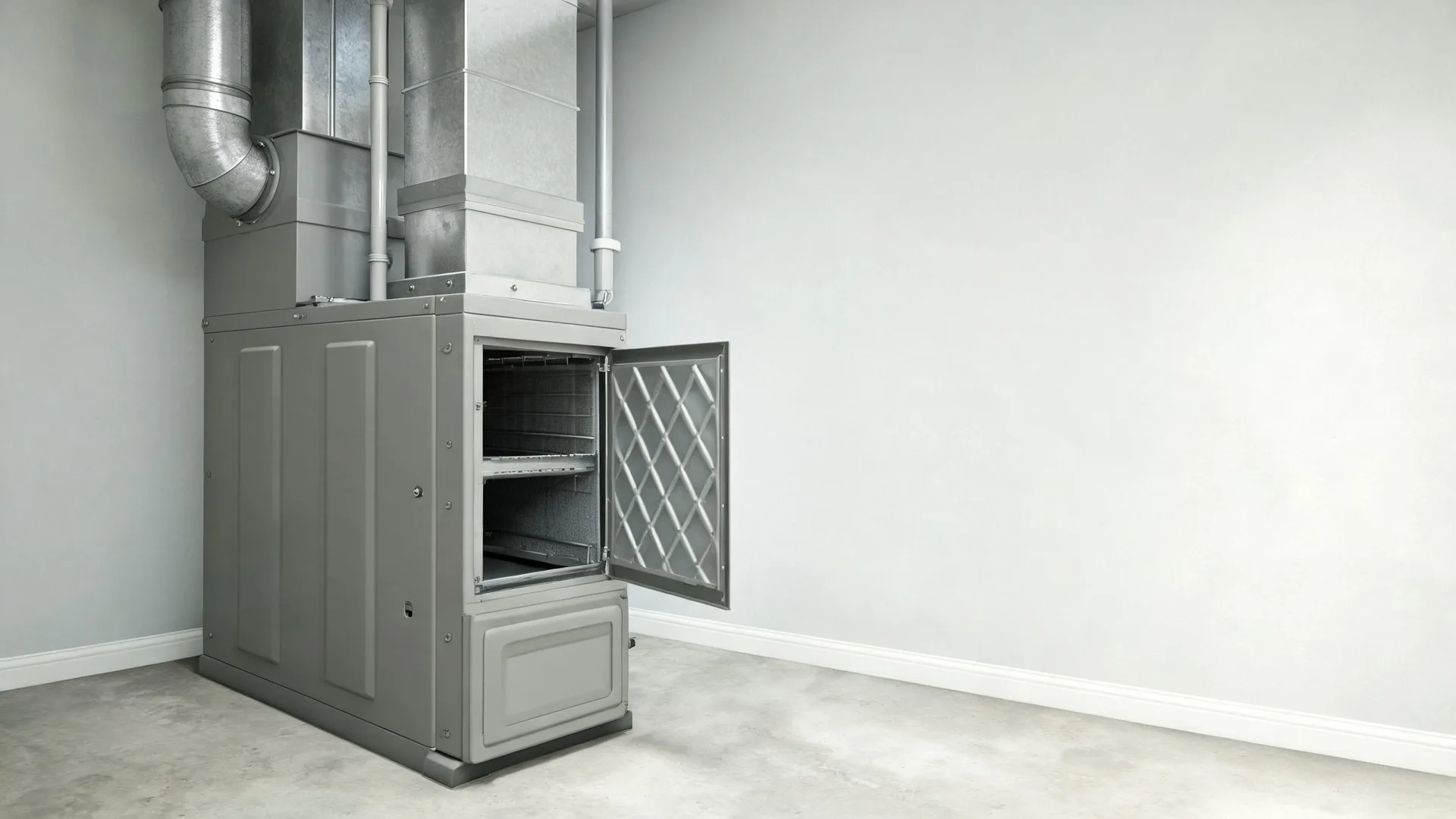
A gas furnace with attached ductwork, gas piping, and condensate lines installed in a concrete-block basement.

A newer furnace is worth fixing, not replacing

If your furnace came with the house, there's a decent chance it's one of the newer ones. That's worth checking before you pay for anything more than a repair. A part that fails after a handful of winters isn't a sign the furnace is done. It's just the part that failed.

The furnace tells you before it quits

A furnace rarely goes from fine to dead with no warning. It short cycles, running for a couple minutes and shutting off before the house warms up. It blows cool or lukewarm air instead of hot. The burner flame looks yellow and uneven instead of steady blue. It clicks and tries to start but won't catch. Each of those is a specific part asking for attention, not the furnace failing all at once.
Noise and smell are not things to wait out

A bang when the burners light means gas is pooling before it ignites, which points to a dirty burner or an igniter firing late. A grinding or squealing sound points to the blower motor or its bearings. A burning dust smell at the first run of the season is normal and clears fast. Any smell that lingers, or anything that smells like gas, means shutting the furnace off and getting it looked at before running it again.

A furnace that's struggling doesn't fix itself by staying on. A cracked heat exchanger gets worse under the stress of each heating cycle, and running the furnace keeps flexing that crack wider. A dirty flame sensor makes the burner shut off early, and leaving it running means more short cycles, which wear the ignition components faster than normal use would. A clogged filter cuts airflow across the heat exchanger, and that makes it run hotter than it's built for every time it fires. None of these get better with time. The part that's failing keeps failing a little more on every cycle until it fails completely, usually on the coldest night it picks.

A diagnostic visit starts with questions. What the furnace is doing, when it started, whether it's one room or the whole house. Then the tech pulls the panel and watches it run through a full cycle, ignition, burner flame, blower kicking in. That's where a late igniter or a weak flame sensor shows up, because the problem happens in real time while the furnace is trying to work. The tech checks the flame sensor and igniter for the buildup that makes them misfire, tests the blower motor, and looks at the heat exchanger for cracks or scorch marks. A gas pressure check and a look at the vent and intake pipes usually round it out, since a blocked vent can mimic other problems that look electrical but aren't. By the end, the failing part has a name, and that's what gets fixed.